1999 Lotus Elise Sport 190
Colin Chapman would have been very proud. Lotus's Elise only weighed about 1,660 lbs. Chapman's "speed through weight" ideology is still a great engineering principle automakers could learn a thing or two from today, especially as they chase ever more efficient solutions in the face of mounting government regulation against fuel consumption.
Lotus had been all over the map in the late 20th century, coming out with a slew of odd designs that still managed to perform, while never quite being the best or the most up to date. But in 1996, they unveiled the Elise, which intended to change all of that.
The Elise replaced the maligned Elan as their entry-level vehicle. The Elan, while very pretty, was really no better than a Mercury Capri (don't get me wrong, I like the Capri, but...) being front-wheel drive. The Elise, however, featured a rear mid-mounted engine that powered the rear wheels. Thanks to simple construction and light parts, it wasn't heavy. Power was small - only four-cylinders - but it propelled the car from 0-60 mph in under 6 seconds. Handling, braking and fuel economy were excellent.
Styling is superb. The mid-engine placement did not yield any design cliches (as Toyota's MR2 did, for example) but rather a refreshing take that is simple, sexy, sporty and damn near-classic by now. British design in the 1990s really expanded some horizons and seemed to blend the minimalism of 1980s design with the luscious curves of the 1950s and 60s. These were only offered as targas, a slight blow to structural integrity but upping the fun factor.
In a lot of ways, these could be descendants of Porsche's 914, which was essentially the exact same setup, removable hardtop and all. Underneath the hood is a 1.8-liter 4-banger producing a healthy 190 horsepower.
This example looks appropriately wild in racer red with matching red seats and steering wheel. Note the integrity bar above the passenger seat. Not sure if anyone is supposed to fit there.
It features 3,248 kilometers which is only 2,018 miles.
Lotus only made the first-generation Elise from 1996 to 2000, before new regulations forced a new design. They were never offered here, sadly, where they would surely have taken a huge bite out of MR2, Del Sol, Miata, Z3 and Boxster sales. Since 2004, however, we have been allowed the second generation Elise, but it lacks the soft curves and simple shapes of the first series.
This is a rare and desirable vehicle now in the U.S.
Available here on ebay for $29,980.
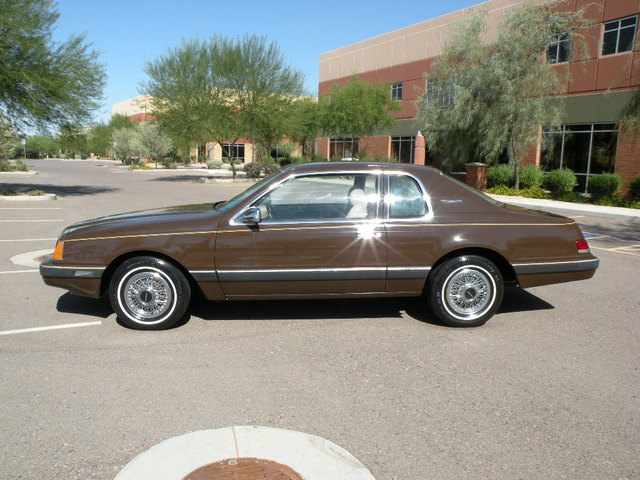
24k-Mile 1985 Ford Thunderbird Elan
When was the last time you saw a clean one of these?
The Thunderbird was Ford's long-running two-door luxury "sports" coupe. The first 1955 Thunderbird is the most recognizable and arguably the best. Every subsequent generation got a little stranger looking and strayed further and further from the initial ideals. In fact, the Thunderbird had become something so different by the end of the 20th century, that Ford launched a limited retro-inspired design in 2002 that harkened back to the original.
That's not to say that everything that came in between is without note. The 1983-1988 ninth generation T-Bird sought to redeem the nameplate after the atrocious models of the 1970s. Long after becoming just a hardtop coupe, the ninth generation finally comes to terms and features a body that attempts to display some effort and flair.
It is a little weird though. The front end wears these recessed, government-mandated sealed beam quad rectangular headlights, an upright grille and a long hood. The rear quarter window is slanted more upright than the a-pillar, giving the car a stunted look that was a dreadful design trend among American cars of the time. The c-pillar is a little more sloping, and tapers to a downward-slanted rear with thin-slotted horizontal taillights. Mercifully, there is no spare-wheel hump as its sister car the Lincoln Mark coupes regretfully incorporated.
This one wears an oppressive coat of flat UPS brown paint that fortunately looks squeaky clean. It's not a bad color here and works surprisingly well on the car.
Underneath the hood were either four, six, or eight cylinders that powered the rear-wheels, to my surprise. Luckily, this example has a 5.0-liter V8.
The seller states the vehicle is a two-owner car from California whose last owner was a little old lady. They state the odometer currently reads a remarkably low 24,690 miles. This classifies this car as a bona fide low mileage survivor. On top of that, it seems to be in excellent condition. The exterior looks straight and clean, with the seller noting there is no rust, although the paint does show some heat stress. Inside, the interior looks brand new. The seller notes there are some dash cracks, but that can be covered up.
Mechanically, they say the car runs and drives and blows cold a/c. They do note two relatively minor problems: the power antenna and power door locks don't work.
This is a great chance to purchase a pretty solid car with a lot of power and in unusually good condition.
Available here on ebay in Phoenix, Arizona for $5,450.
Lost and Found: 1961 Fiat 2100
The seller of this '61 Fiat got lucky twice: first they bought the car 25 years ago, sold it, then tracked it down 5 years later and bought it again.
In that time period, they say the original cream color changed to yellow. But since the car returned, they've done a bunch of mechanical repairs to make sure it keeps running.
The Fiat 1800/2100 was produced from 1959 to 1968. These featured front-mounted four and six-cylinder engines that powered the rear wheels.
Styling was courtesy of Dante Giacosa and is classic post-war European styling, with slight fins, upright greenhouse, simple lines, and wide-eyed from fascia. Although the loss of the original color is regrettable, yellow contrasting with the white roof is still plenty charming, including the genuine Italian hubcaps that smartly finish it off.
The seller notes that the interior is in need of a restoration, but I wonder if that means sacrificing what could be the original seats? Beyond some polishing and new carpeting, it doesn't need much else.
This model is the 2100, which had the largest engine offered in this body, a 2054cc, single carb straight six producing a mere 82 horsepower. This example is mated to a 4-speed manual column shifter transmission.
Cosmetically, the seller notes the vehicle is rust free with only some minor bubbling. They also mention it has no accident damage and all the stainless steel trim is intact.
Mechanically, they state it runs and drives fine.
As a fun side note, the seller mentions they loan their car collection for use in films and television and this very Fiat was recently used in the tv movie Liz and Dick.
It's available here on ebay in Tarzana, California.
What The...1984 Lincoln Continental Turbo Diesel
Last week I posted a Volvo 740 Diesel. I rambled on about my fascination with otherwise sedate cars that were offered with diesel engines, most in the mid-80s, and most very briefly.
Today I have another one to happily add to that growing list.
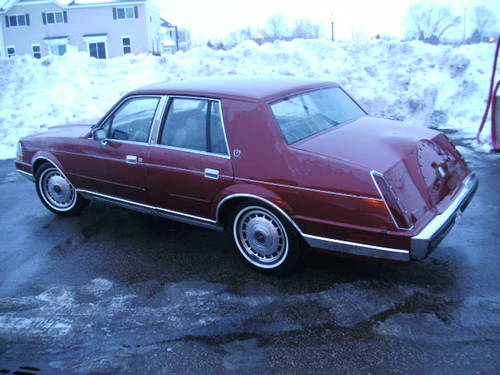
You're looking at a 1984 Lincoln Diesel.
Wait, it gets better. Underneath the hood was a BMW-sourced 2.4-liter turbocharged diesel engine that was also used in the equally short lived and infamous BMW 524TD. That's right, the same BMW engine powered grandpa's Lincoln. And no, this wasn't a custom engine swap. This was the manufacturer's original configuration. Ford/Lincoln was so desperate to take on Cadillac and European diesels, they just outright bought the BMW engines. Good job, Ford. If you can't beat the competition, just buy 'em out.
But logistically and practically, so many questions arise. How did the relatively small engine handle a much larger and heavier car? How were they serviced? Did Ford technicians have BMW engine knowledge?
Bloated 80s American styling, German engineering. The unholy alliance is mind-boggling.
This seventh generation Continental with the '84-'87 facelift are barely seen on the roads anymore and I had forgotten it existed until I saw this ad. It's this weird combination of American design trends from the 70s and 80s combined, with a pompous front-end complete with counter-intuitive and ugly quad-rectangular sealed-beam headlights, iceberg turn indicators, a high and large greenhouse, really thick and upright c-pillars, and an angular and chopped-feeling rear end, which actually resembles Cadillacs of today more than anything else. Oh, and the idiotic but strangely mesmerizing spare-wheel hump bulging from the trunk.
The seller claims the BMW turbodiesel is the "fastest and quietest production diesel ever built", even better than Mercedes-Benz, they say. I don't have any doubt in BMW engineering, but, really, the fastest and quietest? That's quite a claim, although a very appealing one. The 1984-1985 only 524TD has a cult following, possibly for some of those reasons. Not surprisingly, when the 524TD was dropped from the U.S., Lincoln stopped making the Continental diesel. BMW would rather be damned than let an American company continue to use their engine when they themselves weren't even going to continue offering it, no matter how many engines Lincoln could buy.
This ultra-rare example has 118,000 miles on the clock. The seller states they are writing the listing on behalf of an elderly collector who had 3 Continential Turbo Diesels (!) and this is his last remaining one. They say the transmission and torque converters were both rebuilt, and list of host of new parts added.
Cosmetically, they do mention some flaws, as the vehicle is far from perfect. The photos show the vehicle in snow. The engine compartment is soaked, and the interior looks very grimy, with a lot of wear in the steering wheel and on the carpeting. Worse, there are also some rust spots on it.
Mechanically, they say the owner spent $15,000 over the years maintaining this car. It runs, drives, and stops fine and does not leak, smell, or puff excessively beyond the normal start up smoke.
A quick scan of all U.S. craigslists found no other turbo diesel Lincolns for sale at the moment. They were offered very briefly, few were sold, and probably very few are left, at least in operable order. The concept, however strange, is somewhat weirdly awesome to me. Just get used to the idea of ordering some Ford parts and some BMW parts, and you'll be fine.
Find this puppy here on ebay in Minnesota with 16 brave bidders at $1,000 and six days left.
1990 Audi V8 Quattro
I was obsessed with these about a year ago. I thought they were so cool. I still do, but I no longer scour craigslist everyday looking for them. There are just too few in too poor shape to realistically consider as a practical and reliable daily driver.
The V8 Quattro was simply known as just that and not "A8" as its successor was named. It was Audi's flagship sedan from 1988-1993, or roughly the length of the George H.W. Bush administration.
This was a very important car for Audi, perhaps even life-saving. In 1986, the company faced an enormous public relations disaster when 60 Minutes aired a report purportedly showing their Audi 5000 unintentionally accelerating. But the report had been fabricated (so much for journalistic integrity), and the NHTSA eventually found vehicle operators at fault, not the manufacturer. The 5000 was wisely renamed 100 and 200 in 1989.
The damage in the minds of consumers was already done, however. Audi's reputation and sales plummeted, and never recovered to pre-acceleration-debacle-levels until the year 2000.
But in October of 1988, Audi introduced the V8 Quattro, a whole new model to compete with the best of the best. It featured unique sheetmetal, permanent four-wheel drive, a galvanized body and a host of luxury and convenience features.
The most interesting thing about the V8 Quattro for me is the ultra-conservative styling, a collage of rectangular forms. Even the gas lid is square. It looks like some lost Audi concept for super-sedan that never made it out of the boardroom. The angles and proportions are so simple and handsome it's almost too good to be true. It's a more restrained and subtle than the already staid 5000, but the wider track and flared wheel wells give it a more hunkered-down, performance-oriented look. Then the small wheels rebuke the idea of speed and play with perceptions again, making the car look a little nerdy at the same time, too. I love the use of thick black plastic anti-dent trim, headlight wipers, thin pillars and plentiful greenhouse glass providing for excellent visibility.
In early models, power was supplied by a 3.6-liter 8-cylinder engine producing around 247 horsepower, not bad, but not ideal when you factor in a hefty curb weight of 3,774 lbs. 0-60 mph times came in at 7.6 seconds. Handling and overall feel was secure, but acceleration supposedly left something to be desired. I've seen people describe these as sufficient to downright sluggish. Fuel economy was poor as well, at 14 mpg city and 18 mpg highway.
The seller of this example is a small used car dealer and state the mileage as 107,546. They provide no other details. It looks like a typically worn example, but the body seems to have no major flaws. These were, rather amazingly, made of galvanized steel and therefore avoided most rust issues. The real issues come from the car's overall hazy reliability and the cost and availability of rare German parts when things do break.
But for one winter of fun and mostly bank-vault solid driving in the snow? This could be a nice piece for that, and that only. It really is a collector-only car. The A8 that followed was superior in some ways, arguably better looking and more plentiful (and nearly as cheap now). Still, few V8Q were sold, fewer are left, and very few are drivable.
Find it here in New Jersey for $2,995.
75k-Mile 1984 Dodge Colt GTS Turbo
The Dodge Colt was a re-badged Mitsubishi Mirage. While these used to be based off the rear-wheel drive platforms coming out of Japan, the 1978-1984 fourth generation Colt switched over to front-wheel drive. It was a blow to enthusiasts to say the least.
As if to make up for something, the GTS Turbo arrived in 1984, but it was the last year of this generation. It was also a special treat for U.S. customers only, however. Whereas other markets had turbocharged 1.4-liter four-cylinder engines, the GTS Turbo featured the slightly larger 1.6-liter that pumped out 102 horsepower.
Although it was almost like cheating when American auto companies made business deals to sell superior Japanese cars under their nameplate, at least Dodge added some unique power to this unit to make it their own.
These were is also equipped with a novel 8-speed "Twin Stick" manual transmission, which utilizes a two-speed transfer case to give 8 forward and 2 reverse speeds. The seller claims that if you practice restraint on the gas with each shift, the fuel economy expands to 45 miles per gallon. They also note the car weighs in at just under 1,900 lbs.
This example looks pitch-perfect in red with black trim and blacked-out wheels. The seller also mentions some notoriety in that the car was previously owned by Car and Driver Senior Technical Editor Don Schroeder and was used by the magazine for a 1991 road test, the results of which along with other documentation come with the car.
The seller says he was going to modify the car when his friends so objected he felt compelled to just sell the car instead!
Mechanically, they say it is a smooth runner and shifts well. They mention a host of recent work done. Cosmetically, they say there is no rust, having been stored since 1991 and driven only about 1,500 miles in the last two years. They replaced the windshield and note the interior is clean with no stains, tears, cracks or odors.
How many can there be left in this condition? This is a fun, cool, notable little car, and it comes with even more history in the form of automotive journalist previous ownership. Can you imagine actually owning the same car used in your favorite car magazine's road test? It just doesn't get much better.
Find it here on ebay in Syracuse, New York with 30 bids racked up at $2,800
Rare 1991 Mercedes-Benz 300SL 5-Speed
After the R107 SL had been in production for 18 years, Mercedes finally rolled out its replacement, the R129, in 1990. Since the R107 had been slapped with ugly U.S. government mandated headlights and bumpers, it was never the car is should have been. But the R129 had universal styling and a whole new level of appeal.
Bruno Sacco's design was a masterpiece of classic lines but progressive shape. The hood is long and low, and the rear is handsomely squared off, accented with the trademark ribbed taillights. The early models are some of the best looking, with the three-opening air intake slots on the sides, full-faced alloys, and more detailed front air dam.
The underpinnings were based on the excellent W124 sedan chassis. Mercedes initially offered just a six or eight cylinders, then later 12.
This example is a the 24-valve M104 straight-six cylinder engine that produced a healthy 228 horsepower. Many were the more complex V8, so the six-cylinder engines are a neat find for someone looking for something relatively tame but still plenty sufficient to start out with.
What makes this version especially appealing is the very rare 5-speed manual transmission. Mercedes stick shifts are very hard to find, especially in their cars from the 80s and 90s, which were considered by the general populace as "luxury" rather than "sporty" cars, a sentiment echoed and reinforced by Mercedes themselves.
It's difficult to find an exact number of how many 5-speed 300SL were sold here, but the seller says it was only 100 - whether for that year, or total, is unknown. Another source says about 800 total. Either way, it's not much.
The seller of this example says its a two-owner car with a clean accident-free carfax and meticulous ownership. They say the oil was just changed and it drives like a "dream". They list the odometer as having around 95k-miles.
Find it here on ebay in Pompano Beach, Florida with 5 bids at $3,050 and reserve not met.
COTC Exclusive: 29k-Mile 1969 Pontiac Grand Prix J
This '69 Grand Prix is being offered by a collector who acquired the vehicle from Kansas and brought it over to the east coast where it currently resides. It is an incredible un-restored survivor and features the original engine and no rust or rot.
The all-new-for-'69 second generation Grand Prix was ordered by John Delorean, a GM executive at the time, and featured Pontiac's longest hood yet. However, it was lighter and smaller than its predecessor. The front features protruding corners and a distinctive angled grilled. The body shape has become known as a "coke bottle" for its gently rising and sloping profile. The rear is adorned in an integrated chrome bumper and rectangular taillights.
The seller has added a new white vinyl top and aftermarket Pontaic Mag wheels sitting on BF Goodrich tires that give the car a cool touch and nice stance.
Inside, the immaculate interior features white seats, black dashboard and wood decals and chrome touches. It is all-original and nicely contrasts with the exterior color.
Underneath the hood is the 400 cubic inch 6.6-liter V8 engine pumping out about 265 horsepower to the rear wheels. The seller notes the car had the original plug wires and belts on it when they acquired it.
Mechanically, the seller gave the car some recent exhaust work and a tuneup. They say it runs and drives excellent.
There aren't many of the second-generation Grand Prix in this kind of condition left. The seller has always kept the vehicle safely garaged in a climate-controlled private storage facility.
The asking price is $14,000.
Click here to send an email inquiry about purchasing this vehicle.
1994 Jaguar XJ12
How would you like four-doors and 12 cylinders for $1,999?
The code-name XJ40 body was nearly 15 years in the making. Jaguar had intended it to replace the XJ Series II, but production was delayed for one reason or another. Styling, however, continued at an even pace over the years, culminating in a debut at the British International Motor Show in 1986. The Series II XJ, meanwhile, was sold alongside the XJ40 until 1992.
Below is a development photo.
So what does 15 years of continuous styling yield? Sadly, not a shape everyone loved. Purists scoffed at the squared off edges and single-piece rectangular headlights that replaced the iconic quad round lamps. The instrument cluster was digital. The car was more modern than gothic the way Jaguars of the 1950s, 60s and 70s had been. But if the goal was to modernize the XJ, Jaguar succeeded. In a lot of ways, it was actually a very carefully crafted and good looking car. It still retained the classic long and low profile, and the rectangular headlights actually looked better on the boxy shape than the round units they later added did. It was offered in a bunch of rich colors and it looked good in every one of them, too. Jaguar had to move forward and they did so in the most appropriate way possible.
If most people were eventually won over by the styling, the XJ40 gained no fans for reliability and build quality. Sure, it's a solid car, but it just wasn't designed or made the way Mercedes-Benz were. The problem is that the XJ40 was intended to compete against the Benz, but it fell short yet again. By the end of the 1980s, when the Japanese had jumped into the ring with the Lexus LS400 and Infiniti Q45, both of which were faster, cheaper, far better made and arguably better looking, Jaguar was lagging far behind. They've never really recovered, either.
However, Jaguar still had one card up their sleeve their Japanese competitors didn't: the V12 in a four-door sedan. Jaguar had pioneered this setup, and had offered it before Mercedes and BMW jumped into the game. But Jaguar hadn't offered the V12 in the U.S. since 1979, and the XJ40 series only gained the 12-cylinder in 1993, just a year away from the whole car's demise entirely. By then, however, it made sense, as BMW had the 750iL and Mercedes the 600SEL. Could Jaguar keep up? Would it matter?
Jaguar's engine was a 6.0-litre HE version of their long-running V12 engine that dated back to 1971. More than 140 inner body parts had to be re-designed to accommodate the new V12. It was the same V12 used in the XJS during the same period, and produced a very healthy 318 horsepower powering the rear-wheels.
Only a total of 2,991 were ever made, and just 1,325 were exported around the world. By the time this powerful car debuted, the XJ40's reputation was too damaged to ever recover, and sales reflected that. If you thought the 6-cylinder XJ might be problematic,12-cylinder reliability and upkeep could be an absolute nightmare.
Fortunately, if you want to find one, they are available at inexpensive entry prices. This example is being offered up by the owner who says it runs great and has a functioning tachometer, speedometer and odometer. They state the mileage as 137,000, and wears new tires and a new battery.
I'd ask about any maintenance history available. But if you're looking for cheap and fast transportation, this could easily fit the bill and provide more than enough entertainment as well.
Find it here on craigslist in Tucson, Arizona.
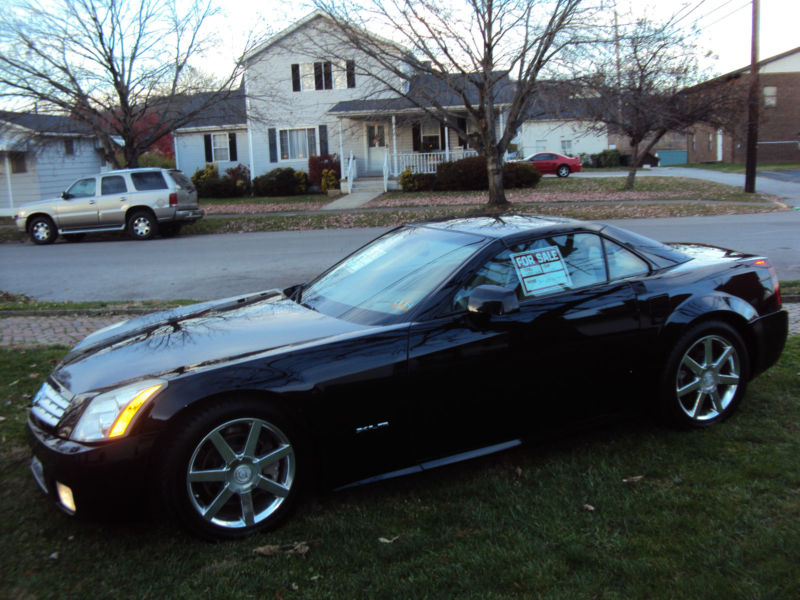
Future Classic: 2004 Cadillac XLR
The XLR was Cadillac's second attempt at a luxury performance two-seater convertible after the mixed results of the Allanté.
When production of the Allanté ended in 1993, Cadillac was without a flagship convertible for a decade. However, in 1999 they tested out a two-door concept, the Evoq, at the Detroit Auto Show. It wore a startlingly fresh body by Kip Wasenko of razor-sharp lines, edges, and creases. It was bold and new, yet still very American and very Cadillac. Under the hood was the familiar Northstar V8, but for the first time in a while, power was directed to the rear wheels. It was a hit, and Cadillac has been utilizing its design themes ever since.
When asked what current designs he likes, legendary Mercedes-Benz designer Brunco Sacco stated he admired Cadillac most. Indeed, in the same way Sacco created a memorable face for all Mercedes-Benz, Cadillac, starting with the Evoq, finally found a design theme to fit across the whole range and instantly identify their cars, especially against stiff competition. No other cars wear Cadillac's ultra-mod sharp body lines, while German and Asian cars are looking more and more alike with each passing model year, much to their detriment.
Based on Corvette's rear-wheel drive Y platform, the XLR debuted in 2004 and featured a unique body, interior and suspension. It also had a power-retractable hardtop that needed just under a foot of clearance for retraction. The hardtop was supplied by Porsche and Mercedes-Benz (who had employed this setup on the groundbreaking SLK) and was made of aluminum to reduce the addition of weight as much as possible.
Only 15,460 were produced until 2009, when it was never followed up with a successor. Currently, Cadillac is two-seat convertible in their range.
The seller of this example states their daughter bought it in 2006 from the original owner, then the seller swapped his four-door Lexus for the XLR. He now finds the XLR too small and needs to sell. The seller states the odometer as reading 70,500, slightly high for an XLR, which were usually acquired by older people who drove them sparingly.
Cosmetcially, the seller says the vehicle is in excellent condition "but not perfect", whatever that means. They do say everything looks and works as it should. Mechanically, they state it runs and drives well, and they invite local prospective owners to inspect and test drive it.
Since the V8 is a large and somewhat complex engine and the vehicle relatively new, it should come with a stack of records and receipts to document the 70k miles put on. If the seller is just getting rid of it for lack of need, it could check out however.
Regardless, with a Buy-It-Now of just $22,000, this is one of the nicest and least expensive XLR I came across on the market right now.
Find it here on ebay in Kenova, West Virginia.
Subscribe to:
Posts (Atom)