Showing posts with label lexus. Show all posts

58k-Mile 1998 Lexus SC400


Lexus's original lineup - the LS, GS and SC - were instant classics when they debuted and 24 years later they keep gaining critical appreciation, even as their prices bottom out. Lexus touched upon every facet of automaking - engineering, efficiency, design, build quality, and marketing - and revolutionized each as well. All of their cars were stylish, extremely well built, and (initially) competitively priced. The brand was a high water mark for the entire industry.

The SC was the crown jewel in the arsenal. As if taking on the legendary Mercedes-Benz W126 with the LS400 wasn't enough, Lexus decided to cut into the premium coupe segment by launching the SC400 in June of 1991 as a 1992 model.


As fundamentally Japanese as Toyota and Lexus are, they are quite American, too. Lexus specifically designed their cars with the American market in mind. Styling of the SC was even transferred over to an American team at Calty Design Research Center in California. The original lineup were lean on the outside, spacious on the inside, had powerful V8 engines and automatic transmissions. They weren't exactly sporty but they were great long distance highway cruisers. In essence, they were super sleek and hi-tech reinterpretations of American cars of the 60s and 70s for the New Age 90s. The Japanese, having risen like a phoenix from the ashes of Hiroshima in 1945, had come to better understand what Americans wanted than Americans themselves.

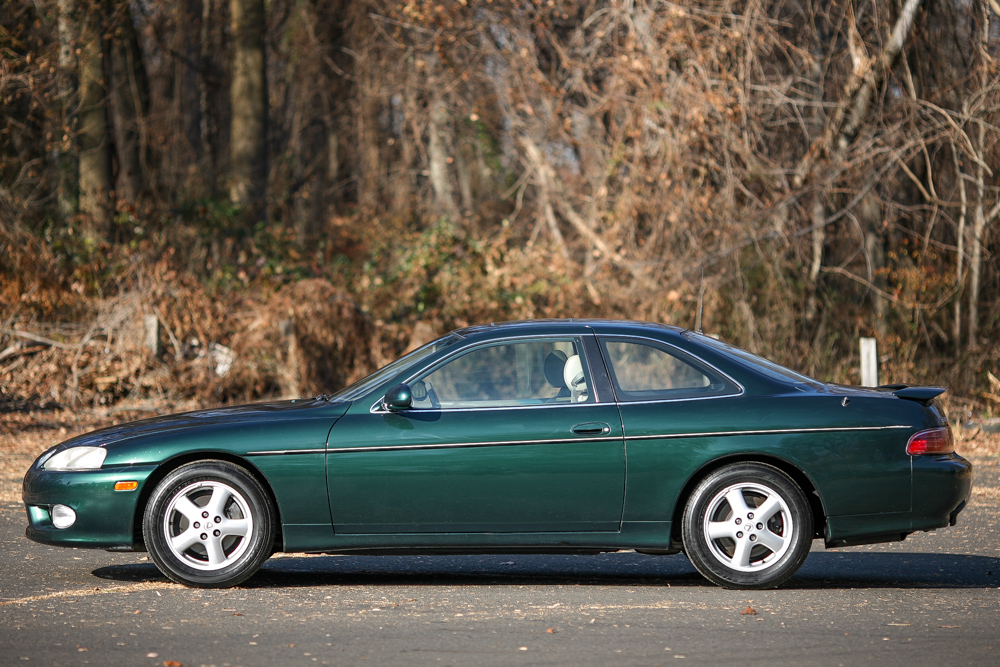
Chief designers Denis Campbell and Erwin Lui said the SC body was based on "emotion and feeling" and possesses almost no straight edges. It is a complete rejection of the angular Blade Runner look of the early 80s, and even the slab-sided techno-industrial look of Bruno Sacco's Mercedes-Benz designs. Instead, it almost starts to recall the soft curves and slopes of cars from the 30s and 40s, but without the excess. The jellybean look became a trend for the rest of the decade and was almost parodied by Ford's ridiculous looking third generation Taurus, but on the SC it works beautifully.


Underneath the hood is the same 1UZ-FE V8 engine from the LS400 that pumped out a very healthy 250 horsepower to the rear wheels. Only an automatic transmission was available. A 6-cylinder version was also offered and with the option of a manual, but the added power of the V8 is preferable, even if you sacrifice the ability to shift manually, which isn't in the spirit of the car anyways.

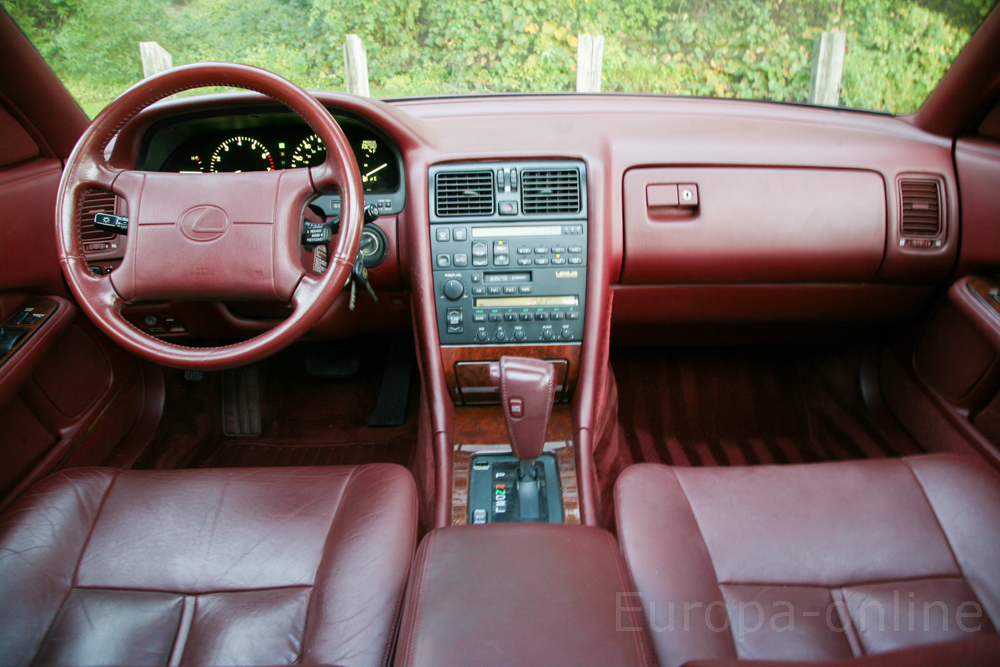
Inside is classic early 90s Japanese design. In the same way that Mercedes-Benz and BMW mastered interior design of the 80s, the Japanese keep the same overall simplicity and functionalism but soften the edges, lighten the colors and smooth out the tone and feel of everything for the ultimate tactile and visual experience. It's like a spa or a vacation, but without the frivolity. It practically beckons for a Kenny G disc to be blasting in it.


The SC400 was produced until 2000 with minimal changes over the years - a testament to the success of the original design. Plenty were produced but they are often scooped up quickly and modified in the second hand market, making immaculate and low mileage examples like this rare. The seller says it has just 58,547 miles on the clock and that everything works. A carfax report and any maintenance records will fill out the rest of the story. Otherwise this thing could be ready for another 50k-100k miles.

Available here on ebay in Pennsylvania with a Buy-It-Now of $14,950 and the Make Offer option.

New Classic: 60k-Mile 1991 Lexus LS400


The LS400 was the first Lexus ever made. I like to call it a "New Age" car. Whereas cars from the early 1980s coincided with new wave music, the LS400 appeared at the beginning of the 90s and the start of the ethereal new age music and lifestyle movement, the tranquility and smoothness of which is echoed in every facet of the LS400.

It's one of those cars that was so good when new, it's never really needed to be discovered and appreciated again until now, as clean and low mileage early examples are becoming harder and harder to find. When they do appear, it's very notable.

Japanese auto manufacturers were rising stars in the 1980s. They had already demonstrated a mastery of compact economy cars. By the middle of the decade, they decided to conquer the luxury car segment too.


Toyota created Lexus with that exact intention. Although Honda had them beat by launching similar-minded Acura in 1986, early Acura cars too closely resembled their Honda siblings and shared their front-wheel drive platforms and small engines. Lexus, on the other hand, was a clear departure from anything Toyota was offering at the time. Supposedly, Toyota sent an undercover research team to live in Laguna Beach, California and observe the lifestyles of wealthy Americans (one can imagine this also becoming rather hilarious). The results indicated a whole new brand was needed to launch a high-end sedan that could compete with the world's best. It would feature an unparalleled blend of luxury and technology.

Lexus debuted the LS400 at the January 1989 North American International Auto Show in Detroit and it went on sale later that September as a 1990 model. It was an immediate success.

The "400" stood for an all-new 4.0 liter 32-valve V8 engine, capable of 250 horsepower and 260 ft·lbf of torque powering the rear wheels. This thing was a fast and silky smooth performer. In a December 1989 Car and Driver luxury sedan road test, the Lexus LS400 won, and was the second fastest coming off the line to 60 mph in 8.6 seconds, behind just the Infiniti Q45. Compared with the BMW E32 and Mercedes W126, the LS 400 had a higher top speed of 160 mph, a lower drag coefficient, lower curb weight, a quieter cabin with 58 decibels at 62 mph, and all the while remarkably avoiding the U.S. Gas Guzzler Tax.


The LS400 also featured a host of new technologies, like automatic tilt-and-telescoping steering wheel with SRS airbag, power adjustable shoulder seat belts, electrochromic rear-view mirror, fluid-damped cabin fixtures, vibration-insulating rubber mounts, airflow fairings, and sandwich steel body panels.

Styling is extremely derivative, but nonetheless successful. The key is simplicity, utilizing straight lines and gently sloping forms. No shape is odd or offensive. Everything pleases. Lexus took cues from all the existing luxury cars of the time and blended them together very well. Although their cars still have no core theme today (as many Asian automakers suffer from), the original LS is something of a design classic now because it smoothed out the harsh chiseled creases of the German and Italian sedans at the time. It was a "kinder, gentler" luxury sedan for the "kinder, gentler" 1990s.

Lexus did all of these amazing things while not forgetting two of the most important aspects of cars, particularly high-end vehicles: cost and quality. With an initial base price of around $35,000, the LS400 was also the least expensive offering in its segment at the time, costing an astonishing $23k less than the comparable Mercedes W126-chassis 420SEL at $61,210. Lexus were also built extremely well. In 2007 the LS400 made a Consumer Reports list of recommended vehicles that regularly last 200,000 miles or more with proper maintenance.

By 1990, the LS400 was outselling Mercedes, BMW and Jaguar. Over 165,000 first-generation units were made. Lexus had won, and, more importantly, the consumer won too. Free market competition drove quality up and prices down.


This particular example is colored in burgundy over rare all-burgundy interior, making the car immediately warm and cozy. It's not everybody's taste but it works on this large luxury sedan.

Since so many were made and they were so reliable, a lot of them are still on the road today, but in varying condition. The seller of this example is a dealer who list the mileage as an astonishingly low 60,483 and say it is a one-owner vehicle. This puppy is just getting warmed up.

Mechanically, they say the engine runs strong and smooth and the transmission and suspension are in good shape. They say all electrical options work the a/c blows cold. They also mention the alloys are free of nicks and paint chips. Cosmetically, they say the photos speak for themselves - the car is utterly immaculate looking, inside and out.

This could be an increasingly infrequent chance to acquire an LS400 with relatively low miles and in great shape.


Available here on ebay in Philadelphia, Pennsylvania for $9,950.

2002 Lexus IS300 Sportcross


For a while, BMW's 3-series was the undisputed king of the sport sedan segment. In fact, it pretty much invented the segment. There really wasn't much competition until the dawn of the new millennium, when cars like the IS300 were launched to directly take a bite out of 3-series sales. Just as the full-size luxury sedan segment was extremely competitive at the start of the 90s, the race to develop the best entry-level sports sedan was really heating up by the end of the decade.

The first generation IS was actually a re-badged Toyota Altezza AS200/300, which went on sale in Japan in 1998. Power was directed from 6-cylinders to the rear wheels. For markets outside of Japan, it was known as the Lexus IS200/300. It was available here from 2001-2005.


Styling is pretty basic but hits the right notes and doesn't offend. The Japanese designers are better known for their interpretations then outright creativity, and the IS300 follows suit, mimicking the long-hood and short rear deck of the 3-series. The body is smooth and simple. The sharp and slanted front headlights give the car a feisty look coupled with the huge five-spoke wheels. The exhaust-like round taillights covered by clear perspex were trend-setting however in that tons of aftermarket taillights have copied the look directly, which could be seen as a good or bad thing.

Inside the driver was treated to a pretty cool red-lit chronograph-style instrument cluster, with miniature gauges for temperature, battery life and fuel economy tucked neatly inside the speedometer. The rest of the interior is hard and cold grey, silvery and black plastics. There is no wood, emphasizing sport and frugality over luxury. The shifter features a chrome-ball knob a la Ferrari. Lexus, long known for their dull interiors, aced this one.


All IS300 were offered with automatic transmissions until 2002, when a 5-speed manual was offered. In 2002, a wagon version was also added. It basically took the sedan styling and added an extended roof and rear hatchback, with new taillights. Aesthetically, it worked. I don't have sales figures but you never see these on the road. Given how Americans don't take to wagons, I'm sure not many were sold. But since the IS300 is a pretty neat car already, the wagon version is especially noteworthy.

This example is being offered up by a dealer who state the mileage as 157,400 and say it runs, drives, and looks "fantastic". Since these were actually Toyota, parts and repairs should be relatively inexpensive. I haven't heard of any major problems with them. This thing could be good for another 100k-200k miles of rear-wheel drive hauling.


Available here on carsforsale.com in Lebanon, Indiana for $7,500

Clean 90k-mile 1991 Lexus LS400


The LS400 was the first Lexus ever made.

Japanese auto manufacturers were rising stars in the 1980s. They had already demonstrated a mastery of compact economy cars. By the middle of the decade, they decided to conquer the luxury car segment too.

Toyota created Lexus with that exact intention. Although Honda had them beat by launching similar-minded Acura in 1986, early Acura cars too closely resembled their Honda siblings and shared their front-wheel drive platforms and small engines. Lexus, on the other hand, was a clear departure from anything Toyota was offering at the time. Supposedly, Toyota sent an undercover research team to live in Laguna Beach, California and observe the lifestyles of wealthy Americans (one can imagine this also becoming rather comedic). The results indicated a whole new brand was needed to launch a high-end sedan that could compete with the world's best. It would feature an unparalleled blend of luxury and technology.


Lexus debuted the LS400 at the January 1989 North American International Auto Show in Detroit and it went on sale later that September as a 1990 model. It was an immediate success.

The "400" stood for an all-new 4.0 liter 32-valve V8 engine, capable of 250 horsepower and 260 ft·lbf of torque powering the rear wheels. This thing was a fast and silky smooth performer. In a December 1989 Car and Driver luxury sedan road test, the Lexus LS400 won, and was the second fastest coming off the line to 60 mph in 8.6 seconds, behind just the Infiniti Q45. Compared with the BMW E32 and Mercedes W126, the LS 400 had a higher top speed of 160 mph, a lower drag coefficient, lower curb weight, and a quieter cabin with 58 decibels at 62 mph, all the while remarkably avoiding the U.S. Gas Guzzler Tax.

The LS400 also featured a host of new technologies, like automatic tilt-and-telescoping steering wheel with SRS airbag, power adjustable shoulder seat belts, electrochromic rear-view mirror, fluid-damped cabin fixtures, vibration-insulating rubber mounts, airflow fairings, and sandwich steel body panels.


Styling is extremely derivative, but nonetheless successful. The key is simplicity, utilizing straight lines and gently sloping forms. No shape is odd or offensive. Everything pleases. Lexus took cues from all the existing luxury cars of the time and blended them together very well. Although their cars still have no core theme today (as many Asian automakers suffer from), the original LS is something of a design classic now because it smoothed out the harsh chiseled creases of the German and Italian sedans at the time. It was a "kinder, gentler" luxury sedan for the "kinder, gentler" 1990s (yeah, right).

Lexus did all of these amazing things while not forgetting two of the most important aspects of cars, particularly high-end vehicles: cost and quality. With an initial base price of around $35,000, the LS400 was also the least expensive offering in its segment at the time, costing an astonishing $23k less than the comparable Mercedes W126-chassis 420SEL at $61,210. Lexus were also built extremely well. In 2007 the LS400 made a Consumer Reports list of recommended vehicles that regularly last 200,000 miles or more with proper maintenance.

By 1990, the LS400 was outselling Mercedes, BMW and Jaguar. Over 165,000 first-generation units were made. Lexus had won, and, more importantly, the consumer won too. Free market competition drove quality up and prices down.


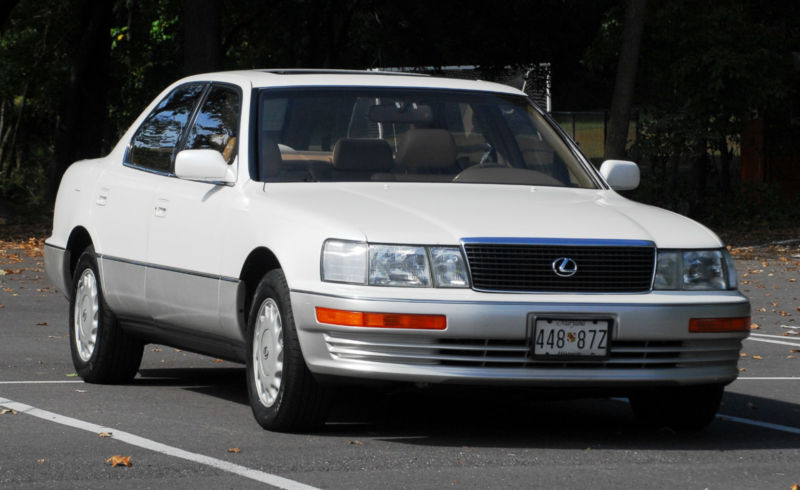
Since so many were made and they were so reliable, a lot of them are still on the road today, but in varying condition. The seller of this example says they acquired it with only 70,000 miles on it and have since put on an additional 20,000, using it as it was intended: a comfortable and dependable daily driver.

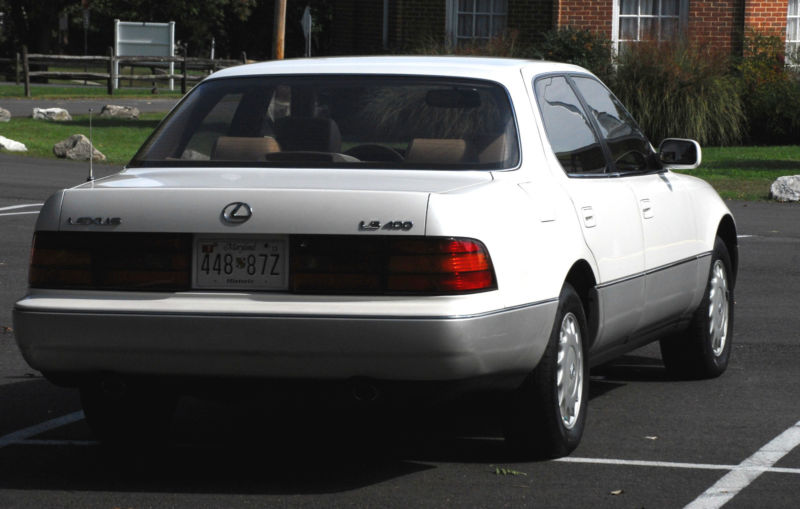
Cosmetically, they say the paint is clean but does have a few chips and a scratch. They say the interior is fine but the seats show some typical wear.

Mechanically, they say they added new front brakes and a new A/C hose. They say the antenna doesn't rise but it still relieves radio waves, and the overdrive light comes on and off, but the transmission and overdrive work fine. Overall, they say everything they know of works. They list the current mileage as 90,652.

This could be a chance to acquire a quality vehicle with relatively low miles at a decent price.


Find it here on ebay in Catonsville, Maryland with a Buy-It-Now of $5,999. The seller has 100% positive feedback.