Showing posts with label 1985. Show all posts

1985 Yamaha QT50


What a qt...get it? This little Yamaha is great for people looking for fun, frugal and low-maintenance transportation in urban areas.

I love (older) cars. But let's face it. Cars suck! Too often they are big, inefficient money pits. One way to get around cars but still get around physically are mopeds.


Yamaha introduced the QT50 in 1979 and ran it until 1992. The '50' denotes a 50cc two-stroke reed valve engine that could propel the moped to a top speed of 30 miles per hour.

The beauty of these is in their extreme simplicity. The drivetrain is weatherproof. The shaft-drive is contained in the single-sided swing arm and eliminates chain maintenance. The drive has a centrifugal clutch but just one gears speed, making wheel changes easy. When operating, the QT50 can average almost 100 miles per gallon.


The seller says this example has just a mere 77 miles and would consider trading it for other motorcycles or fancy watches.

This is a sweet little thing for getting around town, and the low mileage and good condition is pretty unusual.


Available here on craigslist for $1,999.

76k-Mile 1985 Nissan 200SX Notchback


Remember the notchback? This kitschy American styling cue was briefly borrowed by the Japanese in the 80s on cars like the 200SX.

Outside North America, this was called the Silvia and followed a long line of compact rear-wheel drive coupes from Nissan.


In 1984 the S12 generation debuted, featured an all-new small, tightly styled body...and a notchback, along side a more traditional hatchback.

It's classic Rising Sun 80s, all hard angles, straight lines, off-center front logo, hidden headlights, and huge red plastic taillights. Americans are fond of this design because it was when Japanese cars were making their first impressions on us, and those impressions were mostly good. These cars were decent looking, handled well, sipped gas and were affordable. They were the perfect answer in between American and German cars.


Power could have come from either 4 or 6 cylinders, and this is the 4-cylinder option. Thankfully, it's mated to a 5-speed stick for optimal performance and efficiency.

The interior looks remarkably clean and tidy for the age, and is a yuppie nerd's dream, outfitted with what the seller calls the optional Digital Package Upgrade, a fantastic period accessory that gives the full effect. The odometer reads just 76,039 miles and the seller says it's a one-owner car that runs great, was meticulously owned, garaged, never smoked in, never in an accident and has a title ready.


Finding one in this condition is getting extremely difficult, as most are rusted out, parted out or slammed into ground by now.

These don't get much respect on the fancier corners of the web, but Japanese cars of the 80s and 90s are the hot new classics, and this is a remarkable survivor.

Available here on ebay for $6,300 or the Make Offer option.

1985 TVR Tasmin 280i


Although I typically try to steer clear of the "little British roadster" so cliched and overexposed in the classic auto world, this TVR is shunned enough by purists that it's right at home on COTC.

British cars had a hard time in the late 70s and early 80s, especially in markets outside the UK. They shed the legendary sexy curves of the 50s and 60s in favor of hard angles that the Germans and Japanese were so good at. But unlike German and Japanese engineering, British cars weren't known for ergonomics or efficiency. They also rusted faster than the speed of light.


The Tasmin showed up in 1980 looking like Giugario took the weekend off and gave styling duties to his son or brother. You'd think it would be hard to screw up the wedge, but here TVR go and do it, making it awkward, derivative and cheap, especially with those parts-bin taillights last seen on the 70s Lotus lineup. This one takes things further with chintzy gold paint and even golder BBS knock-off wheels.


Inside is that stack-of-boxes dashboard, infuriatingly made worse with a wood steering wheel and shift knob (never understood why those appear on supposedly sporty cars - aren't they slipper and make you lose grip?).

Fortunately, some relief comes from under the hood, a 2.8-liter Ford Cologne V6 good for about 160 horsepower to the rear wheels.


This one has obviously been lucky enough to have an adoring owner, who imported it themselves from the UK to the US in 2011. They state it has no catalytic converter or engine-strangling emissions equipment, keeping power intact. The seller says it's in better than daily driver condition. It's not everybody's cup of English tea, but it seems like a well kept example of a quirky chapter in TVR history, sandwiched inbetween their sumptuous 60s and 90s-00s cars.

By the way, as I'mm writing this I'm listening to this sweet song called "Maybe Tonight" by Lovelock which totally seems like it would be playing from this thing's stereo system.

Available here on ebay.

1985 Mercedes-Benz 280SE Euro


The W126 is one of those rare cars that was better than both its predecessor and successors, crystalizing it in time as a pinnacle of achievement. It debuted in 1979 and was more aerodynamic, efficient, spacious and faster than the outgoing W116.


The brilliant styling was courtesy of genius Bruno Sacco and was the first all-new design to emerge after his ascension to head of styling at Daimler-Benz in 1975. He took everything that was good about the W116 and made it better. This standard wheelbase SE trim means slightly better handling and lower weight than the SEL long wheelbases.


Unfortunately, Sacco's new integrated bumper design had to be extended on US-bound models to comply with the DOT, but this Euro-spec example mercifully has the original pieces that transform the proportions and look of the car. It's a sight to behold for discerning eye, especially auto fans here so used to the other inferior bumpers we got.


Another cool feature of Euro-spec cars are their interiors, like this one with rare cloth seats that weren't an option in the US. I actually prefer leather, but these sure do look comfy. The rest is classic Mercedes-Benz, which means utter perfection: high-quality plastics, easy-to-read and operate controls and gauges, and a delightful oversized steering wheel.


Another thing we never got is what lies under the hood: the M110.989 version of a 2.8-liter inline 6-cylinder engine that produced a competent 185 horsepower. The 6-cylinder is a sweet spot for these, especially in short wheel base form. It's one of the best engines Mercedes ever put out, and will provide power, economy and reliability if routinely maintained.

The seller says it was imported when new, and has a federalized gauge cluster. It now has about 110k miles. They say it's in good shape, including the paint, except for a corner that was resprayed, but it's been garaged during their ownership. It certainly looks sharp, and could easily go for another 100K miles of comfortable, state-of-the-art cruising. It's a lot of car for the price.

Available here on craigslist for $3,800.

1985 Subaru XT


I love the XT! This was one of the most progressive Japanese cars of the past 30 years. Collectors have taken notice too, especially after Subaru restored one for their museum. Fortunately, they remain  on the low, and can be had for dirt cheap.

It debuted in 1984 as Subaru's bold entry into the increasingly hot entry-level two seater market. The styling continues to mystify me with its sharp angles, lines, creases, and wedge shape that tapers both horizontally and vertically, like some sort of retro future escape pod from a larger pyramidal spaceship.


It was one of those weird times when limited technology resulted in features like pop-up headlights that actually enhanced a vehicles overall design, as it does rather bizarrely but nonetheless successfully with the XT. The front bumper mold below the lights transitions into a belt line that wraps all the way around the car and then segues into the thin taillights strip. It's consistent, harmonious, striking and uniform.

The quirk factor is pushed off the charts with an archaic luggage rack mounted to the trunk lid, really emphasizing the mod-primordial aura about the whole thing.


Inside is equally intriguing. Supposedly Subaru was inspired by jet fighter cockpits. They wouldn't be the first automaker, but it resulted in an asymmetrical steering wheel, instrument cluster that adjusted with the steering wheel, stalk-pods that housed vital switches and buttons, and a joystick-like shifter that looks straight out of Top Gun arcade console. The blue cloth is a classic contrast with white exterior paint and has held up well.

Early XT were slightly underpowered, with either a naturally aspirated 4-cylinder or turbocharged version. Even with the turbo it put out a paltry 112 horsepower. You can bet both were good on gas, though. This is one such version, and it also lacks Subaru's trademark all-wheel drive.


A 6-cylinder XT6 came along in 1988 and rectified most issues. Then, it was superseded by the SVX, which, while perhaps equally stylish, was larger, heavier and altogether different.

Given the polarizing looks and relatively fun to drive nature, most of these were trashed and then sold for scrap at the local metal yard. Although this is a base model, it's in clean and good condition enough to look at. There really wasn't and still isn't anything else quite like it.

Available here on ebay.

1985 BMW 323i Euro V8 Swap Project


Ah the E30. Perhaps the definitive new classic BMW. It's modern enough to still hold it's own among todays cars, but wears sheet metal and features design touches that are nowhere to be found anymore.

The 318i was a poker. But the 325i was a peppy little thing. This here, however, blows both out of the  water with a V8 pulled from a '94 E34.


Ok, for starters the seller has a Euro-spec 323i. The 323 was never offered here and without US emissions was slightly more engaging than our 325. It also wears sleek mini-chrome bumpers that we never got, although we did get the universal short plastic bumpers that came in '89. These are more auto-classico looking, though. The french yellow high beams finish things (although it was later scientifically proven yellow light does not improve vision in fog).

It's obviously in rough shape. There's body damage, the paint is poor and the interior is a mess. But the black sport seats and M steering wheel are pluses.


The seller says the body is rust free and the V8 engine and and trans worked good in the E34 they came from. However, there are a bunch of mechanical things left to do, and then the thing needs a thorough cleaning at at least a repaint.

I rarely post project cars due to their unfeasibility but this seems so uncomfortably in transition that somebody with a garage, time and money should finish it themselves, re-name it a 330i and drive the hell out of it (not to mention confuse the local bimmerheads).

Available here on craigslist for $4,500.

1985 Ford E250 Super Club XLT Diesel


When's the last time you saw one of these? Vans are missing widespread collector appreciation because so many were used for utilitarian purposes and run into the ground. But when a clean one comes up on the market it sure reminds you how bold and fun and (sometimes) colorful they were, like this one.

Some post-war work vans were rear-engined like the Volkswagen Vanagon and even America's own Corvair Van. But after the rear-engine fling of the 60s and 70s, manufacturers switched over to front-engine, impractically squeezing in large workhorse engines into the snub-nosed front of these new vans designs.


In the long run perhaps it was for the better. The front-engine configuration made most sense on vans, so that the entire rest of the body could be devoted to space. In this case, it's for passengers and their luggage.

The orange and creme two-tone color is bright and retro and it's amazing to see the brushed aluminum hubcaps still intact. Roof gear adds to the rugged, outdoorsy look.


The interior screams of "in the empire" America: long, flat planes, rectangular shapes and fake wood trim. But man, those seats sure do look cozy.

In back are two more rows of seats. Bring the whole family!


It's also got an 8 cylinder diesel engine powering the rear-wheels. Does it drift? All kidding aside, this will be expensive to operate energy-wise whichever way you splice it (unless you go bio), but I'd still rather have the oil-burner than a petrol guzzler.

Here's the thing. What is the entry price to seating 8 adults in a new vehicle today. At least $30k-$40k, right? And those aren't even diesels. This beast can be had for just under $4k.

Available here on ebay

In the Family: 1985 Chevrolet Impala


Remember these? There was once a time when the Chevrolet rear wheel drive b-body sedans were ubiquitous as police cars, cabbies, and your elderly neighbor's ride during the 80s and early 90s.


Chevrolet introduced this generation Impala in 1976. It was smaller and slightly more efficient than it's gargantuan predecessor of the excessive early 70s. Perhaps most noticeably, it looked a lot better. By no means a beautiful car, it's instead a exercise in clean, simple hard angles. It's tough and no-nonsense looking.


The b-body Impala lasted until 1985 - making this a final year car. Chevrolet then used the Caprice name from 1986 until a major redesign in 1991. The Impala name wasn't resurrected until the 2000 model year.

The seller says this one has been in the family since new and has logged 136,000 miles. Mechanically, they say it has new brakes, new gas line, exhaust, alternator, battery, timing belt and tires. They don't mention rust or any accidents, which are things to look for. They do say it is their daily driver but they need a truck or van now and are willing to trade for one.


Fortunately, under the hood is a 5.0-liter 4-barrel carburetor V8 engine. There's nothing like an American V8 rumbling underneath a boxy late 70s design. Put on your aviators, turn on the police scanner and pretend you're on an stakeout.

Available here on craigslist.

1985 Lincoln Mark VII Diesel


I love diesels and I make no effort to hide it. In America, we've been deprived of widespread use of diesel engines in passenger cars for quite a long time (save for the excellent offerings from Mercedes-Benz and Volkswagen of course). In Europe however, diesels are the norm, not the exception.

Since we're facing another fuel and energy crisis (or really just the same one we've always had), diesels are popular again, even though those who know their advantages never stopped loving them over the years. What makes diesels especially interesting despite their own merits of efficiency and reliability is a 21st century twist of converting them to run on biofuel - that's right, vegetable oil and restaurant leftovers.


Biofuel is cheap and inexpensive (though smelly) so interested customers are hunting down old diesel cars like predators. That makes otherwise insignificant cars like this Lincoln Mark VII rather significant again.

Of course, someone like me already finds this car intriguing.

The fuel crisis of 1979 renewed interest in efficient vehicles again, and this time American manufacturers were listening, unlike their woeful incompetence after the first incident in1973. Of course, diesels still didn't take off for one reason or another, but some of the cars they stuck diesels in were amusing to say the least.


Such is the case with this Lincoln. The Mark VII was based on the rear-wheel drive Fox platform. It lasted from 1983-1992. These aren't sports cars, but they are great, comfortable cruisers, and they styling isn't terribly offensive.

Underneath the hood, however, is a real surprise: a BMW inline 6-cylinder turbocharged diesel engine, the same one in the brief 524TD that came and went here. Just how Lincoln struck a deal with BMW is a story still untold, but it's not a bad idea; Ford's diesel experience was limited to trucks, and BMW's diesel was a great engine the fastest of it's day (even with just 115 horsepower). But since the Lincoln is a bigger, heavier car, you really can't expect much power. Still, you can expect overall reliability if you change the oil religiously.


Lincoln only offered the Mark VII diesel from '84-'85, along with a diesel Continental. From that point on, declining gas prices, politics and the general buoyant mood of the times made diesels disappear again.

The seller says they are the third owner, the car was repainted, service up to date and everything works. They state the mileage is 132,048.

I think this is a pretty cool car. It's not an ideal candidate for biofuel, but it could be a "sleeper" if it was...if there can even be a sleeper biofuel car. Either way, it's rare, and this one looks to be well cared for. It could bring some interesting highway miles to come.

Available here on ebay with a Buy-It-Now of $8,700.

1985 Maserati Quattroporte Euro


The Quattroporte was Maserati's attempt to steal the ultimate luxury car crown from Mercedes-Benz in the eighties. It almost worked. The body was designed by none other than the legendary Giugiaro and the engine was an large and powerful V8. The car looked more modern and edgy than anything Mercedes was putting out, too, but was just as luxuriously appointed on the inside.

There were actually two previous generations of Quattroporte before this one debuted in 1979 and continued until 1990, resulting in a mere 2,155 units being produced, making this a rarity. It was conceived after the company's takeover by Alejandro de Tomaso (of the De Tomaso Pantera), and while not a success with that low volume number, did leave an impression in the minds of many, especially after it appeared in movies and on tv shows as the bad guy's ride.


Giugiaro's body is classic, and fits into his impressive portfolio of clean straight lines and hard edges. The thick and sloping c-pillar was no doubt influential and is especially seen on today's cars as they get more and more windswept back and over.

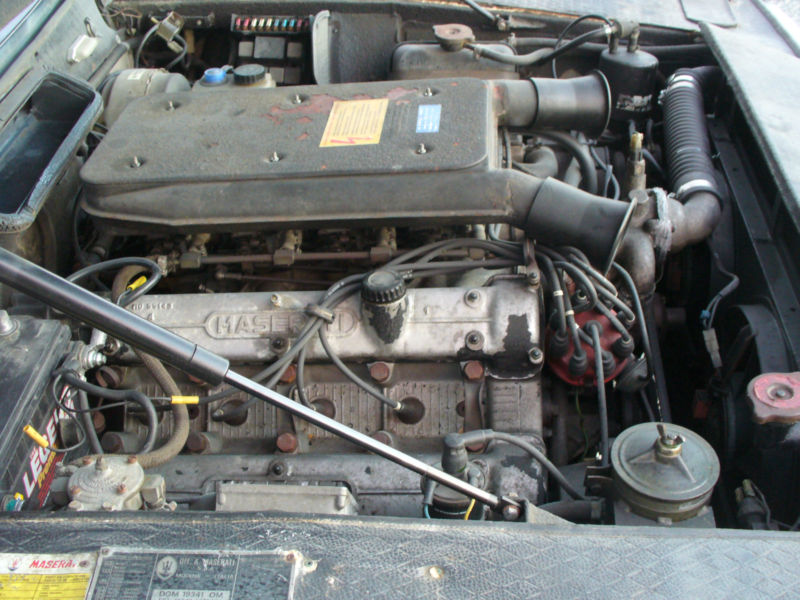
Underneath the hood was either a 4,136 cc V8 producing 238-255 horsepower, or a larger 4,930 unit that produced 280 hp, very healthy for the time and still respectable today.

Adding to this example's rare factor is that it's a Euro-spec version, with shorter and lighter bumpers, headlight washers and other small but good changes.


The seller says the bought it 4 years ago when it had only 32k miles and are now reporting it has 42k. They say it needs some time to warm up but always starts and the Chrysler transmission shifts well. The do mention the blower doesn't fully work, it needs new trunk shocks, and the a/c doesn't work any longer.

Cosmetically, they said it was repainted in the original color but needs weather striping on all the doors.


For the appreciative eye, this is a rare example of a rare car and seems to be overall well kept and enjoyed. With some tlc it could be ready to hit the Italian exotics circuit in no time.

Available here on ebay in Henrico, Virginia with no reserve bidding at $4,173.

1-Owner 1985 Merkur XR4Ti


Merkur was Ford's short-lived import brand from the late '80s. In a rather roundabout way, Ford decided to market their German-made cars in the U.S. market. So we were getting a product made in Germany, owned by a U.S. corporation, intended for the European market, but modified and branded to sell here. Sheesh! Why they couldn't just be honest about it and call it what it was - a Ford - is one of automotive history's minor follies.

Since the brand was discontinued in 1989, it made one wonder whether all the trouble on Ford's behalf was worth it (they even once held press-conference to clarify the pronunciation of "Merkur"...note to marketing executives: if you have trouble saying the name of your brand, the whole brand is in trouble).


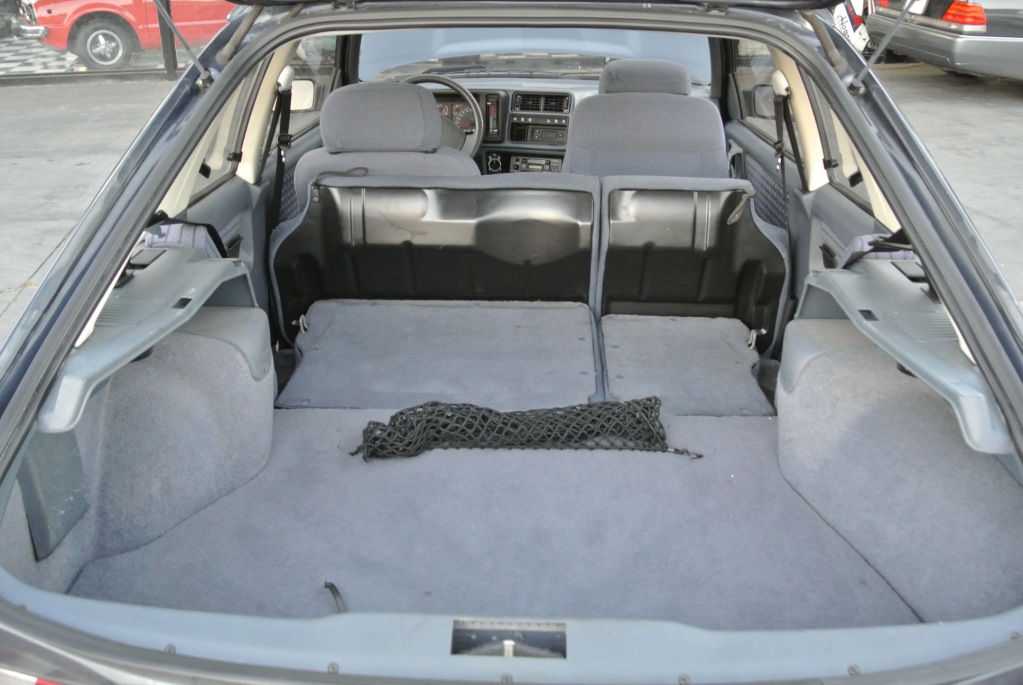
Fortunately, the XR4Ti wasn't half bad. It was based on the European Ford Sierra. A 2.3-litre inline turbocharged 4-cylinder engine sent up to produced up to 175 horsepower to the rear wheels.

Styling-wise, the translation from European economy car to U.S. yuppie-mobile was mostly successful, and at least very memorable. The grille-less front takes getting used to, but the overall shape is nicely proportioned, and the rear quarter window is something rarely, if ever seen on vehicles. The double-decker bi-plane rear spoiler was also-controversial, but when they toned it down for a single level spoiler in the final year or two, the double-decker was somewhat missed. Did it really keep the car weighted down? Who knows. But it was unusual, looked good, and harkened to the car's distant rally cousins in Europe.


Inside, things work relatively well too. The dashboard is un-pretentious and deliciously bland, and is more '80s American than '80s European, but has held up well, mainly due to the fact it's wholly more functional, ergonomic and aesthetically pleasing than American interiors of the '70s. This one looks totally fresh in light grey bolstered leather seats.

The seller states the vehicle has only one previous owner that accumulated just 94k miles on the car. Finding a low mileage Merkur isn't difficult. 42,464 were made, and they have a cult-following here, so most owners are trying keep them preserved. The rest of them are junked, trashed, and abandoned.


There is no real value in the XR4Ti and nobody expects them to rise, though I am sure they will someday in the distant future. Hemmings estimates the value of an "excellent" example at only $3,000. They are a relic of the '80s that failed not because they were a bad machine, but because they were marketed poorly by humans.

Available here on ebay in El Cajon, California for $4,999 and the Make Offer option.

No Reserve 1985 Volkswagen Scirocco


If there are any classic front-wheel drive cars, the Scirocco must be one of them.

After Volkswagen launched the K70 it was clear they were intent on heading away from their air-cooled rear-engine glory days of the Beetle and Karman Ghia and into a new era of water-cooled, front-engine front-wheel drive cars. To soften the blow, they managed to clothe the setup with some nice sheet-metal thanks to Giorgetto Giugiaro, who penned the Golf and Mark I Scirocco.

In 1982, Volkswagen launched a second version of the Scirocco. Although it was based on the same platform, the body was entirely different, more stark, low, lean and angular.


This kind of simple two-box shape has been erased from the market, despite being so visually and functionally successful. It's form over function, and yet it's undeniably fun and sporty. Just how do some simple angles and clean lines evoke so much? It's a powerful reminder that less is more in car design, something totally lost on virtually all of the major automakers today.

Underneath the hood is a small four-cylinder engine. It's not big and powerful, but it's mated to a stick and you can bet it feels fun driving along looking out from the cockpit.


The seller of this example says they purchased it from the original petite female owner and that it has only 118,000 kilometers, which is only about 73k miles. They say it was a short distance commuter car and was not driven in the winters. Inside, they say it is spotless and all gauges and instruments work. On the outside, they say the paint still shines well, but there is some surface rust. Mechanically, they say it starts, runs, shifts, and stops fine.

Volkswagen sold nearly 300,000 MK II Scirocco but they have seemingly vanished from US roads, as their original owners usually drove them into the ground and they often succumbed to rust. Finding a good clean example of the MKI generation is extremely difficult and the second generation is getting harder too.

Available here on ebay in Ontario, Canada with bidding starting at $2,000 and no reserve.

Hibernating 1985 Subaru XT AWD Turbo


The XT is a hot up and coming classic. Low production numbers, two-doors, all-wheel drive, turbocharging and styling that can only be described as nothing less than avant garde. This particular example is in common shape of for an up and coming classic: dramatically stashed in the middle of the woods somewhere, just waiting for an new appreciate owner to rescue and rehabilitate it.

Subaru only produced these from 1985-1991, and the turbo models only until 1988, making them even more rare. These had just 112 horsepower, so they didn't win any drag races but they made up for it with the turbo boost and all-wheel traction. The AWD system was part-time and activated by a push-button on top of the shifter. Talk about choices. Feel unsafe? Did it just start raining? Are you anticipating a storm? Could that be black ice ahead? Just press the button and engine power is diverted to the rear wheels too.


These cars look great in light colors that show off the classic 1980s wedge shape. Note the hidden headlights and slim rear taillight strip that give it an undercover, stealthy look and feel. The greenhouse glass is plentiful and the pillars are slim to give occupants superior vision in and out, which was inspired by the feel of a fighter jet cockpit.

The seller of this example says it has low compression and needs turbo work. Cosmetically, it is clearly dilapidated, which faded paint, rust, dings and dents. This will need a full on restoration. Fortunately, the seller says it still runs and they have a clear title.

The grand price of admission into the new classic car club? A mere $400.

Available here on craigslist in Denver, Colorado.

1985 Volvo 740 GLE Turbodiesel Wagon


If you thought old Volvo cars were durable enough already, this ultra-rare diesel version takes that notion to new heights.

After the fuel crises of the 1970s, automakers scrambled to present consumers with fuel-efficient alternatives. One solution European automakers brought to the table was diesel power, which doesn't require spark plugs and lasts longer than gasoline engines thanks to their inherent construction and the nature of diesel fuel.


As the economy stabilized and gas prices came down diesel was no longer all the rage by the mid 80s but some automakers were still making odd contributions, like the BMW 524TD, the Cadillac Seville diesel, and the infamous Lincoln Continental diesel, which used the same engine as the BMW 524.

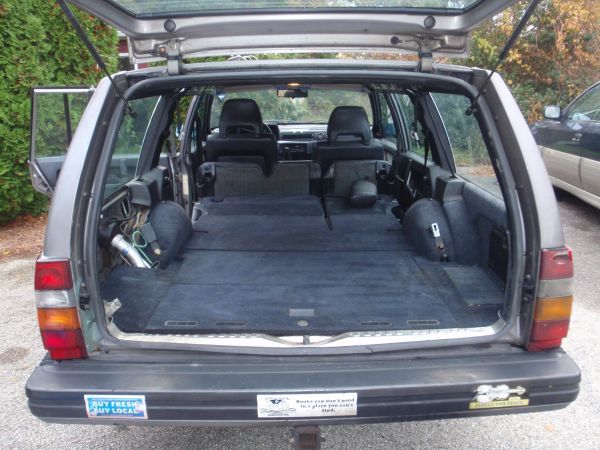
Volvo chose to briefly put a diesel in their 740 body. The 740, of course, was already well on its way to becoming a middle class yuppie classic of suburban America, a masterstroke of form-over-function utilitarianism that was infinitely usable and strangely stylish in the most muted and anti-stylish way possible.


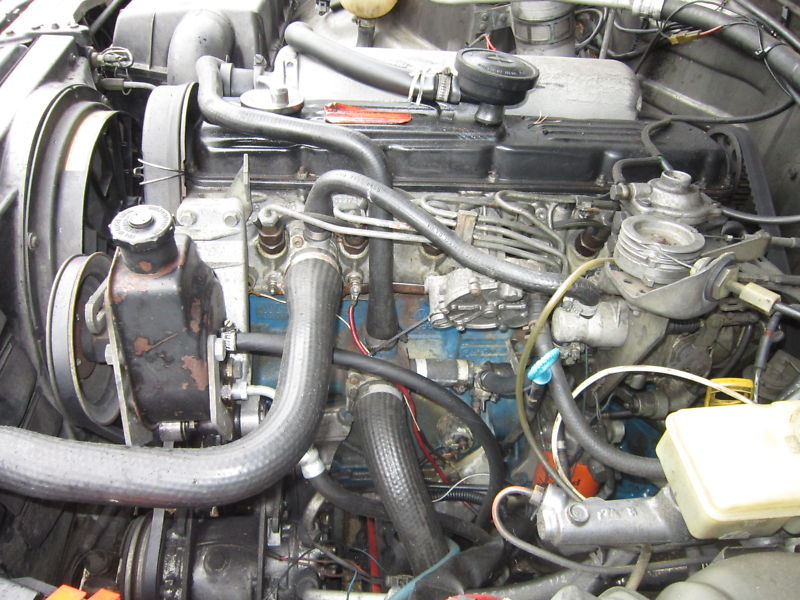
The diesel engine was actually sourced from Volkswagen and was used primarily in their trucks. Most Volvos were four cylinders, and most diesels were five cylinders, so this relatively large 6-cylinder turbocharged engine must provide a healthy boost. Refined? No. But these rear-wheel drive cars were surprisingly fun already, so the extra torque will go a long way.

The seller says this example runs and drives, and the engine was rebuilt in 2005 and now was about 151k miles, still low for a diesel. They do say the radiator leaks some fluid, however. Cosmetically, it has a bunch of visible damage to the rear, sides and corner. But there's something kind of rugged about it. The flat planes and boxy shape handle dents well, dare I say.


This thing seems ready to go, but I would like to see it end up with a diehard collector who can remedy the cosmetic needs and give it some real love. I have no idea how many were made and sold, but it couldn't have been much.

Available here on ebay in Nashua, New Hampshire with bidding starting at $2,600 and a Buy-It-Now of $2,999.