Showing posts with label swedish. Show all posts
1972 Volvo 142E
How things have changed! Volvo abandoned their trademark boxy styling with their S60 sedan, but they had long abandoned rear-wheel drive before that. This 142 is from Volvo's late 20th century glory days when their cars were both boxy and RWD.
The 140 series debuted in 1966 and was basically the car that helped put Volvo on the map, and in middle class garages around the Western world. The 140 was available as a 2-door, 4-door sedan or 4-door wagon.
The design is a slice of heaven. The 1970s were a terrible time for auto design in the United States, but it was a great period in Europe, setting the template for the next two decades. The key is functionality. The stylists understood that good design follows function. As such, the Volvo is simple, clean and handsome with a high waistline, huge greenhouse and long front and rear decks for ample engine and storage space.
Power came from a 2.0-liter 4-cylinder engine. Like a lot of engines from the 1970s, it won't be fast, but should offer decent economy. This one is strangled with an automatic transmission, but a stick shift swap is always a possibility for the talent and time-inclined.
The exterior looks charming in flat green and the interior seems remarkably well-preserved. The seller says it was 121k miles and they drive it regularly so it hasn't sat. I do see some rust near the rear wheel well, so be sure to look into that.
Otherwise, these 2-door versions are sweet deals and great alternative to the pricier BMW 2002, which are a similar idea.
Available here on ebay for $5,999 or the Make Offer option.
1970 Volvo 164
The 164 was a slightly upscale version of the 140. The 1966-74 140 was Volvo's breakthrough model, selling over 1.2 million units. Then the 164 came along in 1968. It was Volvo's attempt to compete with Mercedes-Benz, BMW and Jaguar. As the numeric designation suggests, it had '6' cylinders instead of the 140's '4'.
Although sharing many parts with the 140, the front end was unique, drawing more inspiration from it's predecessor, the Amazon. It's tasteful looking without being too stodgy. The rest of the body is classic 1960s/70s European sedan, with a high waistline and overall bathtub shape inspired no doubt by the NSU 110, itself inspired by the first generation Corvair. White is a very flattering color, too, giving it a clean, bright, appliance-like vibe that suits the functionalism on display.
The interior is this incredible breath of fresh air from today's claustrophobic, over-designed interiors. The dashboard is essentially a single rectangular strip of faux-wood and simple gauges. The pre-airbag steering wheel is especially charming. It looks good. Part of the beauty of simplicity is that there is simply less to go wrong.
For those who complain the 140 is underpowered, the 240's inline 6-cylinder is the perfect antidote. It's a moderately heavy car, but the engine was able to kick out 160 horsepower to the rear wheels, and it managed to be more efficient than some competitors. This one has the column-mounted 3-speed Borg Warner automatic, but it'll be good for cruising easily with friends.
The seller says this survivor is an original daily driver, has no rust and runs strong. If you're looking for a sweet retro people carrier for short to medium trips, this is a pretty nice piece.
Available here on craigslist for $2,800.
1988 Saab 9000 Turbo
Coming from the pre-GM glory days of Saab is this early 9000 Turbo. The 9000 was one of the best cars Saab ever offered. While it shared a platform with Alfa Romeo and Lancia, the body was a totally new design by none other than the legendary Giugiaro. You can easily identify his trademark clean planes, crisp lines and sharp angles, especially in the brilliant glass-canopied rear hatchback.
This one is supplemented by what looks like a factory body kit from the era which added front, side and rear skirts, as well as plastic trim around the rear plate that mimicked the taillights but has since unfortunately sun faded (replacements are out there or it could easily be matched with the body or matte black). It's certainly lesser seen and rather interesting, giving this 9000 a alternate look to stand out from the other scraggly survivors left out there.
Inside occupants are made to feel like Swedish royalty, with enormous leather seats, headrests you can actually rest your head on and clear, thoughtful switches, buttons and gauges.
Underneath the hood is Saab's venerable 16-valve 4-cylinder turbocharged engine. Unfortunately it's mated to an automatic transmission. A stick will make it feel lively and even fun, an auto not so much and they weren't very reliable, either.
It would be neat to swap in a 5-speed and give it an eighties racing livery like the one below. The ground effects would have been the hardest parts to source, so with that out of the way just leaves a talented and well-planned paint job, new tires, different rims and lowered suspension. The seller says this has no rust, so it's a great piece to start with.
Available here on craigslist for $3,995.
1995 Volvo 850 T-5R
The blow of Volvo's big switch over to front-wheel drive was lessened when they introduced a high-performance version of their venerable 850 model called the T-5R.
For starters, the 850 is THE Volvo of the 90s. Conservatively styled, still boxy, reliable and somewhat sporty, it pleased many a soccer moms and dads in American suburbs. A bunch were sold, passed down to their kids, then driven into the ground. They aren't as revered as the 240, but they certainly carried out their duties just as stoically.
Sensing a need for speed though, Volvo partnered with Porsche to create the limited production T-5R. Only 5,500 were made, and this is one of just 185 that were cream yellow. It's a bright color but it fits the car's attitude. T-5R were also fitted with Pirelli tires hugging 17 inch smoked alloys, front bumper lip, side skirts, rear spoiler, and polished aluminum door sills.
Inside, occupants were treated to a pumped up version of the ergonomic 850 interior, with graphite leather and alcantara seats and walnut wood grain accents.
Perhaps most importantly was what hid underneath the hood, a turbocharged 2.3-liter inline 5-cylinder engine that had psi boosted thanks to a special ECU resulting in a total of 243 horsepower and capable of launching from 0-60 mph in under 6 seconds. That's impressive stuff.
Even more impressive is this survivor, with a healthy 145k on the clock, 1 previous owner besides the current seller/dealer and and no accidents. The turbo engine needs extra care, so maintenance history is key, but knowing it has a pretty simple past with no known major crashes is great. This looks like a well-kept, stock example of a rare and special Volvo.
Available here on ebay for $9,495 and the Make Offer option.
1989 Saab 9000 CD Turbo
Saab still exists, but their bankruptcy dealt the company and its loyal customers a huge blow and they may never be the same again. Now, Saab's history is divided into three phases: pre-GM, GM, and post-GM. This is one of their pre-GM cars.
The 9000 was a great car for Saab and it came at just the right time. They had been garnering praise from critics and consumers alike for their sporty, practical and yes, that annoying word always used when describing Saab - quirky - 900 series cars. Sure, they were front-wheel drive and only utilized 4-cylinders but they were extremely well built and fun to drive. So, while things still looked up, Trollhattan made a natural move: launch a new, bigger car, not to replace, but to compliment the 900.
The styling was a joint effort by two geniuses: Bjorn Envall and Giorgetto Giugiaro. Together, they created a shape that was modern, simple, likable and still uniquely Saab. COTC particularly likes the pre-1991 facelift models which are true to the original vision of the designers. This one looks exceptionally cool in black with BBS-style crosspoke rims, and flush fog lamps.
The mechanicals weren't entirely unique, however. The platform was shared among several European automakers and was also used for the Alfa Romeo 164 and Lancia Thema. Still, that's not bad company. It turned out fine, and it fit the car's character perfectly. The 9000 did everything the 900 did, but better. It was larger, wider, and roomier. It handled well and was a smooth, refined cruiser. It was also a sales success.
The 9000 was available in a bunch of trims and engines. One interesting addition was the "CD" in 1988 which hacked away the versatile hatchback and replaced it with a conventional trunk. Sure, it may be counter-intuitive, but the body took the new shape really well, looking very adult and business-like, and the rarity of the model alone makes it noteworthy. And, the classy grey felt-lined trunk is STILL enormous. Angular, defined trunk decks are disappearing today in favor of fastbacks.
Inside, occupants are treated to one of the best interiors of all time by any manufacturer. Saab's experience in building airplanes translated into clear, ergonomic, driver-oriented gauges and dashboards. Information glows green, needles are orange and only emergency lights are yellow or red. It also helped those seats were damn comfortable.
For power, this 9000 has a water-cooled, turbocharged, double overhead camshaft, 16-valve inline 4-cylinder engine good for a healthy 175 horsepower. Later cars were either downgraded with a non-turbo engine or upgraded with a V6, but we like the original turbo 4 for its blend of thrift and speed.
The seller of this example says it's just a two-owner vehicle with 154k miles. That's nothing on these. Most that have been regularly used since new have over 500k by now. These were built for the long haul, provided they didn't rust first or have the faulty automatic transmissions, which this mercifully doesn't.
This really deserves a good home. The brand has been irreversibly altered, and the older pre-GM models are slowly getting their due, if there any are left at all. Still, you know the ones that already departed most likely did their service honorably.
Available here on craigslist for $2,950.
The Last Saab: 2011 9-5 Aero XWD
Saab is notorious for giving their cars initial designs that were well-executed and conservative enough so that they aged well and didn't need replacing for a decade. The first generation 9-5 replaced the 9000 in 1997, itself dating back to 1986. Both the 9000 and the 9-5 shared European GM front-wheel drive platforms. It was nothing special but got the job done. The 9-5 came at a good time in the mid 90s when the company needed a new car. It came with a sleek all-new body and interior. It was big, comfortable and reliable. These were favorites of middle class New England suburbs and sold in respectable numbers.
Unfortunately Saab (or GM, as nobody really knows who was calling the shots at that point) waited too long to replace the first generation 9-5. It fell above Volkswagen but far below Mercedes-Benz and BMW and somewhere even with Volvo, so it occupied a weird position in the market as a luxurious car with the front-wheel drive and therefore needed extra appeal and marketing to stand out. It received neither, and even after several decent facelifts, gradually just faded to the side as an automotive dinosaur. It was shameful.
In 2010, a new 9-5 did finally arrive. Saab had already tried to stage a comeback with an all-new 9-3, but that was an utter failure as the car was a poorly made and unreliable rebadged Euro GM front-wheel four-banger. It didn't stand a chance against anything Germany or Japan were offering, and it wasn't even better than an Accord or Camry. The new 9-5 was a chance to hit the reset button.
At first things looked promising. For starters, the car came in a super smooth, almost sexy body. It hinted at the brand's heritage while moving into the future. It's simple, clean and well-executed. The blackened a-pillars are cool, and the rear-tailights finish the car on a satisfying note. They also came with nifty alloy wheels that resembled fans. (always a good detail on Saabs).
Inside was one of Saab's best interiors yet, which is saying a lot since they always had good interiors. Saab had made aircraft before cars and designed the car dashboards to resemble the highly functional, user-friendly, wrap-around cockpits of a jet fighter. The result was iconic. Numerals were green, needles orange, and every button, switch and knob was artfully formed to be both easy to use and pleasing to touch. The 2nd gen 9-5 took things to a new level, with beautifully carved shapes, silver accents and artful layouts.
Underneath the hood was even more impressive. Although the previous 9-5 was never really underpowered, it wasn't exactly a hot-rod, either. Saab clearly intended to change that with the 2nd generation. This is the top of the line aero model and comes with a turbocharged 6-cylinder engine that produced 300 horsepower. As icing on top, it was matched with Saab's burgeoning system of all-wheel drive called "XWD". Frankly, I always thought it was ridiculous that Saab never offered all-wheel traction earlier on, seeing it was a Swedish carmaker and they sold so many in the snowy Northeast. But for a moment at least, the 9-5 Aero XWD was a really impressive package, for a Saab at least.
All the momentum was crushed however when Saab's financial troubles climaxed in 2010. The 2nd generation 9-5 barely got out of the gates before production ended in 2011, with just 11,280 units made, making this one of the rarest production Saabs in recent memory. The company has gone through bunch of corporate shifting from then until fall 2013, when it appears it will continue some limited production under the National Electric Vehicle Sweden (Nevs), but who really knows what will happen.
The last 9-5 is an impressive car. The platform and engines were widely used in Europe and shouldn't be too difficult to get parts. Servicing might just have to be done at a specialist, Pep Boys or your garage, though. The one positive fallout is that resale values have plummeted, so what was normally a $35k-$45k car can now be had for less than $25k.
Find this one available here for $22,895.
Clean Bargain 1986 Saab 9000 Turbo
With Saab gone, there's never been a better time to reflect on their contributions to the auto industry over the second half of the 20th century. One of the best was their full-size top of the line 9000 hatchback and sedan.
The bigger sibling to the 900, the 9000 actually came later in 1984 as a way to bring in more buyers to the small Swedish brand. It worked. The 9000 took all the things that made the 900 great - space, styling, versatility and turbo power - and did it better. Over 500,000 units were produced until 1998.
The body by Bjorn Envall and Giorgio Giugiaro is an unrecognized classic. Using the Type Four platform that several automakers agreed to share at the time to reduce costs, the designers created a simple but handsome shape that is ever so slightly more conventional than the 900 but makes up for it in bounds more maturity and class, while still being uniquely Saab. We like the early pre-facelift versions for their rarity, cleaner lines, blackened rear pillars and larger hatch glass.
Although the front-wheel drive platform was disappointing when it was selected for the Alfa Romeo 164, it makes complete sense with the 9000. Saab was never a performance-oriented brand and had always employed front-wheel drive. They were not at the level of the German cars, and yet they had much more character than American or Japanese cars. Underneath the hood of this example is a 2.0-liter 4-cylinder turbocharged engine that produced about 130 horsepower. This one also has a 5-speed stick.
Saab has always done interiors well and the 9000 is no exception; in fact, it's one of their best. The wrap-around dashboard cloaked in black is as aesthetically pleasing as it is functional, with all gauges and readouts crystal clear, simple and easy to use. I remember reading that the dials and buttons were also designed to be usable with gloves on when those frigid Scandinavian winters hit. We also love the pre-airbag three-spoke steering wheel.
This example is the cleanest we've seen in a long time. The seller says it's in excellent condition, runs great and everything works. They say the miles are low but don't provide the actual number. From the photos the body looks remarkably clean and straight. The subtle burgundy paint with a hint of pink-purple is also very flattering to the shape, and is a color nobody has done right since. The alloy centers seem dull but can easily be refinished or just re-painted in spray can silver.
With four doors, big cozy seats, plenty of room in front and back, a huge rear hatchback and turbo power, this is one of those seemingly rare cars that is both fun to drive and extremely useful. The build quality on these old Saabs was also rare in that the doors shut with a satisfying heavy clunk. It's too bad the door was shut on the whole company, but cars like this 9000 are positive reminders of their better days.
Available here on craigslist in Inland Empire, California for a mere $1,700.
1984 Volvo 760 GLE Turbo Diesel
If you thought old Volvo cars were durable enough already, this ultra-rare diesel version takes that notion to new heights.
After the fuel crises of the 1970s, automakers scrambled to present consumers with fuel-efficient alternatives. One solution European automakers brought to the table was diesel power, which doesn't require spark plugs and lasts longer than gasoline engines thanks to their inherent construction and the nature of diesel fuel.
As the economy stabilized and gas prices came down diesel was no longer all the rage by the mid 80s but some automakers were still making odd contributions, like the BMW 524TD, the Cadillac Seville diesel, and the infamous Lincoln Continental diesel, which used the same engine as the BMW 524.
Volvo chose to briefly put a diesel in their 740/760 body. These were, of course, was already well on their way to becoming a middle class yuppie classics of suburban America, a masterstroke of form-over-function utilitarianism that was infinitely usable and strangely stylish in the most muted and anti-stylish way possible.
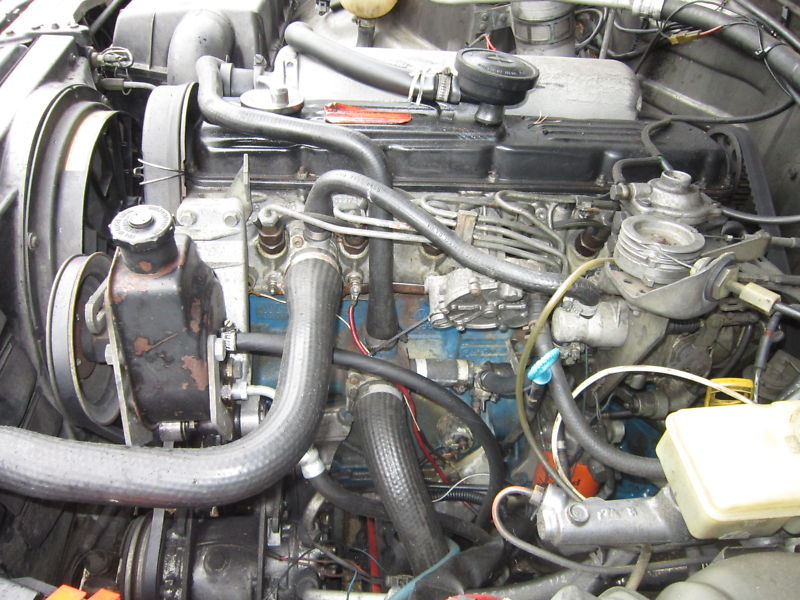
The diesel engine was actually sourced from Volkswagen and was used primarily in their trucks. Most Volvos were four cylinders, and most diesels were five cylinders, so this relatively large 6-cylinder turbocharged engine must provide a healthy boost. Refined? No. But these rear-wheel drive cars were surprisingly fun already, so the extra torque will go a long way.
This example is being sold by someone who says the relatively low 112k miles are original and that the car is in "showroom" condition inside and out. Mechanically, they say it new belts, new tires, new brakes, and new shocks. Cosmetically, they say it has no rust, a huge plus on an old Volvo.
Available here on ebay in Wyoming, Michigan with bidding at $1,025.
1985 Volvo 740 GLE Turbodiesel Wagon
If you thought old Volvo cars were durable enough already, this ultra-rare diesel version takes that notion to new heights.
After the fuel crises of the 1970s, automakers scrambled to present consumers with fuel-efficient alternatives. One solution European automakers brought to the table was diesel power, which doesn't require spark plugs and lasts longer than gasoline engines thanks to their inherent construction and the nature of diesel fuel.
As the economy stabilized and gas prices came down diesel was no longer all the rage by the mid 80s but some automakers were still making odd contributions, like the BMW 524TD, the Cadillac Seville diesel, and the infamous Lincoln Continental diesel, which used the same engine as the BMW 524.
Volvo chose to briefly put a diesel in their 740 body. The 740, of course, was already well on its way to becoming a middle class yuppie classic of suburban America, a masterstroke of form-over-function utilitarianism that was infinitely usable and strangely stylish in the most muted and anti-stylish way possible.
The diesel engine was actually sourced from Volkswagen and was used primarily in their trucks. Most Volvos were four cylinders, and most diesels were five cylinders, so this relatively large 6-cylinder turbocharged engine must provide a healthy boost. Refined? No. But these rear-wheel drive cars were surprisingly fun already, so the extra torque will go a long way.
The seller says this example runs and drives, and the engine was rebuilt in 2005 and now was about 151k miles, still low for a diesel. They do say the radiator leaks some fluid, however. Cosmetically, it has a bunch of visible damage to the rear, sides and corner. But there's something kind of rugged about it. The flat planes and boxy shape handle dents well, dare I say.
This thing seems ready to go, but I would like to see it end up with a diehard collector who can remedy the cosmetic needs and give it some real love. I have no idea how many were made and sold, but it couldn't have been much.
Available here on ebay in Nashua, New Hampshire with bidding starting at $2,600 and a Buy-It-Now of $2,999.
Pre-GM: 32k-Mile 1990 Saab 900 Turbo Convertible
Now that the brand is dead, historians will divide the Saab story into two distinct chapters: pre-General Motors, and everything after. Pre-GM Saabs, of course, are what everyone remembers fondly, and will likely increase in value. The same just can't be said of anything General Motors tampered with.
The 900 is probably the most identifiable and iconic Saab, and lasted from 1978-1993. Although they were simplistic front-wheel drive, the car made up for it in almost every way possible with rock-solid build construction, high quality materials, turbocharged engines, ample interior and trunk space and quirky styling. Almost 1 million were built.
In 1987, the 900 was updated with flush headlamps and smooth integrated bumpers that greatly helped their appearance. These, in my opinion, are the best 900 models and are vastly superior over the previous models. They still look crisp in a manner cars just can't pull off today.
This particular model is the coveted convertible with a turbocharged four-cylinder engine under the hood. It's mated to an automatic transmission, but we're fine with that as these were comfortable boulevard cruisers anyways. Refrigerator white shows off the clean lines and contrasts nicely with the black bumpers and cloth top. Inside, a cozy burgundy leather interior guarantees comfort.
The seller is a dealer and do not underestimate what they have, saying it is "beyond ridiculous" and "unmolested" with original paint and in perfect working order. They say it has no rust, an original rare interior color, and no accidents.
The seller is so confident about this 900, they even post shots of the car from underneath, and it does indeed look remarkably spotless.
Of all the 900 models the convertibles are the most likely to be least driven and in better condition, but this one is the cleanest I've seen yet and the condition and originality are truly inspiring. It's just a shame whoever was the previous owner decided to part with it, but their loss will be a new owner's happy gain.
Dealers usually exaggerate, but they could be right about one thing: there probably isn't another one like this. It could be the lowest mileage Saab 900 convertible in the world.
Available here on ebay in Maywood, New Jersey with 3 days left but bidding already at an astonishing $8,301.
95k-Mile 1985 Volvo 740 GLE Turbo Diesel
I confess. I love diesels. And I love discovering otherwise dull cars from the 80s that were offered (briefly) with diesel engines at one point. The BMW 524TD. The Toyota Camry diesel. Cadillac Seville diesel. Now here comes a Volvo diesel.
The 740 was Volvo's mid-size family sedan from 1982-1992. These were very stoic cars: boxy, upright styling, small engines, but rear-wheel drive and solid-as-a-rock build quality. When their cars were offered with turbos or stick-shifts, they showed surprising signs of life. Needless to say, they have engendered an enormous cult following for a variety of reasons.
In the 1980s, auto manufacturers still had the fuel crises of the 70s in the back of their minds. Diesel engines compress air first then directly inject fuel. Diesel fuel is less volatile than gas and is a better lubricant, making parts work better together and therefore last longer. Diesel engines are typically 20% more efficient than gasoline engines.
Then there are the just plain cool aspects, like a diesel engine theoretically being able to function under water because they are totally mechanical and don't require electronics. Or, similarly, being able to start a diesel engine after a thermonuclear shock wave because the ignition isn't electrically triggered. Talk about dependability. They'll be there for you even in the apocalypse.
Mercedes-Benz mastered the concept of combining diesel reliability and passenger car comfort with a long line of vehicles going back to the first such implementation ever, their 1936 260 D. By the 1980s, their diesel cars were legendary. Coincidentally, diesel fuel was typically less expensive than gasoline. Since the equation of comfort, performance, and reliability was successful for them, a lot of other manufacturers jumped into the fray with varying results, but mostly all unsuccessful in the U.S. At some point it struck Volvo executives as something they must attempt, however.
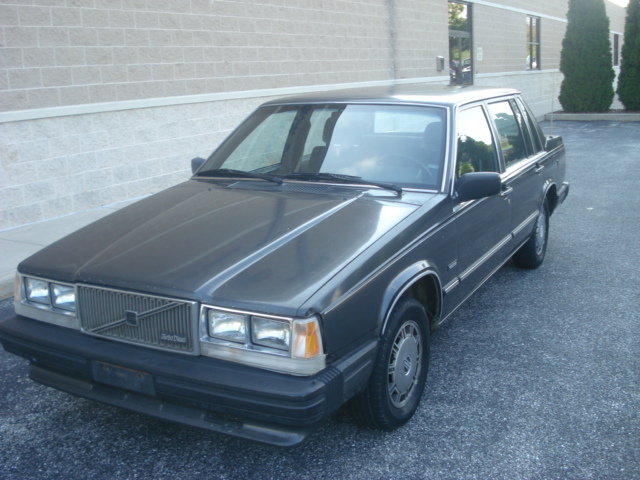
From what I can tell, Volvo only sold the 740 diesel from around 1985-1986. This is an '85 version. On the outside, it's your typical 740, all hard angles and straight lines, and looking even more stern in gunmetal grey metallic paint. The overall car exudes this remarkably harsh and almost oppresssive industrial aura, with the big plastic unpainted 5 mph bumpers, jutting front air dam, sealed-beam quad square headlights and upright rectangular grille. In some ways, the reliable and efficient concept of diesel engines are perfectly befitting of this Volvo's hyper-utilitarian character. It looks like a Mack truck morphed into a sedan.
Volvo body. Big truck diesel engine. Stick shift. How did this all turn out?
According to this excellent blog post on this very same subject, the Volvo 740 Turbo Diesel drove like you'd expect a passenger car with a truck engine to drive: not smooth, refined or clean. However, the author has a 740 TD of their own that has racked up a remarkable 215,000 miles, several engines, turbos and transmissions later and enjoy it thoroughly, on principle and performance. They do note a potential trouble area in the timing belt, which requires a rare tool to fix.
All of which makes this 95k-mile survivor rather remarkable. The seller says they acquired it from an estate sale and it runs, shifts and drives fine. They admit not knowing much about the history, but say it seems well maintained and the sale of the vehicle comes with extra parts and service manuals. This Volvo looks cold, steely and reliable, and with a some love and care, it could easily prove to be just that for many, many more miles. Trust me. Volvo collectors out there are daydreaming about this puppy.
Find it here on ebay in Glen Rock, Pennsylvania with bidding already at $3,050 and no reserve.
California Clean: 74k-mile 1989 Volvo 760 Turbo
This '89 Volvo is being offered in the kind of condition you really only find in California: immaculate inside and out and rust free.
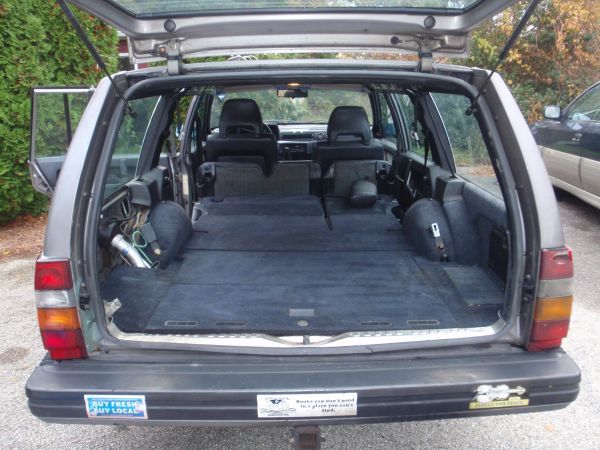
As a child of a middle class New England suburb, Volvo cars were everywhere. Parents and their (very privalaged) children alike drove sedan or wagon variants. But since these were mostly teenagers tooling around, and since New England has some of the most harsh and radical weather of any region in North America, the Volvos I'm used to are extremely beat.
It's examples like these that remind you what nice vehicles they were, especially in muted blue over grey leather.
The 760 was produced from 1982-1992. It was intended to replace the legendary 200-series, but was instead sold right alongside it. These had mostly four-cylinder engines, although a diesel-powered six was available. Styling is courtesy of Jan Wilsgaard and is a classic by now. Hard angles, an upright c-pillar, big clear headlamps and taillights. These helped earn Volvo the reputation as makers of boxy cars. Volvo has completely abandoned this look, so their older designs are gaining more and more favorable attention as time goes on. Hint: people love boxy cars.
The seller seems to imply they are the second owner, having acquired it from the original owner in July 2009 when it had only 64k miles on the clock.
They say they have all original documentation and service records since new, and also say they have done a number of things to the car since they acquired it.
Mechanically, they state the only known problems are a power window and cruise control not working. Cosmetically, they say it has a small crack in the windshield and the grille. Most importantly, there is no rust. Thank you, Southern California.
Find it here on ebay in Los Angeles, California.
Subscribe to:
Posts (Atom)