Showing posts with label ford. Show all posts

1988 Ford Thunderbird Turbo Coupe


Ford ended the legendary Thunderbird nameplate a while ago, having come full-circle with a retro version at the start of the new millennium. Every generation had some appeal, and a lot of people were puzzled and saddened to seed it go. It's like if McDonald's got rid of their Big Mac suddenly one day for no good reason.


Speaking of fast-food, this is a fast ruiser that would totally be rad to go to the drive through with. In 1983, Ford launched an all-new, totally redesigned Thunderbird that finally erased any memories of the bloated barges of the Malaise 70s. The new car was handsome, well-proportioned and perhaps most importantly very aerodynamic, with a drag coefficient of just 0.35.

It mercifully shared the rear-wheel drive Fox platform with the Mustang of the era. This meant a balanced chassis, decent handling and a real shot at taking on the European competition.


In 1987, Ford gave the Thunderbird a refresh which ditched the awful sealed-beam headlights in favor of flush units, shrinked the grille and tweaked the taillights. The thing I really like about this generation Thunderbird is that it aesthetically offers something Europe still couldn't replicate, a mix of muscle and modernity.

There were a bunch of engine options, too. You could get a V6, V8, or a special turbocharged 4-cylinder engine like this one.


Of all the engines, I'd want the turbo 4. The V6 wasn't like today's powerful 6-cylinders and had to move a relatively large and heavy car. The V8 made the car too fuel thirsty and irrelevant, as the similar and better appointed Lincoln Mark VII was essentially the same car. But the 4-cylinder turbo offered everything: decent fuel economy and gobs of power. Ford knew they had a hit and gave the engine a air-to-air intercooler from the SVO Mustang that boosted output to an impressive 190 horsepower.

Other features included 4-wheel disc brakes Automatic Ride Control, functional hood scoops for the intercooler and 16-inch "snowflake" alloy wheels.


These are new classic American muscle cars. The 80s were a mixed decade for the US auto industry, as they had to stave off serious competition from Europe and Japan, but cars like this show they still had interesting things to say. '88 was the best year for the Turbo Coupe, and the last year for this entire generation.

The seller says this example has over 120k miles, and although they say it isn't perfect, it looks clean and well kept enough. The seller also says they have a bunch of spare parts.

Available here on craigslist for $3,000.

4,822-Mile 1988 Merkur XR4Ti


There's a running joke here on COTC about absurdly low mileage cars. Why are they always boring econoboxes? Well, this super-low-mileager is slightly more unusual this time around.

The story of Merkur and the XR4Ti is a convoluted and mostly unpleasant one. Basically, Ford Motor Co. had been running an entirely different show in Europe, selling cars that were smaller, sleeker and more fuel efficient. Europeans may have a tradition of better made cars that do admittedly meet slightly different demands, but that in no way means Americans should want anything less. That's exactly what Ford did though. They often gave us less.


Of course, the plan inevitably backfired, as most corner cutting does. In a bittersweet case of 'free enterprise' and 'competition', Americans did finally get better products - from rivals across the Atlantic and Pacific. Add in a fuel crisis or two and Detroit's Big Three were in Big Trouble. If only they had just sold us the cars they had given Europe that whole time, things may have been entirely different.

Not totally tone-deaf though, Ford thought they'd start to bring over some European models based on the Sierra and Scorpio. But instead of just calling it a Ford, they gave it a name the press instantly mocked and consumers mispronounced, prompting Ford's people to conduct spelling sessions at press releases. Note to marketing boardrooms everywhere: don't sell something you can't pronounce easily.


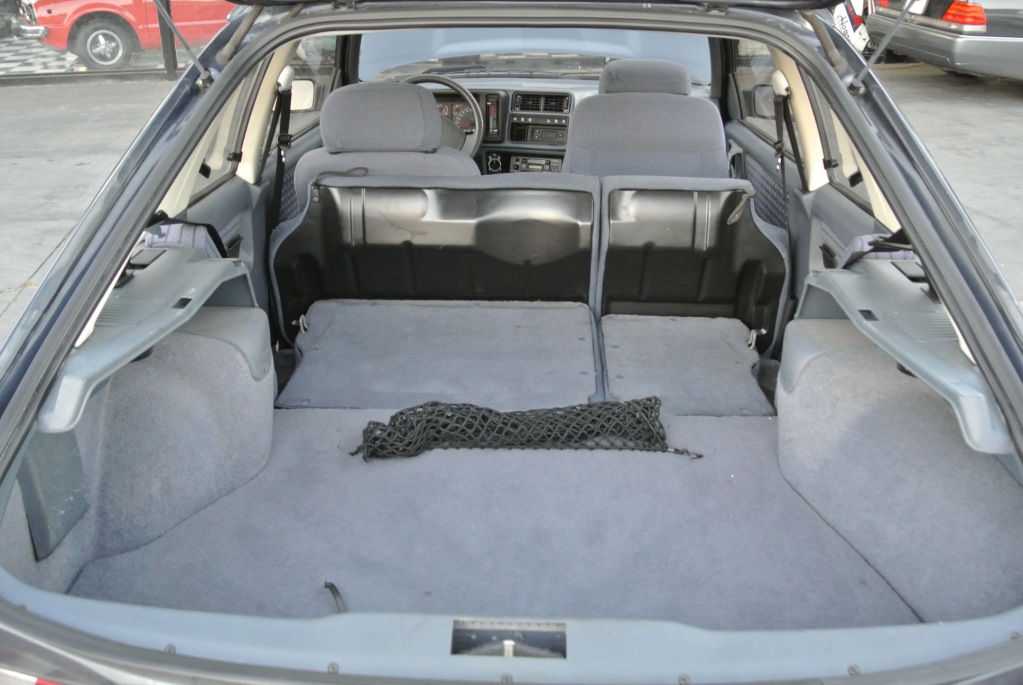
The shame is, botched rollout aside, the cars themselves weren't half bad. The XR4Ti was based on the Sierra and featured a futuristic aerodynamic body, hatchback rear door, turbocharged 4-cylinder power and rear-wheel drive. It wasn't a jet rocket but it offered similar performance to entry level Japanese sports cars of the time. It had no major flaws, and have held up well over time. The XR4Ti was in no way a bad car.

But the damage was already done. Production halted in 1989 with just over 42k examples produced and the brand dissolved, relegated to yet another bizarre chapter in eighties auto history.


The people that did end up with these cars took a liking to them. You could say the Merkur has since developed a cult following. But I have never seen one with this low mileage. Is it for real? The odometer only has 5 digits. The interior and exterior look pretty good, but the undercarriage shows surface rust and wear. The seller says he believes it is accurate.

If you missed the whole Merkur story this could be a rare opportunity to start fresh with a like-new one.

Available here on ebay.

1985 Ford E250 Super Club XLT Diesel


When's the last time you saw one of these? Vans are missing widespread collector appreciation because so many were used for utilitarian purposes and run into the ground. But when a clean one comes up on the market it sure reminds you how bold and fun and (sometimes) colorful they were, like this one.

Some post-war work vans were rear-engined like the Volkswagen Vanagon and even America's own Corvair Van. But after the rear-engine fling of the 60s and 70s, manufacturers switched over to front-engine, impractically squeezing in large workhorse engines into the snub-nosed front of these new vans designs.


In the long run perhaps it was for the better. The front-engine configuration made most sense on vans, so that the entire rest of the body could be devoted to space. In this case, it's for passengers and their luggage.

The orange and creme two-tone color is bright and retro and it's amazing to see the brushed aluminum hubcaps still intact. Roof gear adds to the rugged, outdoorsy look.


The interior screams of "in the empire" America: long, flat planes, rectangular shapes and fake wood trim. But man, those seats sure do look cozy.

In back are two more rows of seats. Bring the whole family!


It's also got an 8 cylinder diesel engine powering the rear-wheels. Does it drift? All kidding aside, this will be expensive to operate energy-wise whichever way you splice it (unless you go bio), but I'd still rather have the oil-burner than a petrol guzzler.

Here's the thing. What is the entry price to seating 8 adults in a new vehicle today. At least $30k-$40k, right? And those aren't even diesels. This beast can be had for just under $4k.

Available here on ebay

22k-Mile 1989 Ford Thunderbird


Thunderbird is one of those priceless, iconic American names that is sadly not being used by Ford at the moment.

Between 1955 and 2005, however, the Thunderbird saw a total of eleven generations, most very different from each other. There was the original classic that gave birth to the concept of a personal luxury coupe, then the equally classic designs of the 60s, then the 70s gave way to big, bloated, very un-sporty designs, until a drastic rebirth in the 80s resulted in a slight reduction in size and great improvement in aerodynamics, aesthetics and efficiency.


This is the 10th generation that debuted in 1988. Ford changed American auto making with their 1986 Taurus, which was sleek and futuristic but practical. The new Thunderbird followed with similar styling cues: large, flat, smooth planes, a nearly grille less front, and a gently sloping rear. It's a big car, but it's styled so well that you don't realize it.

COTC likes these early Thunderbirds for their presence and style, as the later cars got more rounded and jellybean like and thus detracting of the persona going on here. Relive the American Empire days in all their glory.


These were also mercifully rear-wheel drive in a sea of American front-wheel drive cars in the late 80s and 90s. With the subtle styling, rwd and big V8, these could be sleeper drag racers and a nice alternative to the Mustang of the time.

Unfortunately this is just an early V6 version. But what an example it is. The seller claims it has just 22,501 miles and one previous owner. The car's condition is therefore like new. The exterior paint and plastic trim looks like it just rolled out of the factory.


The interior is also looking great. No dash cracks, clean gauges and buttons and immaculate cloth seats.

While not a collector car, it could easily be someone's daily driver or a great first car for a teenager. It's a big, comfortable boulevard and highway cruiser. Sure, the V6 isn't preferable, but it might save you a little bit of gas compared to the V8. This one makes most sense if the price stays under $5k.

Available here on ebay with no reserve.

Perfect Strangers: Porsche and Thunderbird


Last summer I spotted this rusty white 911 sitting at a Shell station in Massachusetts. The attendant said it has been sitting there in need of repairs for a while, but they stayed in touch with the owner. The car itself was complete looking but in poor shape. The clear coat had completely faded and was peeling to reveal surface rust. The interior was a mess. The engine is probably even worse. But it still looked striking in refrigerator white, just sitting there, neglected, forever in purgatory. My guess it was a late 70s or early 80s non-turbo Carrera.


Fast forward to this fall, when I buy my E46. I'm in need of a local European garage who I can trust to honestly assess, repair and service my car. I found them nearby and get talking with the friendly owner, Dave. He's a big Porsche guy, and he's looking for an old 911 to completely redo into a race car. I immediately think of the 911 I saw. It's a perfect candidate for that kind of work.

So I went back to see it today, and sure enough it was still there, but this time it had moved across the lot and now sat next to 1964 Ford Thunderbird.


The Thunderbird was also painted white, but in much better condition. The paint still had gloss and the chrome looked decent. It wore a hardtop and whitewall wheels. It looked beautiful.

One of the things I immediately noticed was the size difference between the two - how small the 911 is in general and especially compared to the boat-like Thunderbird.


I sent the photos of the Porsche along with some contact info over to Dave and am interested to see what he does. Regardless, it's fun seeing these this odd couple together, and even more amusing both seemingly broken down at a gas station. Purists don't cringe! They will hopefully have homes soon. At least the Porsche. COTC will keep you updated!

1-Owner 1985 Merkur XR4Ti


Merkur was Ford's short-lived import brand from the late '80s. In a rather roundabout way, Ford decided to market their German-made cars in the U.S. market. So we were getting a product made in Germany, owned by a U.S. corporation, intended for the European market, but modified and branded to sell here. Sheesh! Why they couldn't just be honest about it and call it what it was - a Ford - is one of automotive history's minor follies.

Since the brand was discontinued in 1989, it made one wonder whether all the trouble on Ford's behalf was worth it (they even once held press-conference to clarify the pronunciation of "Merkur"...note to marketing executives: if you have trouble saying the name of your brand, the whole brand is in trouble).


Fortunately, the XR4Ti wasn't half bad. It was based on the European Ford Sierra. A 2.3-litre inline turbocharged 4-cylinder engine sent up to produced up to 175 horsepower to the rear wheels.

Styling-wise, the translation from European economy car to U.S. yuppie-mobile was mostly successful, and at least very memorable. The grille-less front takes getting used to, but the overall shape is nicely proportioned, and the rear quarter window is something rarely, if ever seen on vehicles. The double-decker bi-plane rear spoiler was also-controversial, but when they toned it down for a single level spoiler in the final year or two, the double-decker was somewhat missed. Did it really keep the car weighted down? Who knows. But it was unusual, looked good, and harkened to the car's distant rally cousins in Europe.


Inside, things work relatively well too. The dashboard is un-pretentious and deliciously bland, and is more '80s American than '80s European, but has held up well, mainly due to the fact it's wholly more functional, ergonomic and aesthetically pleasing than American interiors of the '70s. This one looks totally fresh in light grey bolstered leather seats.

The seller states the vehicle has only one previous owner that accumulated just 94k miles on the car. Finding a low mileage Merkur isn't difficult. 42,464 were made, and they have a cult-following here, so most owners are trying keep them preserved. The rest of them are junked, trashed, and abandoned.


There is no real value in the XR4Ti and nobody expects them to rise, though I am sure they will someday in the distant future. Hemmings estimates the value of an "excellent" example at only $3,000. They are a relic of the '80s that failed not because they were a bad machine, but because they were marketed poorly by humans.

Available here on ebay in El Cajon, California for $4,999 and the Make Offer option.

No Reserve 74k-Mile 1984 Ford Bronco


It's just not often you come across a Bronco in this good conditon.

Of all the sport utility vehicles pumped out by American manufacturers in the 80s and 90s, perhaps the Bronco stands the best chance at becoming a collectible classic. They were two-doors, big engines and featured quaint styling. They are iconic.


It's also noteworthy that Ford has stopped making the Bronco entirely, after 30 years and five generations. Why do they always end good cars just as they keep getting better? Surely rising fuel prices and changing tastes and lifestyles have something to do with it, but an iconic vehicle is never worth ditching. And there will always be a customer base for the Bronco in the U.S.

Still, if you missed out on one when they were new, there are still some examples left in good condition.


This one is for sale by a private party who says they are thinning out a vehicle collection. They say it has no rust, wears the original paint, original engine and transmission and was never in any accidents. The two-tone earth colors perfectly befit the rugged charm of these.

Mechanically, they say it has the power option package which will ease modern drivers. They say the 351 cubic inch Ford V8 engine starts and runs "perfectly", and that the 4x4 works.

There really is nothing quite like the Bronco on the market today. This one seems to be in good shape, and will provide many more miles of strong transportation to come.

Check it out here on ebay in Phoenix, Arizona with no-reserve bidding already over $10k.

24k-Mile 1985 Ford Thunderbird Elan


When was the last time you saw a clean one of these?

The Thunderbird was Ford's long-running two-door luxury "sports" coupe. The first 1955 Thunderbird is the most recognizable and arguably the best. Every subsequent generation got a little stranger looking and strayed further and further from the initial ideals. In fact, the Thunderbird had become something so different by the end of the 20th century, that Ford launched a limited retro-inspired design in 2002 that harkened back to the original.

That's not to say that everything that came in between is without note. The 1983-1988 ninth generation T-Bird sought to redeem the nameplate after the atrocious models of the 1970s. Long after becoming just a hardtop coupe, the ninth generation finally comes to terms and features a body that attempts to display some effort and flair.


It is a little weird though. The front end wears these recessed, government-mandated sealed beam quad rectangular headlights, an upright grille and a long hood. The rear quarter window is slanted more upright than the a-pillar, giving the car a stunted look that was a dreadful design trend among American cars of the time. The c-pillar is a little more sloping, and tapers to a downward-slanted rear with thin-slotted horizontal taillights. Mercifully, there is no spare-wheel hump as its sister car the Lincoln Mark coupes regretfully incorporated.

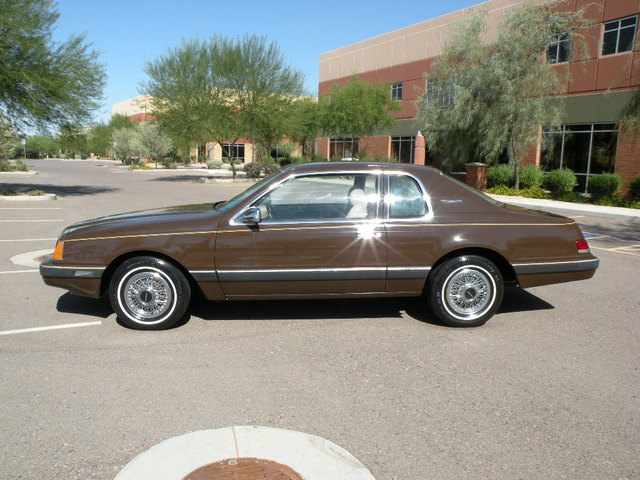
This one wears an oppressive coat of flat UPS brown paint that fortunately looks squeaky clean. It's not a bad color here and works surprisingly well on the car.

Underneath the hood were either four, six, or eight cylinders that powered the rear-wheels, to my surprise. Luckily, this example has a 5.0-liter V8.


The seller states the vehicle is a two-owner car from California whose last owner was a little old lady. They state the odometer currently reads a remarkably low 24,690 miles. This classifies this car as a bona fide low mileage survivor. On top of that, it seems to be in excellent condition. The exterior looks straight and clean, with the seller noting there is no rust, although the paint does show some heat stress. Inside, the interior looks brand new. The seller notes there are some dash cracks, but that can be covered up.

Mechanically, they say the car runs and drives and blows cold a/c. They do note two relatively minor problems: the power antenna and power door locks don't work.


This is a great chance to purchase a pretty solid car with a lot of power and in unusually good condition.

Available here on ebay in Phoenix, Arizona for $5,450.

Good Cop Bad Cop: 1992 Ford Mustang SSP


Have you ever wondered what it was like to sit behind the wheel of a police car (rather than the back seat)?

Now is your chance.

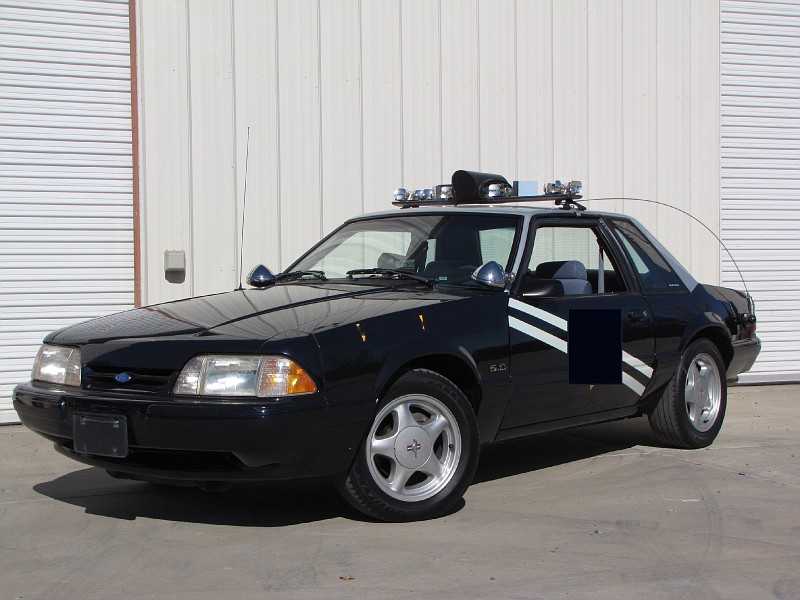
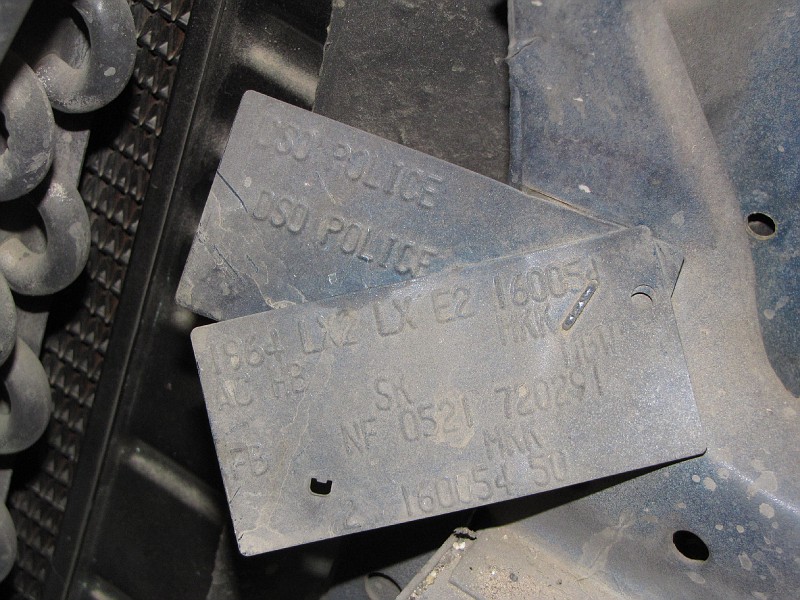
Up for grabs is this Mustang Special Service Package formerly used by the Nevada Highway Patrol. That's right. This is the cop car that would have chased your getaway through the desert at 100 miles per hour.


The seller states only 15 SSP Mustangs were ordered by the state of Nevada.

They say this vehicle was used as a patrol car, then used by the military, before it ended in private hands and has now been restored back to Highway Patrol-spec. This includes new paint and new front seats. The seller states there is no rust and no bodywork was needed. Maybe this thing didn't see much action after all.

Fox-bodied Mustangs split the critics. I think about everyone dislikes how they look, and then half think they're a hoot to drive and the rest think they're just awful. But let's face it: with a V8 engine, rear-wheel drive and a 5-speed manual transmission, you'd have to be a stiff not have a blast in this. Who cares if they look best in front of a Domino's Pizzeria on a rainy Friday night, or on the set of Married With Children?


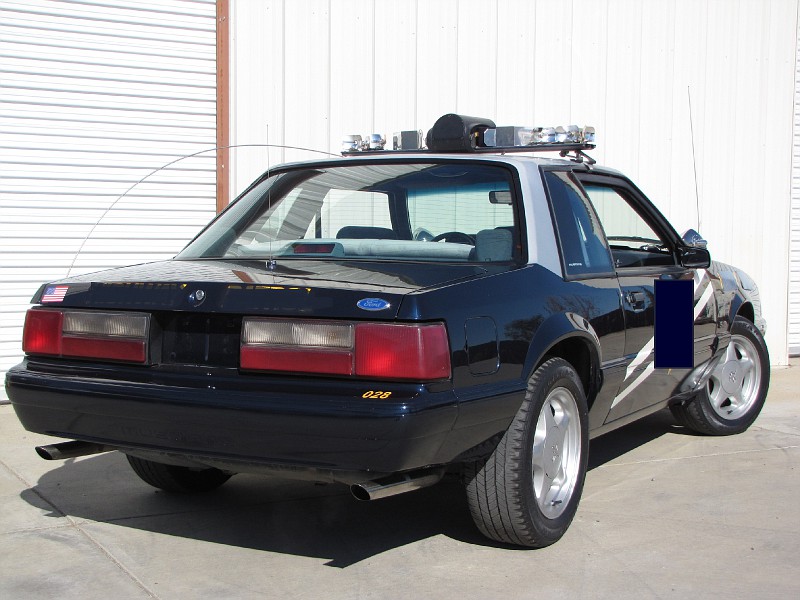
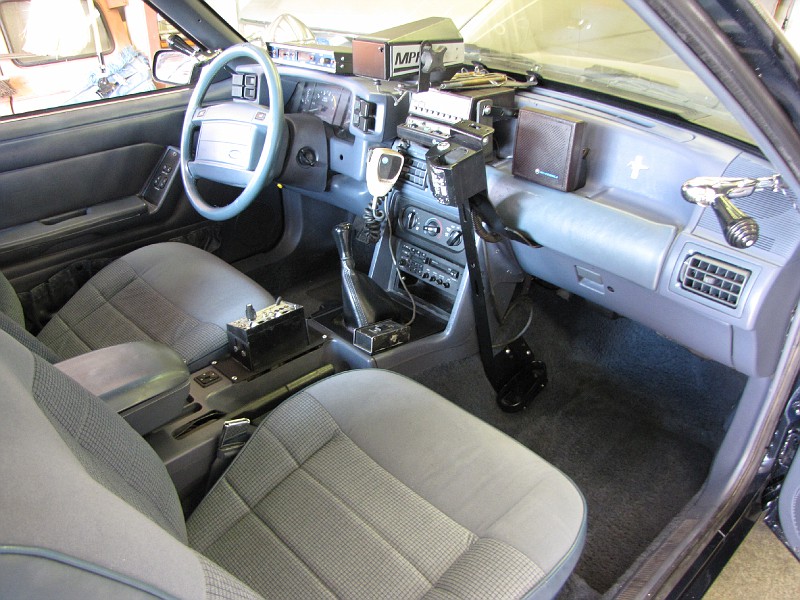
Inside is a feast for techheads...that is, for a techhead from the early '90s. All of the equipment looks outdated, like a bunch of cable boxes (remember those) piled on the dash. How is any of the street legal, anyways? I guess, until you get caught with all of it...

The most interesting thing about this Mustang actually aren't the flashing red and blue lights. It's the fact that you have the moderately rare notchback body coupled with the V8, stick shift, dual exhausts and Pony wheels. This is a better Mustang than your average Fox Mustang, police equipment or no equipment.


Find it here on ebay in Byron, California with bidding at $4,050 and a buy it now of $10,495.

Trail Ready: 34k-mile 1989 Ford Bronco Eddie Bauer Edition


There have actually been quite a few examples of car-meets-clothing line in the past, some notorious, some forgotten, but none as successful and good a pairing as Ford trucks and outdoors retailer Eddie Bauer. The partnership started in the mid '80s with a stroke cross-branding genius and the rest is history.

I actually didn't know the Bronco was the first to proudly wear the Eddie Bauer name. I was so used to Explorer versions in my northeast suburb of the '90s.

Ford's legendary Bronco line were two-door sport utility vehicles produced from 1966-1996, essentially the late 20th century glorydays.


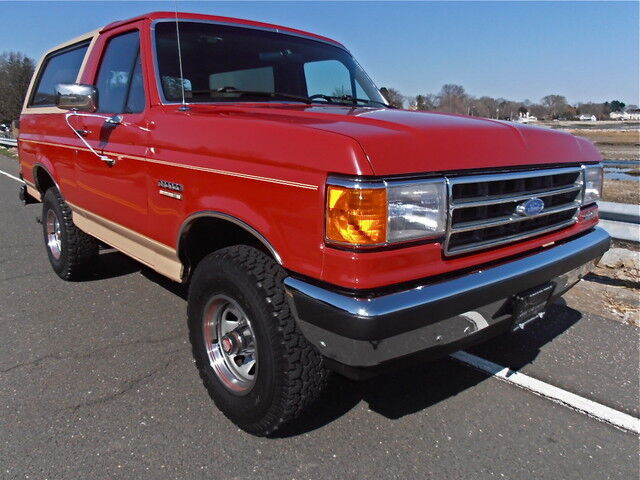
This is a fourth generation Bronco, made from 1987-1991.

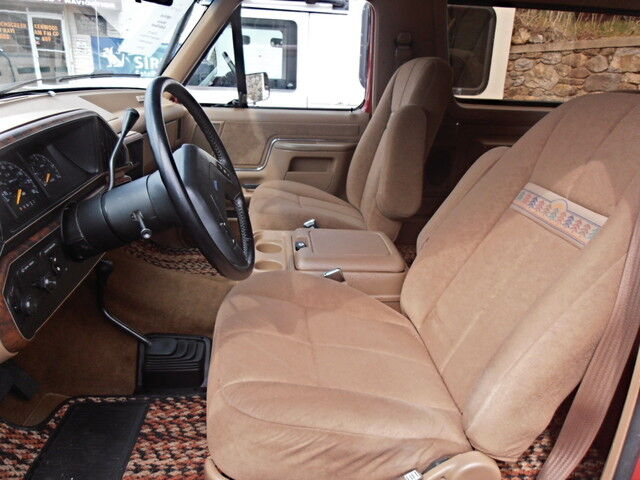
As far as I can tell, the Eddie Bauer Edition, clever as it is, doesn't signify much beyond admittedly tasteful aesthetic touches: pinstripes, unique non-metallic paint colors contrasting with creme lower panels, Eddie Bauer logos, and some additional interior stitching patterns on the seats. But oh, what a difference it makes in the mind.

The seller offers up this pristine '89 example with only 34,000 miles on the odometer. That's incredibly low. Sure, there were many of them made, but a good bunch were trashed, thrashed and abused, and rightly so, as this is a big tough truck. This one somehow escaped and is now here in for our wonderment.


The interior is immaculate, showing very little wear. The seats seem to have no stains of tears. Note the aftermarket woven floor mats that very work well.

The seller says this was a 2-owner vehicle from California, and seem to imply it has no rust, another fate for Broncos. They say that coming from a fresh tuneup she runs fine, a/c blows cold and the 4x4 system works. They also say she has mammoth new B.F. Goodrich All Terrain T/A tires which look terrific on the car.


With the excellent condition, V8 engine, four-wheel drive, cozy seating and collector status, this could be THE Bronco to have if you're in the market for one.

Ford ended the Bronco nameplate a while ago and seem to have no plans on bringing it back. These are fondly remembered trucks for a good reason.

Find it here on ebay in Southport, Connecticut with bidding at a whopping $14,600 and less than a day to go.

From Mazda, With Love: 1990 Ford Festiva L


The Ford Festiva was created by Mazda but sold as a Ford in North America under the nameplate Festiva. It was a subcompact economy car.

This is a first-generation Festiva, which lasted from 1986-1993. The '90 model year cars benefited from a facelift and fuel injection. All Festiva cars had front-wheel drive and 4-cylinder engines. This one had a 1.3-litre 4-cylinder engine and 5-speed manual transmission.


I've never been a huge fan of microcars, but I know a lot of people are. I do understand the appeal though, as they provide no-frills basic day-to-day transporatation, which, for many, is enough.

But if I could have more than one car, I'd definitely consider having one little car like this just for errands.

The seller states this car has new tires, brakes, calipers drums and suspension.


Styling-wise we have a typical micro hatchback, simple, basic, and honest. Red isn't a bad color, it's fun to have small cars in bright colors, and the paint looks shiny and clean on this. The interior shows some wear on the seats, but does feature Ford's automated seat belts.

Aftermarket Infiniti G20 wheels are an odd touch but look good from a distance. They are better than the eye-sore steel wheels these are usually seen with nowadays.

The most interesting thing about these cars is that there is nothing like them on the market today. Who will fill the entry-level, bottom-barrel car void? In the '80s and '90s, Kia sold ultra-economy cars here because once-inexpensive Japanese automakers like Honda and Toyota were moving upmarket each model year. Coincidentally, Kia also sold a version of the Festiva. Today, even the most basic cars are equipped with enough electronics to make one dizzy. Automakers are forgetting the thrill in basic transportation. Note to entrepreneurial car enthusiasts: the market is hungry for it.

The seller says this Festiva is easy and cheap to fix, on top of getting good gas mileage.


Find it here on ebay in Williams Bay, Wisconsin.

Extended Life: 39k-mile 1985 Ford Capri Injection Special


This is a 1985 Ford Capri the seller says they personally imported from Great Britain 18 months ago. As such, it's a right-hand drive car.

The Capri was built in Cologne, Germany and officially brought over to the U.S. and sold as a Mercury from 1970-1978. It was a sub-pony car, with a two-door body, four or six-cylinder engines, and rear-wheel drive. It didn't look half bad either. After 1978, they stopped importing the Capri to the U.S. But it continued on in Europe until 1986, quite a long production life. We then got the Fox-body Capri from 1979-86.


This is a 2.8-litre 6-cylinder Injection Special, which had semi-leather seating and a limited slip differential, along with some exterior trim changes. It also has a 5-speed manual transmission.

The seller says they got this car from a dealer who got it from the second owner. They go on to say they were disappointed with the car at first because it was minimally used over the years and therefore had a "stiff" feeling. So they went on to replace a number of parts and do an engine tuneup, which seemed to loosen it up, with the seller saying it now drives great, shifts smoothly and is fast.


Cosmetically they say it's had one high quality repaint, which is more good news than bad. They say the interior seats have wear but it's clean with a crack-free dash.

The seller states that the vehicle is ready to go with all books, manuals, decals, British license plates and spare parts. They say it has a clear Michigan title, which should be transferable to any state, although the car has had no emissions equipment added, so potential California buyers should take note.

It's hard to place a value on it. The seller claims it's only 1 of 4 in the U.S. Given that many Mercury Capri versions were sold here, there isn't a big draw in going through the cost and hassle of importing it, so I believe the low numbers. But it's got to be a entertaining performer, making it worth bringing over to some.

Kudos as well to the seller for a thorough and well-written writeup.


Find it here on ebay in Berkley, Michigan with bidding at $102.50, reserve not met and 4 days left.