Showing posts with label volvo. Show all posts
1972 Volvo 142E
How things have changed! Volvo abandoned their trademark boxy styling with their S60 sedan, but they had long abandoned rear-wheel drive before that. This 142 is from Volvo's late 20th century glory days when their cars were both boxy and RWD.
The 140 series debuted in 1966 and was basically the car that helped put Volvo on the map, and in middle class garages around the Western world. The 140 was available as a 2-door, 4-door sedan or 4-door wagon.
The design is a slice of heaven. The 1970s were a terrible time for auto design in the United States, but it was a great period in Europe, setting the template for the next two decades. The key is functionality. The stylists understood that good design follows function. As such, the Volvo is simple, clean and handsome with a high waistline, huge greenhouse and long front and rear decks for ample engine and storage space.
Power came from a 2.0-liter 4-cylinder engine. Like a lot of engines from the 1970s, it won't be fast, but should offer decent economy. This one is strangled with an automatic transmission, but a stick shift swap is always a possibility for the talent and time-inclined.
The exterior looks charming in flat green and the interior seems remarkably well-preserved. The seller says it was 121k miles and they drive it regularly so it hasn't sat. I do see some rust near the rear wheel well, so be sure to look into that.
Otherwise, these 2-door versions are sweet deals and great alternative to the pricier BMW 2002, which are a similar idea.
Available here on ebay for $5,999 or the Make Offer option.
1970 Volvo 164
The 164 was a slightly upscale version of the 140. The 1966-74 140 was Volvo's breakthrough model, selling over 1.2 million units. Then the 164 came along in 1968. It was Volvo's attempt to compete with Mercedes-Benz, BMW and Jaguar. As the numeric designation suggests, it had '6' cylinders instead of the 140's '4'.
Although sharing many parts with the 140, the front end was unique, drawing more inspiration from it's predecessor, the Amazon. It's tasteful looking without being too stodgy. The rest of the body is classic 1960s/70s European sedan, with a high waistline and overall bathtub shape inspired no doubt by the NSU 110, itself inspired by the first generation Corvair. White is a very flattering color, too, giving it a clean, bright, appliance-like vibe that suits the functionalism on display.
The interior is this incredible breath of fresh air from today's claustrophobic, over-designed interiors. The dashboard is essentially a single rectangular strip of faux-wood and simple gauges. The pre-airbag steering wheel is especially charming. It looks good. Part of the beauty of simplicity is that there is simply less to go wrong.
For those who complain the 140 is underpowered, the 240's inline 6-cylinder is the perfect antidote. It's a moderately heavy car, but the engine was able to kick out 160 horsepower to the rear wheels, and it managed to be more efficient than some competitors. This one has the column-mounted 3-speed Borg Warner automatic, but it'll be good for cruising easily with friends.
The seller says this survivor is an original daily driver, has no rust and runs strong. If you're looking for a sweet retro people carrier for short to medium trips, this is a pretty nice piece.
Available here on craigslist for $2,800.
1995 Volvo 850 T-5R
The blow of Volvo's big switch over to front-wheel drive was lessened when they introduced a high-performance version of their venerable 850 model called the T-5R.
For starters, the 850 is THE Volvo of the 90s. Conservatively styled, still boxy, reliable and somewhat sporty, it pleased many a soccer moms and dads in American suburbs. A bunch were sold, passed down to their kids, then driven into the ground. They aren't as revered as the 240, but they certainly carried out their duties just as stoically.
Sensing a need for speed though, Volvo partnered with Porsche to create the limited production T-5R. Only 5,500 were made, and this is one of just 185 that were cream yellow. It's a bright color but it fits the car's attitude. T-5R were also fitted with Pirelli tires hugging 17 inch smoked alloys, front bumper lip, side skirts, rear spoiler, and polished aluminum door sills.
Inside, occupants were treated to a pumped up version of the ergonomic 850 interior, with graphite leather and alcantara seats and walnut wood grain accents.
Perhaps most importantly was what hid underneath the hood, a turbocharged 2.3-liter inline 5-cylinder engine that had psi boosted thanks to a special ECU resulting in a total of 243 horsepower and capable of launching from 0-60 mph in under 6 seconds. That's impressive stuff.
Even more impressive is this survivor, with a healthy 145k on the clock, 1 previous owner besides the current seller/dealer and and no accidents. The turbo engine needs extra care, so maintenance history is key, but knowing it has a pretty simple past with no known major crashes is great. This looks like a well-kept, stock example of a rare and special Volvo.
Available here on ebay for $9,495 and the Make Offer option.
1984 Volvo 760 GLE Turbo Diesel
If you thought old Volvo cars were durable enough already, this ultra-rare diesel version takes that notion to new heights.
After the fuel crises of the 1970s, automakers scrambled to present consumers with fuel-efficient alternatives. One solution European automakers brought to the table was diesel power, which doesn't require spark plugs and lasts longer than gasoline engines thanks to their inherent construction and the nature of diesel fuel.
As the economy stabilized and gas prices came down diesel was no longer all the rage by the mid 80s but some automakers were still making odd contributions, like the BMW 524TD, the Cadillac Seville diesel, and the infamous Lincoln Continental diesel, which used the same engine as the BMW 524.
Volvo chose to briefly put a diesel in their 740/760 body. These were, of course, was already well on their way to becoming a middle class yuppie classics of suburban America, a masterstroke of form-over-function utilitarianism that was infinitely usable and strangely stylish in the most muted and anti-stylish way possible.
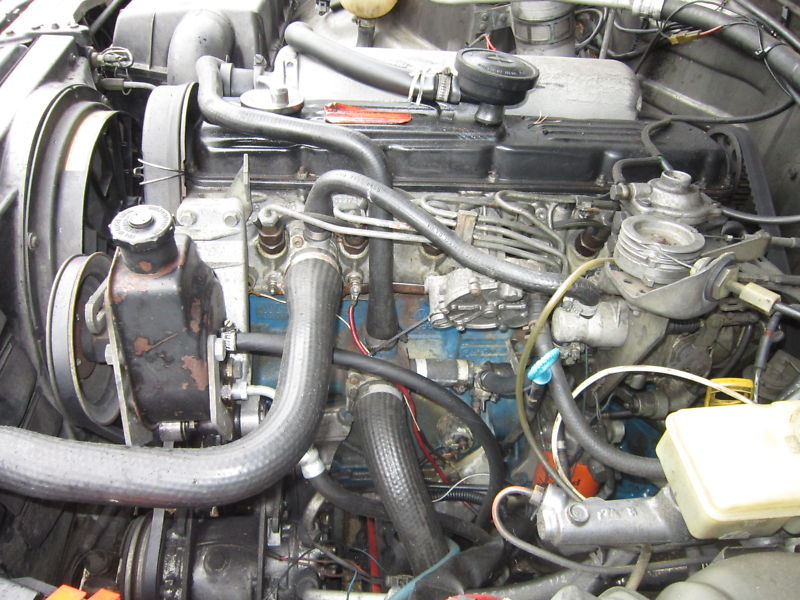
The diesel engine was actually sourced from Volkswagen and was used primarily in their trucks. Most Volvos were four cylinders, and most diesels were five cylinders, so this relatively large 6-cylinder turbocharged engine must provide a healthy boost. Refined? No. But these rear-wheel drive cars were surprisingly fun already, so the extra torque will go a long way.
This example is being sold by someone who says the relatively low 112k miles are original and that the car is in "showroom" condition inside and out. Mechanically, they say it new belts, new tires, new brakes, and new shocks. Cosmetically, they say it has no rust, a huge plus on an old Volvo.
Available here on ebay in Wyoming, Michigan with bidding at $1,025.
1985 Volvo 740 GLE Turbodiesel Wagon
If you thought old Volvo cars were durable enough already, this ultra-rare diesel version takes that notion to new heights.
After the fuel crises of the 1970s, automakers scrambled to present consumers with fuel-efficient alternatives. One solution European automakers brought to the table was diesel power, which doesn't require spark plugs and lasts longer than gasoline engines thanks to their inherent construction and the nature of diesel fuel.
As the economy stabilized and gas prices came down diesel was no longer all the rage by the mid 80s but some automakers were still making odd contributions, like the BMW 524TD, the Cadillac Seville diesel, and the infamous Lincoln Continental diesel, which used the same engine as the BMW 524.
Volvo chose to briefly put a diesel in their 740 body. The 740, of course, was already well on its way to becoming a middle class yuppie classic of suburban America, a masterstroke of form-over-function utilitarianism that was infinitely usable and strangely stylish in the most muted and anti-stylish way possible.
The diesel engine was actually sourced from Volkswagen and was used primarily in their trucks. Most Volvos were four cylinders, and most diesels were five cylinders, so this relatively large 6-cylinder turbocharged engine must provide a healthy boost. Refined? No. But these rear-wheel drive cars were surprisingly fun already, so the extra torque will go a long way.
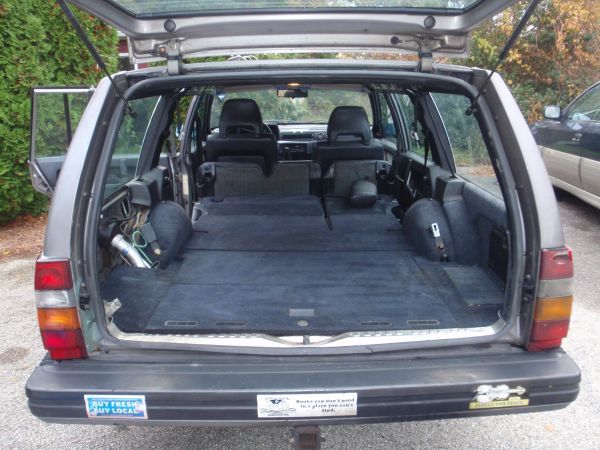
The seller says this example runs and drives, and the engine was rebuilt in 2005 and now was about 151k miles, still low for a diesel. They do say the radiator leaks some fluid, however. Cosmetically, it has a bunch of visible damage to the rear, sides and corner. But there's something kind of rugged about it. The flat planes and boxy shape handle dents well, dare I say.
This thing seems ready to go, but I would like to see it end up with a diehard collector who can remedy the cosmetic needs and give it some real love. I have no idea how many were made and sold, but it couldn't have been much.
Available here on ebay in Nashua, New Hampshire with bidding starting at $2,600 and a Buy-It-Now of $2,999.
95k-Mile 1985 Volvo 740 GLE Turbo Diesel
I confess. I love diesels. And I love discovering otherwise dull cars from the 80s that were offered (briefly) with diesel engines at one point. The BMW 524TD. The Toyota Camry diesel. Cadillac Seville diesel. Now here comes a Volvo diesel.
The 740 was Volvo's mid-size family sedan from 1982-1992. These were very stoic cars: boxy, upright styling, small engines, but rear-wheel drive and solid-as-a-rock build quality. When their cars were offered with turbos or stick-shifts, they showed surprising signs of life. Needless to say, they have engendered an enormous cult following for a variety of reasons.
In the 1980s, auto manufacturers still had the fuel crises of the 70s in the back of their minds. Diesel engines compress air first then directly inject fuel. Diesel fuel is less volatile than gas and is a better lubricant, making parts work better together and therefore last longer. Diesel engines are typically 20% more efficient than gasoline engines.
Then there are the just plain cool aspects, like a diesel engine theoretically being able to function under water because they are totally mechanical and don't require electronics. Or, similarly, being able to start a diesel engine after a thermonuclear shock wave because the ignition isn't electrically triggered. Talk about dependability. They'll be there for you even in the apocalypse.
Mercedes-Benz mastered the concept of combining diesel reliability and passenger car comfort with a long line of vehicles going back to the first such implementation ever, their 1936 260 D. By the 1980s, their diesel cars were legendary. Coincidentally, diesel fuel was typically less expensive than gasoline. Since the equation of comfort, performance, and reliability was successful for them, a lot of other manufacturers jumped into the fray with varying results, but mostly all unsuccessful in the U.S. At some point it struck Volvo executives as something they must attempt, however.
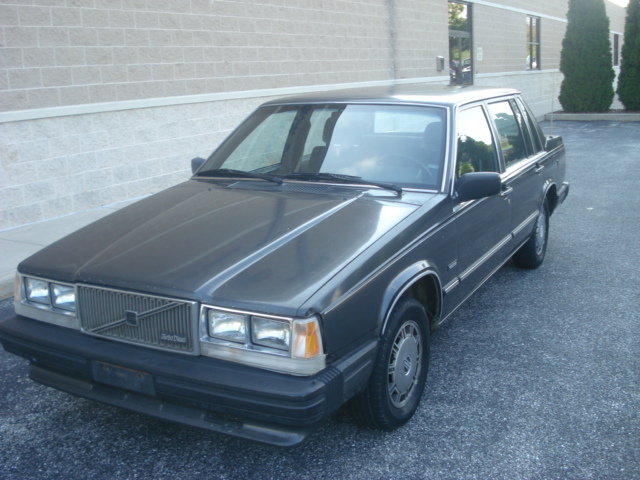
From what I can tell, Volvo only sold the 740 diesel from around 1985-1986. This is an '85 version. On the outside, it's your typical 740, all hard angles and straight lines, and looking even more stern in gunmetal grey metallic paint. The overall car exudes this remarkably harsh and almost oppresssive industrial aura, with the big plastic unpainted 5 mph bumpers, jutting front air dam, sealed-beam quad square headlights and upright rectangular grille. In some ways, the reliable and efficient concept of diesel engines are perfectly befitting of this Volvo's hyper-utilitarian character. It looks like a Mack truck morphed into a sedan.
Volvo body. Big truck diesel engine. Stick shift. How did this all turn out?
According to this excellent blog post on this very same subject, the Volvo 740 Turbo Diesel drove like you'd expect a passenger car with a truck engine to drive: not smooth, refined or clean. However, the author has a 740 TD of their own that has racked up a remarkable 215,000 miles, several engines, turbos and transmissions later and enjoy it thoroughly, on principle and performance. They do note a potential trouble area in the timing belt, which requires a rare tool to fix.
All of which makes this 95k-mile survivor rather remarkable. The seller says they acquired it from an estate sale and it runs, shifts and drives fine. They admit not knowing much about the history, but say it seems well maintained and the sale of the vehicle comes with extra parts and service manuals. This Volvo looks cold, steely and reliable, and with a some love and care, it could easily prove to be just that for many, many more miles. Trust me. Volvo collectors out there are daydreaming about this puppy.
Find it here on ebay in Glen Rock, Pennsylvania with bidding already at $3,050 and no reserve.
California Clean: 74k-mile 1989 Volvo 760 Turbo
This '89 Volvo is being offered in the kind of condition you really only find in California: immaculate inside and out and rust free.
As a child of a middle class New England suburb, Volvo cars were everywhere. Parents and their (very privalaged) children alike drove sedan or wagon variants. But since these were mostly teenagers tooling around, and since New England has some of the most harsh and radical weather of any region in North America, the Volvos I'm used to are extremely beat.
It's examples like these that remind you what nice vehicles they were, especially in muted blue over grey leather.
The 760 was produced from 1982-1992. It was intended to replace the legendary 200-series, but was instead sold right alongside it. These had mostly four-cylinder engines, although a diesel-powered six was available. Styling is courtesy of Jan Wilsgaard and is a classic by now. Hard angles, an upright c-pillar, big clear headlamps and taillights. These helped earn Volvo the reputation as makers of boxy cars. Volvo has completely abandoned this look, so their older designs are gaining more and more favorable attention as time goes on. Hint: people love boxy cars.
The seller seems to imply they are the second owner, having acquired it from the original owner in July 2009 when it had only 64k miles on the clock.
They say they have all original documentation and service records since new, and also say they have done a number of things to the car since they acquired it.
Mechanically, they state the only known problems are a power window and cruise control not working. Cosmetically, they say it has a small crack in the windshield and the grille. Most importantly, there is no rust. Thank you, Southern California.
Find it here on ebay in Los Angeles, California.
Basic Brick: 67k-mile 1991 Volvo 240
This 1991 Volvo 240 is being offered by a seller who claims the car has only 67,982 original miles.
Although more than 2.8 million units were sold from 1974-1993, the 240 were basic family transportation that racked up usage and mileage pretty quickly, so finding relatively low mileage examples is is difficult.
These are modern classics. The 240 is almost as iconic as the VW Beetle. At the very least, it's one of most important cars for Volvo and was their best seller for years.
Styling by Jan Wilsgaard is ultra-conservative and utilitarian looking, almost befitting of a military or diplomat. The car is long and narrow like a train. The hood and trunk deck are flat planes. Angles and corners are soft up close but the overall shape is an exercise is the beauty of squares and rectangles. The headlights are enormous, wide-eyed and kind of geeky looking. The hard porous ribbed headrests are still fascinating. I believe they were intended to give the interior an airy feel.
Under the hook were workhorse 4-cylinder engines powering the rear wheels. Some were turbocharged. It's too bad Volvo never but a 6-cylinder in these. I always thought they would be cool as more powerful, more luxurious cars since they are already large and roomy.
This is a base model in silver over blue cloth, automatic transmission, plastic wheel covers, mudflaps. The seller says it is a one-owner car with all records and books, always garaged, and runs and looks great. If your 240 with 300k miles is starting to get a little creaky, you might want to look into this one and basically
start over again.
Find it here on ebay in Subury, MA with one bid at $9,000, reserve not met and 5 hours left.
Never This Nice: 75k-mile 1993 Volvo 960 Wagon
This Volvo looks to be in the kind of exquisite condition you never find them in anymore.
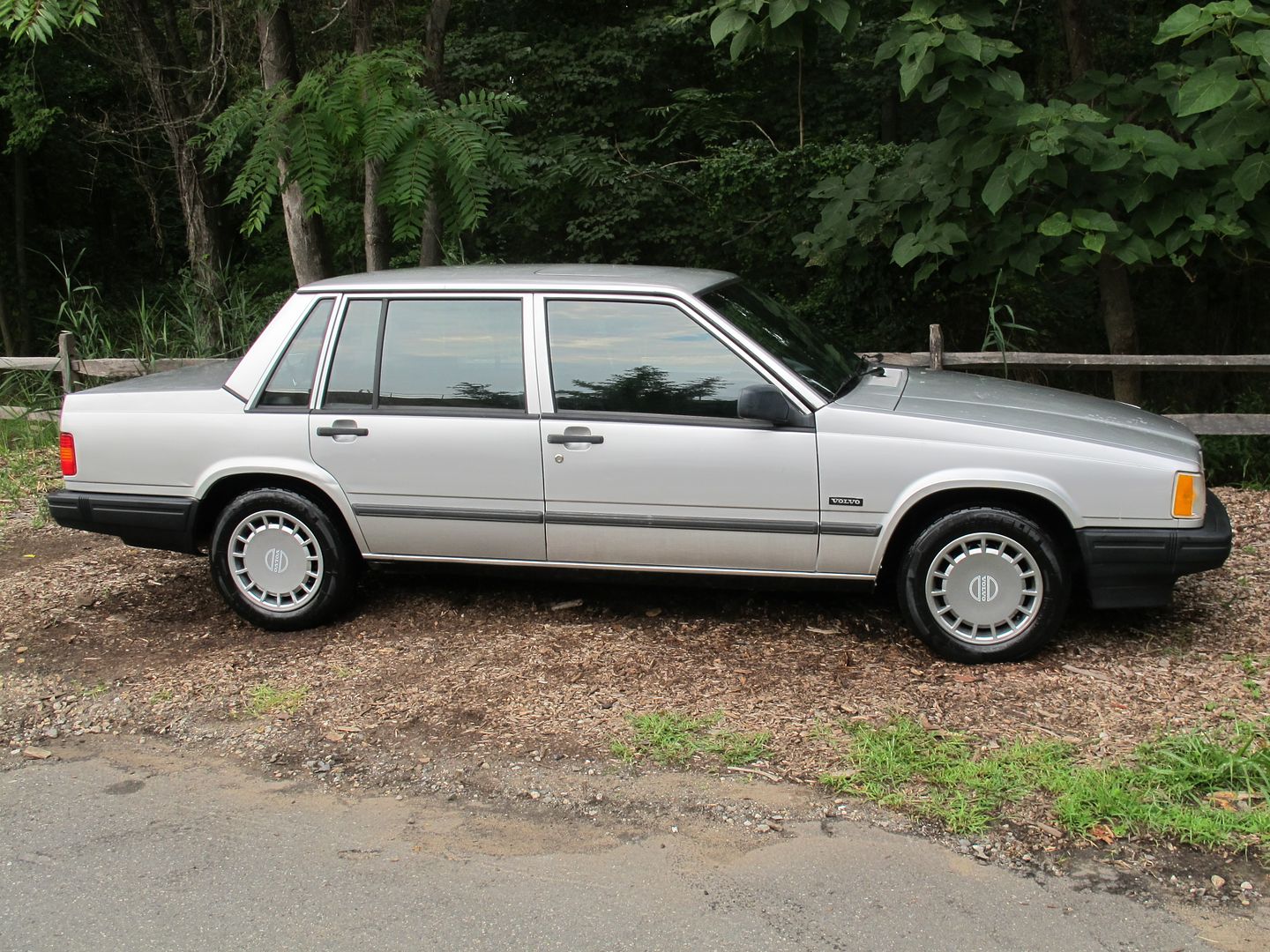
The 900 series were made from 1990-1998 and were, sadly, the last rear-wheel drive cars they made.
This is a pre-facelift '90-'94 960, before the car was moderately updated in 1995. Both the pre- and post-facelift models are nice looking, but the black plastic side molding on this early model absorbs wear better than the all-body-color strips on later cars.
The car is powered by a 2.9-litre, 24-valve DOHC inline 6-cylinder engine.
Exterior design is ultra-conservative, but it works so well. It's boxy and relatively simple but the price paid for not being stylish is a wonderful amount of useful interior space. And that's what a station wagon should be (as opposed to the loony Dodge Magnum, for example).
This one is pitch-perfect in gold over saddle leather interior. The alloy wheels are also really nice.
Since these were the mom car of the '90s upper middle class suburb, they were often driven a lot and with children in the back seats. Seeing one in this great shape is kind of bittersweet, as if it was never used as intended, but so nice to see it almost as nice as new.
The seller states the odometer clocks in at just 75,466 miles.
The vehicle is being offered by a dealer who are "Volvo specialists" and was driven by the seller and his wife.
They say it has also never been in an accident, reaffirming the low miles are just due to sparing use.
These are great cars. Since the mileage is unusually low but not museum-quality low, I would keep driving it for another 100-200k miles, as they were designed to go.
The price for this all this? A buy-it-now of just $4,975. You won't find another one like it, and you won't find any new car with this kind of build quality.
Find it here on ebay in North Miami, Florida.
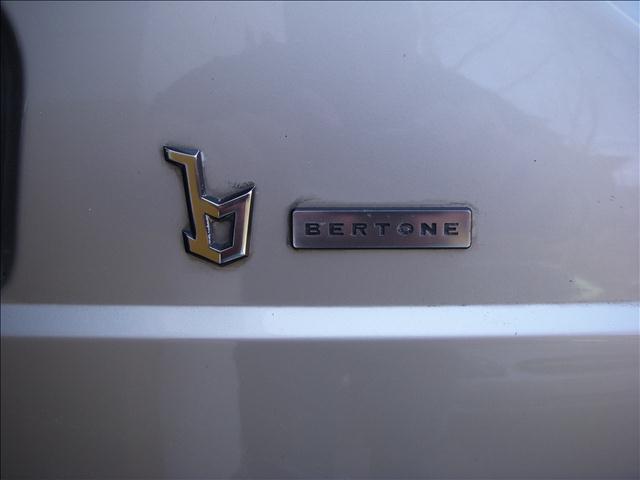
Italian Clothed Swede: 1988 Volvo 780 Bertone
Remember when Volvo's used to be scorned for being "boring" and "boxy" (before they became the frozen waterfalls they are today)?
The 1986-1990 Volvo 780 was supposed to combat the idea Volvo couldn't make a sexy and fast car to compete with the likes of BMW and Mercedes.
All the 780 proved was that Volvo really couldn't compete with the big leagues. But not without becoming a cult classic in the process. It is the last rear-wheel drive coupe Volvo built.
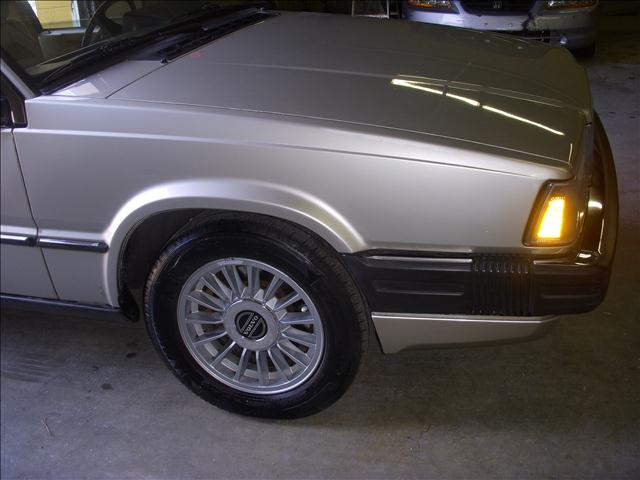
The most noticeable difference is the styling by famed design house Bertone. Bertone had previously worked on a special coupe version of the 240. The 780 was a whole new car however. No body panel except for perhaps the doors were shared with another Volvo. This of course made getting parts difficult if you got into an accident in one.
Interestingly, the styling isn't that drastic or wild, at least when compared to other cars of the time. In fact, it's quite tame. Just as Pininfarina successfully created a look that was both predictable but handsome for Cadillac with the Allante around the same time, Bertone made the 780 undeniably Volvo and still good looking. It takes all of the Volvo design themes of the time but with the slightest differences. The sharp lines, creases and obsession with rectangles continues, but the front is a little smaller and narrower, and the c pillar is more sloped than on other Volvo models.
Bertone was hired to make a Volvo and they did that very well.
Mechanically, the 780 came with either a turbocharged 4-cylinder or non-turbo V6 engine. Early cars had the V6, such as this '88 example. I hear that some people prefer the later 4-cylinder turbo engines. Either way, with the car weighing around 3,400 lbs combined with an automatic transmission the 780 was no sports car by any stretch, but rather just slightly more powerful than your standard Volvo station wagon, in swankier wrapping.
Inside, occupants were treated to more hard angles bathed in warm earth tones, sumptuous leather seats and wood grain accent trim. If you liked Volvo's interiors of the '80s, you'll love sitting in a 780 Bertone.
The seller lists this particular example as having a whopping 212,000 miles. They do say it is a one owner car that has been "maintained to the fullest", with records to prove it, which is good. Still, I'd be leery of any 20+ year old car with over 200k miles. Sure, Volvo cars were known to last for a long time, especially their legendary 240, but the 780 was plagued with engine and transmission problems, so it is unusual to see one driven this much.They say it runs fine, however.
But hey, you can't expect perfection with 212k on the clock. The rest of the body does look good and this is a good color scheme in champagne over tan.
Fortunately, the buyer has this priced under $5k with an initial asking price of $3,000. Hopefully that can be chipped down as well. This thing could need a new engine soon or other major repairs. This could however be a great snag for diehard Volvo enthusiasts or fans of boxy 1980s cars. Only 8,518 of the 780 Bertone were built, and I'd make a good bet that only a fraction are left, as they have no inherent collector value and usually succumb to rust before they end up in a scrap heap.
Find the craigslist ad here in Cranston, RI and the dealer page here.
Cool Box: 1990 Volvo 740 Turbo
Volvos come across my radar every now and then.
Now is one of those times. And man is it a good example this time.
I always thought Volvos were cars people secretly hated but drove because they felt safe. Why else would anyone subject their garages to such 'bland, boxy' styling?
In the white suburban neighborhood of my childhood and adolescence, Volvos were ubiquitous, but they were just as often driven by teenagers as adults. This didn't help the impression of Volvos in my mind. The Volvos owned and driven by the teenagers I knew were dinged up 850 station wagons or the ultra-utilitarian 240 sedans.
I didn't fully appreciate Volvos until the internet age. Then I was able to read rave reviews, fully digest the vast cult following, and see how their values held pretty reasonably, especially for the now-legendary 240.
Turns out that they were actually pretty decent cars. Those teenagers were pretty damn lucky (in many ways beyond what they drove, too)!
Like a lot of European cars from the late 80s to mid 90s, Volvos were extremely durable, well-built, ergonomic and reasonably fuel-efficient. And yes, safe.
But what a lot of other Europeans cars had that Volvo lacked was some semblance of a sportiness.
One of the first cars to change perceptions about Volvo was undoubtedly the 740 Turbo.
The 740 was introduced in 1982 as a whole new range of vehicles for
Volvo and lasted until 1993 when it was replaced by the much-lauded 850.
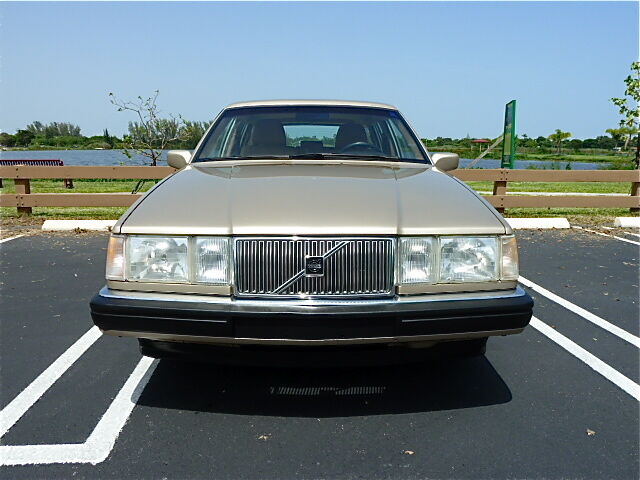
In 1990 the vehicle was given a facelift, replacing the ugly U.S.-spec quad square lamps with larger and more uplifting single-unit pieces and smoother once-piece bumpers.
Also new for '90 was the Turbo, which featured a 2.3-litre intercooled turbocharged inline four-cylinder engine that produced 165 horsepower. Styling wise, swept-star alloys and a stealthy blackened front grille signify the Turbo model. On the rear trunk lid, the badges, in typical 1980s manner, are wonderfully informative, denoting "Volvo" then "740 Turbo" and then beneath that "Intercooler". Why thank you! Fortunately, all badges to wear proudly.
And while the styling may have been once considered stodgy and dull, today it feels delightfully minimalist, conservative and handsome. The angles are crisp and clean. Lines end where you expect them too. The shape just makes perfect sense. Given Volvo's post-millennial shift towards completely uncharacteristic shoulder curves and wild taillights, their memorable, now "classic" look from the 80s to the mid 90s is aging just beautifully in the minds of many, yours truly included.
I found this 1990 Volvo 740 Turbo offered by a dealer in New York. I've seen a few of their listings on ebay for other vehicles before. They always seem to have unusually good looking and relatively low mileage European cars from the 80s and 90s, complete with decent descriptions and a ton of high resolution photos, a big plus for me when viewing cars online.
With only 88,441 miles on the odometer, this 740 was either driven sparingly over the past two decades or was driven frequently at first, then stored for a long time. The seller mentions the vehicle only had one owner, another plus, so either scenario is plausible.
Whatever the reason for the low miles, assuming they are accurate, the vehicle qualifies as a survivor. The body looks straight. The seller claims there is no rust. The car was obviously washed and detailed prior to photographing so the tires look slick, the alloys crisp and the black plastic dark and clean, again another plus.
The all-black plastic and leather interior is just as good.
Volvo interiors are just as all-business as the exterior. Sharp angles. Function over form. Clean, uncluttered, easy to use. It's been said that you can find everything even if you are blindfolded. The interior of this particular 740 is clean, with no apparent rips, tears or stains on the broad seats.
On a whim I actually googled the VIN and found a vehicle with the same VIN for sale as salvage. I guess that means it was either an insurance loss or donation at some point prior to its current offering. The odometer was reading 88,435 then.
The dealer probably bought it for dirt cheap and now intends to flip it for maximum profit. That's all fine and well, but I'd make sure to question them thoroughly on the full history and what repairs they did, if any.
How many can be left? And in this good shape? For under $5K you get a solid, low-mileage turbo Swedish sedan. That's so much more car for so relatively little money than most new cars today.
Find it here on ebay with only a buy-it-now price of $4,500.
Now is one of those times. And man is it a good example this time.
I always thought Volvos were cars people secretly hated but drove because they felt safe. Why else would anyone subject their garages to such 'bland, boxy' styling?
In the white suburban neighborhood of my childhood and adolescence, Volvos were ubiquitous, but they were just as often driven by teenagers as adults. This didn't help the impression of Volvos in my mind. The Volvos owned and driven by the teenagers I knew were dinged up 850 station wagons or the ultra-utilitarian 240 sedans.
I didn't fully appreciate Volvos until the internet age. Then I was able to read rave reviews, fully digest the vast cult following, and see how their values held pretty reasonably, especially for the now-legendary 240.
Turns out that they were actually pretty decent cars. Those teenagers were pretty damn lucky (in many ways beyond what they drove, too)!
Like a lot of European cars from the late 80s to mid 90s, Volvos were extremely durable, well-built, ergonomic and reasonably fuel-efficient. And yes, safe.
But what a lot of other Europeans cars had that Volvo lacked was some semblance of a sportiness.
One of the first cars to change perceptions about Volvo was undoubtedly the 740 Turbo.
In 1990 the vehicle was given a facelift, replacing the ugly U.S.-spec quad square lamps with larger and more uplifting single-unit pieces and smoother once-piece bumpers.
Also new for '90 was the Turbo, which featured a 2.3-litre intercooled turbocharged inline four-cylinder engine that produced 165 horsepower. Styling wise, swept-star alloys and a stealthy blackened front grille signify the Turbo model. On the rear trunk lid, the badges, in typical 1980s manner, are wonderfully informative, denoting "Volvo" then "740 Turbo" and then beneath that "Intercooler". Why thank you! Fortunately, all badges to wear proudly.
And while the styling may have been once considered stodgy and dull, today it feels delightfully minimalist, conservative and handsome. The angles are crisp and clean. Lines end where you expect them too. The shape just makes perfect sense. Given Volvo's post-millennial shift towards completely uncharacteristic shoulder curves and wild taillights, their memorable, now "classic" look from the 80s to the mid 90s is aging just beautifully in the minds of many, yours truly included.
With only 88,441 miles on the odometer, this 740 was either driven sparingly over the past two decades or was driven frequently at first, then stored for a long time. The seller mentions the vehicle only had one owner, another plus, so either scenario is plausible.
Whatever the reason for the low miles, assuming they are accurate, the vehicle qualifies as a survivor. The body looks straight. The seller claims there is no rust. The car was obviously washed and detailed prior to photographing so the tires look slick, the alloys crisp and the black plastic dark and clean, again another plus.
The all-black plastic and leather interior is just as good.
On a whim I actually googled the VIN and found a vehicle with the same VIN for sale as salvage. I guess that means it was either an insurance loss or donation at some point prior to its current offering. The odometer was reading 88,435 then.
The dealer probably bought it for dirt cheap and now intends to flip it for maximum profit. That's all fine and well, but I'd make sure to question them thoroughly on the full history and what repairs they did, if any.
How many can be left? And in this good shape? For under $5K you get a solid, low-mileage turbo Swedish sedan. That's so much more car for so relatively little money than most new cars today.
Find it here on ebay with only a buy-it-now price of $4,500.
Subscribe to:
Posts (Atom)