Showing posts with label under $15k. Show all posts

59k-Mile 1991 Peugeot 405 Mi16


The 405 was not only the last Peugeot to be sold in the US, but the last French car as well. It's lack of success here must have come as a surprise to the company, because in Europe it was a hit with the press and consumers alike, winning a bunch of new car awards and selling millions of units. Just chalk it up to one of many differences between the two continents, I guess.

French cars did have a poor reputation this side of the Atlantic, but the 405 was intended to rectify that. It supplanted the smaller and less modern 305 in 1987 with an all-new body and range of engines. However it was only offered as a sedan with just three engines choices in the US from 1988-1991.

The styling was credited to famed design house Pininfarina and, if you love 80s Eurobox sedans as much as I do, you just 'get' the appeal: big greenhouse, clean flat planes, black plastic anti-dent trim all the way around, and a rear awash in red plastic. It's approachable, it's simple, and at this point it's classic. What's that saying about good design? That it is invisible? I wholeheartedly agree, and this car is an example of how subtle design is an art.

Inside, occupants are treated to a simple, functional layout, with clear gauges, manual climate controls and big cushy leather sport seats. Kind of reminds me of the third generation Jetta, and that's a compliment.

Now, the 405 was already a pleasant, capable front-wheel drive cruiser. But what makes this low-mileage survivor even more interesting is the Mi16 trim (VIN# VF3DB1332MS518585) which means that there is a 1.9-liter 16-valve 4-cylinder fuel-injected all-alloy engine under the hood, capable of producing 150 horsepower. Suddenly, an otherwise polite but sedate sedan with a modest curb weight of around 2,700 pounds was faster than Peugeot's own V6 engine.


There weren't many made, less were sold and very few survive. Practically none are in this remarkable condition. The dark green and black interior is a great combo, and the original 15" alloys are present. The chrome paneling below the belt line isn't preferred, but may have been an original factory option. The seller is a dealer who say the car has had just one previous owner and the 59k-miles are accurate. Things certainly look like that low of a mileage. Check for rust and maintenance history.

This is a rare edition of a historically important car. As of this year, there still hasn't been a French car here since the 405. The seller is asking a hefty $14.9k for car, about $9k more than the highest estimates I've read for a 406 Mi16, but they also have the Make Offer option. How do you put a price on this? Regardless, let's hope it ends up in an equally caring next home.

Available here on ebay.

1999 Alfa Romeo 156


Sigh. Alfa Romeo in the late 90s. It's something we'll never know, because the company stopped selling cars here in 1995. Today, they offer just one car in the US, a snazzy sport coupe for over $100k. That's a shame, because they have a long tradition in something far more practical yet still very fun: compact sport sedans.

The last Alfa most Americans remember was the 164. Based on a Euro platform it shared with Lancia and Saab, it was a slight betrayal with front-wheel drive, but the styling and engine power were still quality. Alfa basically continued and expanded their front-wheel platforms after that, resulting in the 156, among other models.


The 156 debuted in 1997. European auto styling in the 90s completely eschewed the 80s hardcore techno-industrial angles in favor of soft corners, organic shapes and minimal details. The 156 is a great example, with small lamps, no anti-dent molding and rear door handles built into the c-pillar keeping the side profile clean. It's good looking, especially considering today's over-designed cars.

Under the hood of this example is a "Twin Spark" 2.0-liter 4-cylinder engine mated to a stick shift. Alfa's are renowned for their exhaust notes and excellent handling. I certainly would have preferred this puppy over a mechanically similar Honda or Toyota back in the day.


The seller says the car has 145,000 kilometers, which is about 90k miles. They say it has one previous owner, some service history, a new timing belt and in good condition throughout.

This one is in Canada and is not exempt under the US 25-years-and-older import rule unless it is federalized, and who knows how much that entails or costs. Still, it's not impossible and is good to see this one on this side of the Atlantic nonetheless, especially in such a sweet color combo as silver over red leather.


Available here on ebay with no bids and a Buy It Now of $10,500.

2005 Honda Accord Hybrid


Hybrids are still viable contenders as gas prices continue to hover just under $4 a gallon and no relief in sight. Alternative energy vehicles have a very checkered and infamous past, most notably with General Motors EV-1, which by most accounts was a pretty cool automobile until they abruptly canceled the program. It wasn't the first time GM pulled a weird move that resulted in several conspiracy theories.

Only a couple years later however, the Japanese marched in with the Honda Insight and Toyota Prius. The first generation Insight was truly cool, using expensive high-strentgh but ultra-lightweight steel, and super aerodynamic design to achieve a new level of efficiency. Then the four door-Prius came along and found a spot in garages across American suburbs.


Honda introduced a Civic Hybrid, but it didn't have a hatchback or "hip" status like the Prius, which Hollywood celebrities drove to award ceremonies. Then Honda rolled out an Accord Hybrid. This was based on the North American seventh generation Accord. Hondas are frustrating cars. You feel like there's potential for a really great car, but they always seem to settle for just good. Unfortunately, "just good" meant they still had flaws. One of the things that has always bothered me about Hondas is ride quality and road noise, two things competitor Toyota seemed to care about and try refining.

Flaws aside, the Accord Hybrid seemed like a good idea. If you couldn't stand the dingy looks or compact size of the Civic but still wanted fuel savings, the Accord Hybrid was an option.


One of the things that made it interesting was the pairing of 6-cylinders and an electric motor. The 1st-gen insight only had three cylinders and the Prius just four. 6-cylinders seemed to address hesitations about hybrid performance while still utilizing the electric motor for efficiency. In fact, the combination produced 15 more horsepower and made the '05 Accord Hybrid faster than the gasoline V6 Accord. There was just one problem: the 29/37 mpg wasn't that much better than the regular Accord and not great as far as hybrids go in general.

Not surprisingly, since it looked like a regular Accord, drove like a regular Accord and was $3k more than a regular Accord, the Hyrbid Accord didn't take off, and wasn't offered after 2007.


The seller of this example seems to be a former Marine who "just got married at age 66" and took exceptional care of the car. With just 57,008 miles on the clock, they also barely drove it. Accord Hybrids were positioned at the top of Honda's lineup, so they usually come very well-equipped, and this one has nice leather seats and a bunch of other goodies.

Honda just reintroduced an Accord Hybrid for 2014, but until now this was the only Accord Hybrid, and it still remains a rare and interesting alternative energy car. Being a hybrid, it still bears a price premium, but it's a good design and will still be mostly efficient and very reliable transportation for a long time. Or, at least until it needs a new electric battery (every 10 years).

Available here on ebay for $12k.

42k-Mile 1992 Dodge Stealth R/T Twin Turbo


The Stealth is a nameplate Dodge doesn't even bother using anymore. That's a shame, because in the 90s it had potency - thanks to the VR4 AWD.

In actuality, the Stealth was no triumph of American engineering. It was a triumph of American dollars and bargaining power. Chrysler made a deal with Mitsubishi and were able to sell cars using their mechanical components. One such car was the Mitsubishi 300GT, from which Chrysler/Dodge made the Stealth.


I guess it was a good deal if you really had to have that American design pen touch...but even then, it was very similar looking to the 3000GT. Still, that's not a bad thing. These are classics of the 90s, all smooth corners, globular shapes and swishy swoopy lines. The big benefit to the driver is aerodynamics and efficiency.

So what were the mechanicals that Chrysler wanted to get their hands on so badly? The Stealth has a 3.0-liter twin-turbocharged 6-cylinder engine good for almost 300 horsepower. That was a big deal then and remains impressive today. It'll be a gas guzzler, but damn this thing will haul on the highways.


As if that wasn't enough, it's got not only four-wheel drive, but four-wheel steering to keep you in total control, glued to the road with the utmost confidence. The 3000GT/Stealth cars were laboratories of 90s Japan hi-technology. The basic fact is that you just don't get this kind of package anymore, at least not for under, what, $40k?

The interior is also impressive, swathed in black leather. This one is mated to a manual transmission and seems to have an aftermarket DVD player upgrade.


I wouldn't expect anything less from a 2-owner, 42k-mile car. Look for accidents, rust and maintenance history. The engine is complex and I imagine would need oil changed religiously.

But if you want a big, safe, powerful sports car from the 90s, this packed with similar power as a 300ZX but has more technology and is less common.

Available here on ebay for $12,500.

The Case For Replicas: 1987 Fiero-Ferrari


Replicas are the Rodney Dangerfield of the auto world: they don't get any respect. But I like them. In fact, I think in some cases they make more sense than owning the original.

Take Ferrari replicas. Real Ferraris are expensive to start with. Then there's the cost of parts, repairs, worrying about getting a scratch in it, heck, even an oil change on some models requires the engine to come out of the bay! It's not for the faint of heart, or wallet.


However, a replica gives you that classic Pininfarina styling without all the headaches of the real thing. The best Ferrari replicas were either the Corvette-based McBurnie Daytona or the Pontiac Fiero-based 308/328. This is a Fiero-based 328. Pontiac actually liked the idea of a replica so much they allowed dealers to sell a 308 body as an option called the Mera. This was quickly shutdown after threats of lawsuits, but it got enough gears turning for people to be interested.

The Mera was based on the 308. I've never seen a 328 replica, although it could be easily done since the basic body is the same as the 308. It looks pretty good, especially with the post-'86 lights.


The seller confirms this is indeed based on a Fiero. Unfortunately, it will not have Ferrari-like performance, as it's a 4-cylinder version, a shame since the 6-cylinders are readily available. They also say it has an auto transmission. On the upside, they list the mileage as 69k and say the seats are leather.

This is a mostly show-and-no-go car, but the details and spirit are in the right place.  I would remove the Corvette side mirrors and rear spoiler and then just have a good laugh driving around. Also, if I were a b-movie director I'd totally want one of my characters to drive one and not worry if they crash it in a chase.


Available here on craigslist for $9,999.

1981 Tatra 613


I love Tatra! These are one of the coolest, strangest and most forgotten cars in history, but they also hold an extremely important place as the only rear-engine 8-cylinder passenger cars ever made.

Tatra has a long and colorful history as the third oldest automaker in the world, and have seen nations and governments rise and fall while making cars and trucks the entire time. Their chief designer, Hans Ledwinka, associated with Ferdinand Porsche so closely that Tatra produced a car similar to the Volkswagen Beetle two years before the Beetle came out. It's still a source of controversy to this day who was responsible for the eventual Beetle, but Tatra's contribution is undeniable.


Fortunately, Tatra kept on developing rear-engine ideas which resulted in the brilliant and gorgeous 1936 T77,  a huge, graceful, four-door, 8-cylinder rear-engine monster. It was unlike anything at the time an remains unchallenged to this very day in terms of style, aerodynamics and engineering principles.

Tatra essentially followed up with a predecessor to the T77 for the next 40 years, cumulating in the last major body style, the 613, launched in 1974 and lasting until the late 90s (!). It replaced the curvy, space-age 603 and was a complete departure with less chrome, hard angles and a large greenhouse. Late 70s and early 80s examples like this are the best looking with their classic bumpers and spartan interiors.


This one looks pitch perfect in black over burgundy. The exterior looks complete down to the wheels, and the interior is a period affair but cozy nonetheless. Sitting there on those velour seats in front of big analogue gauges and oversized pre-airbag steering wheel and staring out through the huge airy windows must be a totally liberating experience compared to the overdone, claustrophobic and distracting interiors of today.

Underneath the trunk (how I enjoy saying that for a change) is a 3.5-liter dohc air-cooled 8-cylinder engine good for 165 horsepower directed to the rear wheels. This is the stuff of some people's dreams. It sure wasn't efficient, but it definitely blew Volkswagen's rear four bangers out of the water. The only transmission available was a 4-speed manual. Later cars had fuel injection, but the early versions are noted for their simplicity.


The seller writes in poor english but seem to indicate the engine, brakes and transmission all work and valid documents are present. However, they do mention some rust, and say it would be a project car.

This is a really rare and very cool car and is a personal fantasy of mine to own. I know of only one documented 613 in the US. It's not as desirable as the 603, but this gives off more modern, everyday-driver vibes. I'd love to see an American grab this and bring her over. Depending on the rust it could be just driven as-is or need more work, but it's definitely not a deal breaker. This is a complete example of a special vehicle.

Available here for 8,999 Euros or about $12,500.

1987 Volkswagen Type 2 Westfalia Syncro


I recently posted a '91 Type 2 Syncro that was a decent late mode example. This is an even better bargain. The most desirable of all the Type 2 are the Westfalia campers, that basically take the versatility of a regular Type 2 to an extreme, with two rows of seating that fold down completely for sleeping bags or even a mattress and a roof that pops up so that a 6-foot tall adult can fully stand inside the vehicle.

Westfalia-Werke was the coach builder in Germany who added the camper modifications onto the vans after they left the factory. They had been doing this since the 50s.


By the time this was converted in the late 80s the Westfalia name was legendary. Not all VW campers are Westfalia and not all Westfalia VW are even the same. This one has a pop up and awning but does not seem to have much else, like a cooking facility and voltage outlets, however, I'm sure those things are possible to add now.

What is an amazing extra is the coveted 4wd Syncro. I'm not sure how many vans were made with both Westfalia and Syncro, but it wasn't many, and much less have survived today in one piece.


This one has 195k on the clock but looks clean. The owner says it's rust free and has good paint. The anthracite color is hard to wrong with and the interior looks pretty clean and tidy. I dig the exterior "Syncro" decals and what appear to be original plastic VW hubcaps.

Mechanically, the seller says it needs a locking leg for the pop up top and an a/c recharge.


I'd get some ownership history, maintenance records and check the underbody yourself for rust. If it checks out, this is a sweet vehicle. The mileage is high but with proper upkeep it could be good for another 190k. The rear engine four bangers are reliable and designed to go for half a million miles or more before a rebuild. It's also mated to a stick shift, so no worries about Volkswagen's troublesome automatics.

Westfalia Syncro prices are high. Sellers know what they have and want top dollar, not just because of the rarity but the desirability in usefulness. You can literally go almost anywhere on land, and stay the night, too. This one is reasonably asking $13,000.

Available here on craigslist.

Imitation Is Flattery: Ferrari 512BB Replica


Quick! Do you want drive something flashy without having to fork over the dough normally associated with doing so? Answer: a replica Ferrari.

These cars are looked down upon by 99% of automotive enthusiasts out there. I could care less. I love replicas! When I was younger I used to build LEGOs all the time. On a couple occasions I made a few model cars. Building a LEGO car is like building a replica car: it ain't gonna come out exact, but the harder you try the closer you get, until you realize the effort was the fun part, and the end result is something greater than the actual thing because it's unique and your experience was involved in it.


We've all heard of the Ferrari Daytona replicas and then of course there was the Pontiac Mera, which imitated the Ferrari 308. But you don't see Ferrari 512BB replicas often. Part of it is personal preference. A replica 512BB sure as hell doesn't have a 12-cylinder engine in the back the way the actual car did. So the body styling must have appealed to somebody along the way enough to make a replica.

This one is okay looking. There are for worse replicas. The seller doesn't specify what the mechanical underpinnings are, but it looks to be a Pontiac Fiero, based on the proportions and interior. The seller does say it was built by Corson in Phoenix in 1989. A little internet sleuthing revealed there was indeed such a company, the cars were in fact based on a Fiero chassis and some apparently had V8 engines. Impresssive. I also found this neat vintage ad:


Unfortunately seller doesn't specify what engine is in this example, so it's anybody's guess - four, six or eight cylinders. They do however say it's not bad on gas, so it probably isn't an eight cylinder.

Mechanically the say it has only 45k miles, a warranty on the engine, and updated a/c. Cosmetically it looks pretty flawless, but you want to check the (presumably) fiberglass body for cracks or accident repair.


If you don't live near a bunch of car snobs, this is a fun ride that provides all the classic style of European cars without the headaches and expenses. Sounds like a good idea to me.

Available here on craigslist for $10,000.

1975 Mercedes-Benz Sprinter O 309 Diesel


Although it's hard to believe, spring is coming up and then summer, and you know what that means...road trip time! What better way to canvas miles of American pavement then this sweet vintage Benz bus?

First of all let me say I love Mercedes-Benz. Not the snooty, blingy, gimmicky, over-engineered global car company of today. No, I love the company they used to be when they rose from the ashes of the second world war like a phoenix and remade themselves into a company that built great cars not just for their own people, but for the world. This meant a range of cargo vans, buses and trucks that could go anywhere and do anything. Best of all, they were often equipped with Mercedes-Benz's legendary diesel engines. Back then, the diesels were almost entirely mechanical, meaning they could theoretically operate submerged under water. These engines went on for half a million or more miles. They were specifically designed for the long haul.


So you can imagine a vintage Benz enthusiast pulse quicken when this baby popped up on ebay. Mercedes introduced the O 309 in 1967 and it lasted until 1986. This lovely '75 model year example comes smack in the middle and is equipped with a 4-cylinder diesel engine. The seller says they have added a factory turbocharger. These are far from fast, so the extra boost is welcome.

Inside there are two captains chairs up front and padded bench seats in back. There's also a fold out table, a full size bed, 3 way power, carpeted flooring and LED lighting.


Cosmetically, the seller says it is unrestored and may wear its original paint. They do say there are dings, dents, and some rust and rot but nothing too serious or threatening. Mechanically, the speedometer doesn't work, the engine leaks oil and a sway bar bushing will eventually have to be replaced. Despite all that, they stress it can be driven away and used as-is, which would be the most economically sensible idea.


Fortunately, they say it has had 13 years and over $11,000 worth of maintenance done and the records to back it up.

If you plan on living out of this, I'd put the time and money into perfecting it just how you want. But if you're just gonna embark on that summer road trip, it could be all set to go.


Available here on ebay with an asking price of $11,950

73K-Mile 1994 Mazda RX-7


Mazda's RX-7 made quite an impression when the charming first generation debuted in 1978. By then, the Germans had long abandoned any notions of mainstream, mass-produced rotary engines. But Japan hadn't given up on the quirky engine setup, which was noted for its smoothness and high output, although not necessarily reliability and efficiency.

Successive generations of the RX-7 have come and gone, but the 90s version remains the most enigmatic. Firstly, it's rare. Mazda only offered it here from 1993-1995 and never sold many, hence pulling it off the market so quickly. Second, it was the only rotary engined car available. The rotary engine is a piece of complex machinery, and is not measured by cylinders. This generation RX-7 came with a sequential twin-turbocharger unit that was good for north of 250 horsepower, impressive for the time. But despite being a quality, capable rear-wheel drive sports car, it was often out-shined by stiff competition like the 300ZX, Supra, Corvette and NSX. Lastly, the styling, while admired for its simplicity, is almost a little too soft and anonymous to stand out in a field of alpha-personalities.


Only three models were offered in North America: base, touring and R. This is a 1994 model that is being offered by a private seller. They don't specify what trim it is, but it seems well equipped with a sunroof, leather seating and a rear spoiler, all of which are rather must-haves on this type of car.

They say it has just 73k miles on the clock. It's no garage queen though, and has dings and dents on the body along with a worn driver's seat.


Mechanically, the seller says it runs and drive nice. Reliability will depend on their upkeep, so check for proof. I'd also check for accidents. These were fast cars and inexperienced owners often pushed them to the limits, with repercussions. Scarce parts and service might be expensive, as well.

The seller is asking $12,000, which is a large chunk of change for an old car not in perfect condition. But, the mileage is low enough and the car itself rare that it is still desirable. Knowledge is power and will help in negotiating.


Available here on craigslist.

1975 Porsche 914 1.7L


The Porsche 914 is a such a funny little car. It was intended to be a Volkswagen. But so close were Porsche-VW ties in those days, it ended up with with the more prestigious of the two's badge. And values have increased in an absurd and irritating Porsche-like way, too.

The one thing going for the 914 is a sense of low-key fun that the hot-tempered, snooty 911 doesn't have. The 914 came with mid-placed 4-cylinder engines (although a 6-cyl was briefly offered). These aren't fast cars. But they handled well, were relatively easy to maintain, and looked cool at the beach or drive in movies.


The styling is strangely appealing too. You want to be repulsed at first, then you just "get it". Aaahh, 70s German car. Pop art. Rampant crime in NYC. Milk is $1.40 and gas is only .57 cents a gallon.

Early models had smaller chrome bumpers, but this one is cursed with the larger black rubber pieces. Thank American lawyers and bureacracy.

One big thing about old Porsches is the degree of originality. Fortunately, this one has just a light re-spray, but everything else seems original, including the nice wheels. Although the interior looks too good.


The seller is a dealer and says it has just 60k miles and $10k in maintenance receipts. Obviously, this is one of the better kept 914.

Unfortunately, for the price they want, you could easily find a decent 1997 Boxtser, which was essentially the same idea but looked way better and was way faster. Also, you will never get your money back. The 911 is a whole different league and will always be worth more.

Available here on craigslist for $14,500.

Imitation is Flattery: Pontiac Mera


Ah, I love fake Ferraris. At least, the concept behind them. All the looks, and none of the mechanical headaches. If only it were that simple. 

Kit cars and replicas were all the rage in the yuppie 80s, when rolling in style was a priority, even if it meant driving a fake car. Interestingly, as car design has declined and classic car prices surged, kit cars have a new appeal to me: they can indeed give you the look of a classic car without all the worry and expense that comes with a real classic. 


Unfortunately most body kits from the 80s were poor. If the body was for a mid-engine Ferrari, it had to fit over a mid-engine chassis - and there were nary few mid-engine cars on the market in the 80s. That is, until the arrival of the legendary Pontiac Fiero in 1984. The Fiero gave reason for a whole new generation of Ferrari replicas.


The best replica body for the Fiero was, rather shockingly, officially sold through authorized GM/Pontiac dealers as an option called the "Mera". There was no Ferrari badging as far as I can tell, but the body sure as hell looked like a 308 - enough so that to the casual 80s observer, it was a real Ferrari. The body was never offered as a kit, and a company called "Corporate Concepts" installed everything before delivery. The interior mechanics underneath were 100% Fiero. It was only offered on new Fieros, and never retro-fitted.


Alas, the steal of the century didn't last long. Just as Ferrari threatened to sue the producers of Miami Vice for use of the Daytona replica, they sued Pontiac dealers over the Mera, and production stopped after a mere 247 examples were produced, making it an extreme rarity.

They do pop up for sale however, and usually as either derelict project cars or showroom queens. This one is definitely the latter, looking almost brand new. The seller says it has just 30k miles. They actually don't know if it is an official Mera, but say the taillights say Mera. Deductive reasoning skills! This is almost definitely a Mera, given the quality body and Fiero underpinnings. The nice thing about the Mera is that the body is really well done, looking almost exactly like a 308, with no major glaring inaccuracies. Proportions and fit and finish are good. While I would prefer white or black, the red exterior color is just fine as well.

As an added bonus, it's got the V6 Fiero engine for extra kick. Italian body, cheap American parts...I'd take it.

Available here on craigslist for $13,400 or trade.

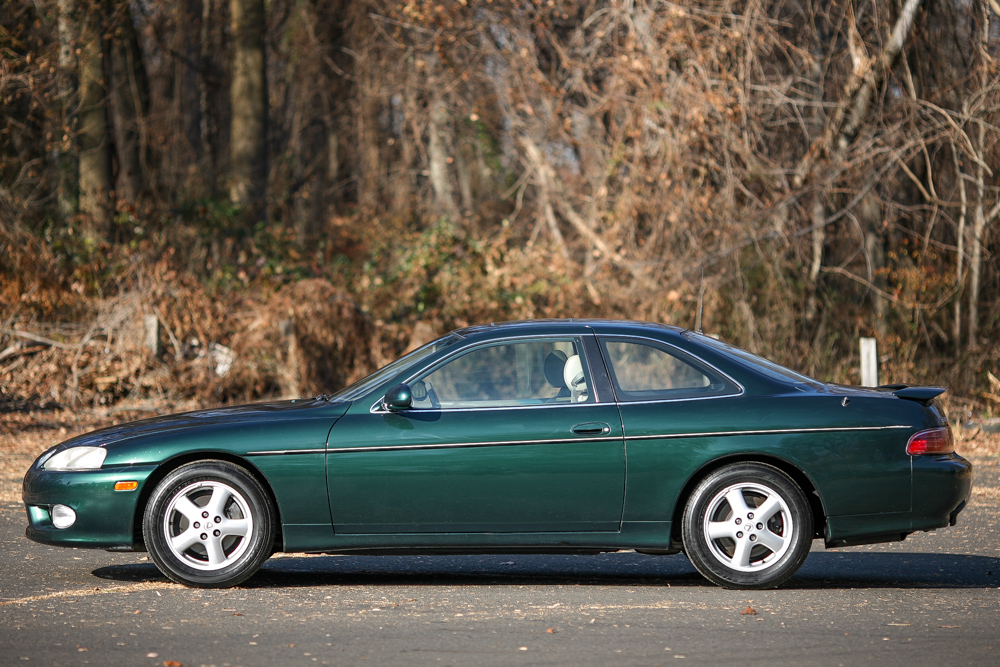
58k-Mile 1998 Lexus SC400


Lexus's original lineup - the LS, GS and SC - were instant classics when they debuted and 24 years later they keep gaining critical appreciation, even as their prices bottom out. Lexus touched upon every facet of automaking - engineering, efficiency, design, build quality, and marketing - and revolutionized each as well. All of their cars were stylish, extremely well built, and (initially) competitively priced. The brand was a high water mark for the entire industry.

The SC was the crown jewel in the arsenal. As if taking on the legendary Mercedes-Benz W126 with the LS400 wasn't enough, Lexus decided to cut into the premium coupe segment by launching the SC400 in June of 1991 as a 1992 model.


As fundamentally Japanese as Toyota and Lexus are, they are quite American, too. Lexus specifically designed their cars with the American market in mind. Styling of the SC was even transferred over to an American team at Calty Design Research Center in California. The original lineup were lean on the outside, spacious on the inside, had powerful V8 engines and automatic transmissions. They weren't exactly sporty but they were great long distance highway cruisers. In essence, they were super sleek and hi-tech reinterpretations of American cars of the 60s and 70s for the New Age 90s. The Japanese, having risen like a phoenix from the ashes of Hiroshima in 1945, had come to better understand what Americans wanted than Americans themselves.

Chief designers Denis Campbell and Erwin Lui said the SC body was based on "emotion and feeling" and possesses almost no straight edges. It is a complete rejection of the angular Blade Runner look of the early 80s, and even the slab-sided techno-industrial look of Bruno Sacco's Mercedes-Benz designs. Instead, it almost starts to recall the soft curves and slopes of cars from the 30s and 40s, but without the excess. The jellybean look became a trend for the rest of the decade and was almost parodied by Ford's ridiculous looking third generation Taurus, but on the SC it works beautifully.


Underneath the hood is the same 1UZ-FE V8 engine from the LS400 that pumped out a very healthy 250 horsepower to the rear wheels. Only an automatic transmission was available. A 6-cylinder version was also offered and with the option of a manual, but the added power of the V8 is preferable, even if you sacrifice the ability to shift manually, which isn't in the spirit of the car anyways.

Inside is classic early 90s Japanese design. In the same way that Mercedes-Benz and BMW mastered interior design of the 80s, the Japanese keep the same overall simplicity and functionalism but soften the edges, lighten the colors and smooth out the tone and feel of everything for the ultimate tactile and visual experience. It's like a spa or a vacation, but without the frivolity. It practically beckons for a Kenny G disc to be blasting in it.


The SC400 was produced until 2000 with minimal changes over the years - a testament to the success of the original design. Plenty were produced but they are often scooped up quickly and modified in the second hand market, making immaculate and low mileage examples like this rare. The seller says it has just 58,547 miles on the clock and that everything works. A carfax report and any maintenance records will fill out the rest of the story. Otherwise this thing could be ready for another 50k-100k miles.

Available here on ebay in Pennsylvania with a Buy-It-Now of $14,950 and the Make Offer option.