Get In And Go: 1963 Porsche 356 B Super


The seller says this little old Porsche is in driving condition.

The 356 really needs no introduction - it was the first production Porsche, and a beloved classic car today. It's one of the few cars that inspires both a cult following and mainstream appreciation.

This is a '63 B Super version. The "B" cars were made from 1959 to 1956. "Super" was a mid-level trim. B cars benefit from a new front end nose that curves into a perfectly rounded edge - almost like the tip of an M&M candy. The headlights were higher however. They also have slightly larger bumpers, revised front seats, and folding rear seats.

The engine was a pushrod 1.6-litre dual carb 4-cylinder that produced between 60-90 horsepower.


The seller says this car has an older repaint that could benefit from a whole new coat. They also say there is some rust in the doors.

However, they say the car is otherwise original, including the glass and interior. They do mention the seats have been recovered, and the buttery tan color looks nicely broken in.

Mechanically, they say it runs like a champ, having done an oil change, tuneup and brakes rebuilt.


These in-between 356 cars are getting harder and harder to find. Most up for grabs nowadays are either derelict rust buckets or Concours-grade show pieces. It's refreshing to see a used example that the new owner will have several options with: give it that new shiny paint job, hide it in a garage, or just jump in and drive away.

Find it here in Hollywood Hills, California with an asking price of $31,000.

Forgotten Technology: 1988 Honda Prelude Si 4WS


This 1988 Honda Prelude is from a time when Honda, and Japanese auto manufacturers in general, were pushing the envelope in what they could deliver to the customer with the highest build quality but at the most accessible price possible.

Some fruits of their labor? 4-wheel steering. They debuted this brilliant feature on the third generation Prelude produced from 1988-1991, the first production car to ever offer it. Essentially, turning the steering wheel pivoted not just the front wheels but also the rear wheels in tandem. It was an entirely mechanical setup too, meaning no reliance on computers, and added only 51 extra pounds of weight to the car.


The handling of this otherwise sedate front-wheel drive car was transformed, eliminating body roll and creating near-ideal handling in lane maneuvering - at any speed. I have read that it feels like the car is sliding at first, before you realize you're actually in complete control. Combined with the 16-valve DOHC 4-cylinder engine that produced 135 horsepower against the car's modest 2,600 lb. weight, the Prelude 4WS was a standout performer. During a Road & Track test the Prelude 4WS won the Slalom by completing it at 65.5 mph - faster than any other car, Ferrari, Lamborghini and Porsche included.


This car also has a 5-speed manual transmission. Talk about the perfect package.

The seller states this example up for sale runs and drives good, with no leaks in the moonroof, one body ding and good tires and brakes. They also say they have a clean title in hand.

From the pictures, it looks like a typical used Honda, which is totally fine and expected, especially in this car. I do notice that the lug nut covers are missing, however, a minor gripe, but I would track down replacements if the seller doesn't have them for some odd reason.


I really dig the styling of this generation Prelude. It's slightly more refined than the first generation. Honda would further tweak this car for 1990, and it got even better looking with a revised front end where the turn signals and driving lights were housed in a single strip like a Ferrari. But this '88 model is just fine. This is from a time when designers were thinking as much about practicality and functionality as beauty - and, surprise, surprise - beauty often followed functionality quite well. Note the super-thin pillars for maximum visibility, giving the car a nifty look with all the greenhouse glass. The pop-up headlights are a given for this era too, but they are perfectly fitting the gently sloping face and athletic credentials of the car. The rear is also nicely shaped, with a broad taillights strip. I like how the body color against the taillights form a yellow to red gradient.


The seller states they want $2,500 or best offer, but no low ballers. Low ballers? How can you go any lower? They don't mention the miles, but the body looks good otherwise. Supposing there's no rust, this is definitely worth $2,500. Hop in, drive, enjoy, then restore it with fresh paint, tuneup and maybe leather seats or seat covers. You'll be the only person on the road with 4-wheel steering and you'll tell the difference, too. To me, that's damn near priceless. Thank you Honda. Now if only they could start acting like the company you used to be.

 Find it here on craigslist in Hoquiam, Washington.

Trail Ready: 34k-mile 1989 Ford Bronco Eddie Bauer Edition


There have actually been quite a few examples of car-meets-clothing line in the past, some notorious, some forgotten, but none as successful and good a pairing as Ford trucks and outdoors retailer Eddie Bauer. The partnership started in the mid '80s with a stroke cross-branding genius and the rest is history.

I actually didn't know the Bronco was the first to proudly wear the Eddie Bauer name. I was so used to Explorer versions in my northeast suburb of the '90s.

Ford's legendary Bronco line were two-door sport utility vehicles produced from 1966-1996, essentially the late 20th century glorydays.


This is a fourth generation Bronco, made from 1987-1991.

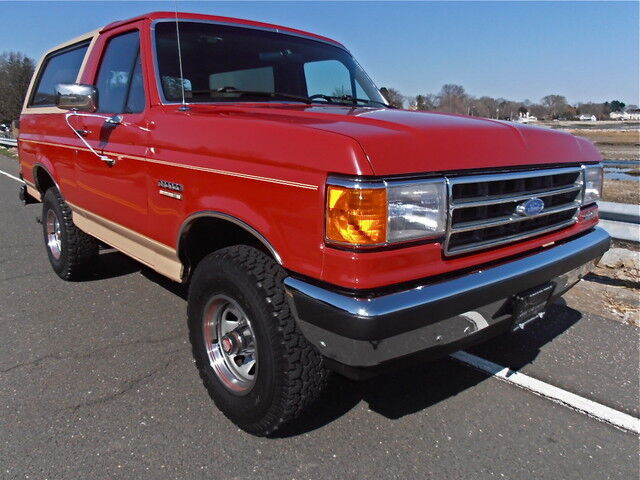
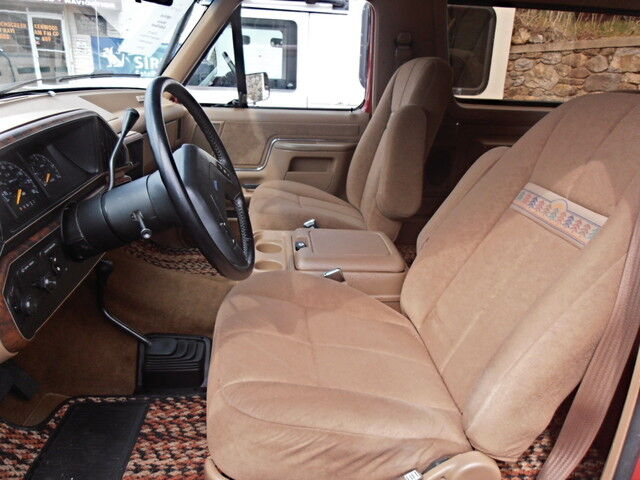
As far as I can tell, the Eddie Bauer Edition, clever as it is, doesn't signify much beyond admittedly tasteful aesthetic touches: pinstripes, unique non-metallic paint colors contrasting with creme lower panels, Eddie Bauer logos, and some additional interior stitching patterns on the seats. But oh, what a difference it makes in the mind.

The seller offers up this pristine '89 example with only 34,000 miles on the odometer. That's incredibly low. Sure, there were many of them made, but a good bunch were trashed, thrashed and abused, and rightly so, as this is a big tough truck. This one somehow escaped and is now here in for our wonderment.


The interior is immaculate, showing very little wear. The seats seem to have no stains of tears. Note the aftermarket woven floor mats that very work well.

The seller says this was a 2-owner vehicle from California, and seem to imply it has no rust, another fate for Broncos. They say that coming from a fresh tuneup she runs fine, a/c blows cold and the 4x4 system works. They also say she has mammoth new B.F. Goodrich All Terrain T/A tires which look terrific on the car.


With the excellent condition, V8 engine, four-wheel drive, cozy seating and collector status, this could be THE Bronco to have if you're in the market for one.

Ford ended the Bronco nameplate a while ago and seem to have no plans on bringing it back. These are fondly remembered trucks for a good reason.

Find it here on ebay in Southport, Connecticut with bidding at a whopping $14,600 and less than a day to go.

Early Example: 1982 Ferrari Mondial 8 Coupe


The Ferrari Mondial was ranked as one of the 50 worst cars of all time by TIME magazine a couple of years ago. If you know TIME at all, you know they love to draw readers with bold claims and outlandish headlines. A Ferrari? One of the worst cars? Sure, they aren't practical, but that doesn't make them bad. Now, maybe the Mondial wasn't the "best" Ferrari, but any mid-engine V8 car is going to be a better car than your standard vehicle. I mean c'mon.

The Mondial was produced from 1980-1993 for a total production of only 6,884 units. The seller claims this 1982 model was one of only 703. Regardless, there were clearly not many made of any year. The "entry-level" Mondial replaced the Dino 208/308 GT4, itself a departure for the brand with a mid-mounted V8 engine. The Mondial was essentially the same thing, only wrapped in Pininfarina styling.

I like the early Mondial cars. I used to dislike the excessive black plastic, including the strips lining the c-pillar band around the front that makes it look like a raccoon, but it all has charm now. A 1986 update completely freshened the car for people that didn't like this early look.

This is a rare Coupe version. The convertible wasn't added until 1983. Most Mondial cars in America were the convertible, so it's nice to see a coupe.


Inside, we have an instrument cluster literally housed in a rectangular box, a minimalist dashboard, and a classic Ferrari chrome ball shifter. This one also has a beautiful red leather interior which contrasts well with the silver exterior. I love red leather, nobody does it anymore.

The seller is typically scant on details like most craigslist ads but mentions this car has only 39k miles, is all-original (except for obvious later wheels taken from a 348) and they have maintenance records, books and tools. That's good to hear.

I would check for rust, verify the number of previous owners and pore through the records. A 30-year old 8-cylinder engine made in Italy is going to have to been taken well care of to make this car worthwhile. Fortunately, early Mondial 8 cars are supposedly a relatively tame and simple affair, with only 214 horsepower (still a healthy dose) and an engine that does not need to be removed from the subframe for major services to be performed (wait...some cars actually needed their engines removed to work on? Yikes). So, electrical gremlins aside, ownership shouldn't be a nightmare or outrageously expensive.


Find it here on craigslist in Hawthorne, California for $21,500. Hemmings values a 1982 Mondial Coupe in fair condition at $7,500, good condition $12,125, and excellent condition at $20,125, so this car is priced at the high end.

It Ain't Easy Being Green: 1976 Lancia Scorpion B


This Lancia Scorpion is looking sharp in bright apple green.

The Scorpion was named so only for the North American market, and only for two years, '76 and '77. Elsewhere it was known as the Montecarlo from '75-'82.


I like the idea of the Scorpion. Mid-rear-engine, compact Pininfarina design. And it was probably a decent car, in Europe that is. Unfortunately the American version almost completely ruined the essence of the vehicle. Larger bumpers were tacked on. The headlights were changed to inane sealed-beam units that semi-popped up (what was the point?). The engine was downgraded to a tiny 1756cc 4-cylinder that combined with emissions equipment resulted in a pathetic 81 horsepower. While I'm sure the car handled beautifully, highway driving was probably not joyous.


The seller says this car has low miles (but does not provide a figure), stick shift, targa top and leather seats. They thankfully took the time to wash the car and take good clear photos which greatly benefit the listing. The car looks beautiful. The interior looks very clean, and there seem to be no cracks in the dash.


The seller wants $8,900. Hemmings values a 1976 Lancia in good condition at $3,950. The seller has way overpriced their item. Sure, there were only 1,801 U.S. Scorpion cars, but they were significantly de-tuned and repressed. It's probably still interesting to drive, but you're not getting a performance car. You're not getting much car, period.

Still, it's nice to see one preserved like this.

Find it here on craigslist in Santa Monica, California.

The Perfect Sedan: 1995 BMW 540i 6-Speed Manual

*UPDATE: The seller lowered the price to $7,295 then listed the vehicle as sold*


I want this car.

The E34 chassis BMW 5-series from 1988-1995 is one of my favorite BMW cars of all time.

They are the ultimate expression of BMW and represent everything the brand was going for in the late 20th century period before the new millennium.

The tekno-mekanical styling is still something to behold, classy but rugged, sophisticated yet old world. You can thank little-known Italian Ercole Spada for that. Why he never became a household name like Brunco Sacco or Giugiaro escapes me. His designs for the E32 and E34 were iconic to say the least.


Not only are these things great looking, they were always blessed with strong engines, coupled with rear-wheel drive.

Whereas Mercedes boasted they were "Engineered Like No Other Car", BMW claimed their cars as "The Ultimate Driving Machines". The E34 only enhanced their argument.


This is a 540i, which has the huge, torquey 4.0-litre 8-cylinder engine producing around 280 horsepower. On top of that, it has an ultra rare 6-speed manual transmission, offered only one year, 1995. Only 3,203 540i cars had the manual, and only 1,524 were officially imported to North America.


The seller says this car is loaded with  M-Technic sport suspension, bolstered leather sport seats, sunroof, all season traction control and heated front seats. They say it also has a new clutch, built-in K40 radar detector and retains its original radio and honeycomb wheels. What a list of goodies. So many second-hand BMW cars are trashed and thrashed, so finding a pristine one like this that seems to have had at least one mature adult owner is exciting.

It looks beautiful in jet black over parchment.

The mileage in one of the pictures reads 122,669. That's a lot by any standard, but not too much for a '95 that was driven regularly. These V8 engines had a problem with Nikisil that lined the cylinders, but were covered by an extra warranty from BMW. If this one make it to 122k, chances are it was fixed or will never have the issue.

So this car could be good for another 100k before a rebuild.


The seller is asking $7,595, which is a lot given the age, but can easily be justified. The car looks terrific, the manual was produced in low numbers, and it's probably one of the highest quality, fastest and most comfortable sedans out there.

Find it here on craigslist in Braintree, MA.

From Mazda, With Love: 1990 Ford Festiva L


The Ford Festiva was created by Mazda but sold as a Ford in North America under the nameplate Festiva. It was a subcompact economy car.

This is a first-generation Festiva, which lasted from 1986-1993. The '90 model year cars benefited from a facelift and fuel injection. All Festiva cars had front-wheel drive and 4-cylinder engines. This one had a 1.3-litre 4-cylinder engine and 5-speed manual transmission.


I've never been a huge fan of microcars, but I know a lot of people are. I do understand the appeal though, as they provide no-frills basic day-to-day transporatation, which, for many, is enough.

But if I could have more than one car, I'd definitely consider having one little car like this just for errands.

The seller states this car has new tires, brakes, calipers drums and suspension.


Styling-wise we have a typical micro hatchback, simple, basic, and honest. Red isn't a bad color, it's fun to have small cars in bright colors, and the paint looks shiny and clean on this. The interior shows some wear on the seats, but does feature Ford's automated seat belts.

Aftermarket Infiniti G20 wheels are an odd touch but look good from a distance. They are better than the eye-sore steel wheels these are usually seen with nowadays.

The most interesting thing about these cars is that there is nothing like them on the market today. Who will fill the entry-level, bottom-barrel car void? In the '80s and '90s, Kia sold ultra-economy cars here because once-inexpensive Japanese automakers like Honda and Toyota were moving upmarket each model year. Coincidentally, Kia also sold a version of the Festiva. Today, even the most basic cars are equipped with enough electronics to make one dizzy. Automakers are forgetting the thrill in basic transportation. Note to entrepreneurial car enthusiasts: the market is hungry for it.

The seller says this Festiva is easy and cheap to fix, on top of getting good gas mileage.


Find it here on ebay in Williams Bay, Wisconsin.

Italian Clothed Swede: 1988 Volvo 780 Bertone


Remember when Volvo's used to be scorned for being "boring" and "boxy" (before they became the frozen waterfalls they are today)?

The 1986-1990 Volvo 780 was supposed to combat the idea Volvo couldn't make a sexy and fast car to compete with the likes of BMW and Mercedes.

All the 780 proved was that Volvo really couldn't compete with the big leagues. But not without becoming a cult classic in the process. It is the last rear-wheel drive coupe Volvo built.


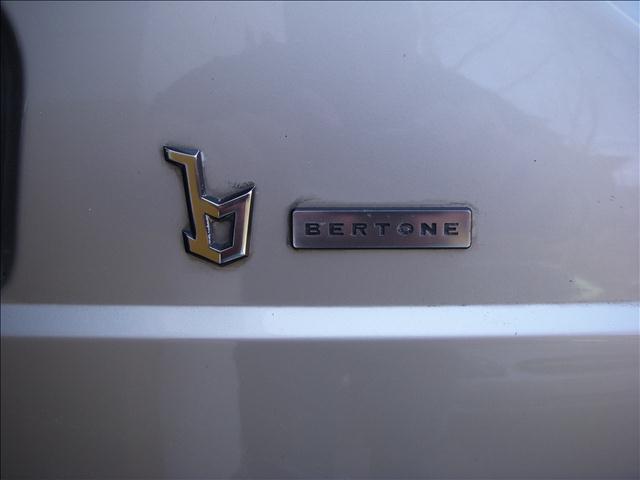
The most noticeable difference is the styling by famed design house Bertone. Bertone had previously worked on a special coupe version of the 240. The 780 was a whole new car however. No body panel except for perhaps the doors were shared with another Volvo. This of course made getting parts difficult if you got into an accident in one.

Interestingly, the styling isn't that drastic or wild, at least when compared to other cars of the time. In fact, it's quite tame. Just as Pininfarina successfully created a look that was both predictable but handsome for Cadillac with the Allante around the same time, Bertone made the 780 undeniably Volvo and still good looking. It takes all of the Volvo design themes of the time but with the slightest differences. The sharp lines, creases and obsession with rectangles continues, but the front is a little smaller and narrower, and the c pillar is more sloped than on other Volvo models.

Bertone was hired to make a Volvo and they did that very well.


Mechanically, the 780 came with either a turbocharged 4-cylinder or non-turbo V6 engine. Early cars had the V6, such as this '88 example. I hear that some people prefer the later 4-cylinder turbo engines. Either way, with the car weighing around 3,400 lbs combined with an automatic transmission the 780 was no sports car by any stretch, but rather just slightly more powerful than your standard Volvo station wagon, in swankier wrapping.


Inside, occupants were treated to more hard angles bathed in warm earth tones, sumptuous leather seats and wood grain accent trim. If you liked Volvo's interiors of the '80s, you'll love sitting in a 780 Bertone.


The seller lists this particular example as having a whopping 212,000 miles. They do say it is a one owner car that has been "maintained to the fullest", with records to prove it, which is good. Still, I'd be leery of any 20+ year old car with over 200k miles. Sure, Volvo cars were known to last for a long time, especially their legendary 240, but the 780 was plagued with engine and transmission problems, so it is unusual to see one driven this much.They say it runs fine, however.

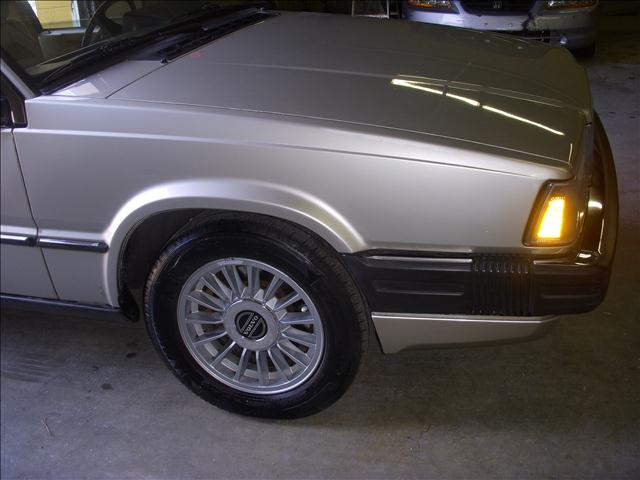
Since the rest of the car looks good, it could be seen as just a well-driven example with maintenance to match, which is desirable. The seller says the car is defect and ding free, yet I can easily spot some damage to the rear passenger side corner:


But hey, you can't expect perfection with 212k on the clock. The rest of the body does look good and this is a good color scheme in champagne over tan.

Fortunately, the buyer has this priced under $5k with an initial asking price of $3,000. Hopefully that can be chipped down as well. This thing could need a new engine soon or other major repairs. This could however be a great snag for diehard Volvo enthusiasts or fans of boxy 1980s cars. Only 8,518 of the 780 Bertone were built, and I'd make a good bet that only a fraction are left, as they have no inherent collector value and usually succumb to rust before they end up in a scrap heap.

Find the craigslist ad here in Cranston, RI and the dealer page here.

Another One: 1975 Steyr-Puch Pinzgauer 710 4X4


This is the second rare but mighty Pinzgauer utility truck I've featured. The first was here.

These things are awesome. Forget about your typical Mercedes Unimog. These things are more obscure but just as tough, if not more so.

The Pinzgauer replaced the Halfinger utility vehicle and was made by extinct European conglomerate Steyr-Daimler-Puch. Production started in 1971 and continues to this day. First generation Pinzgauer 710 and 712 vehicles were sold to both the military and civilians until 1985.


This one looks great in dark green with the chunky Goodyear Wrangler tires. I love the design. The enclosed body and windows makes it seem like an extreme motorhome on steroids or something. Note the large rear mudflaps to protect vehicles traveling behind from particles kicked up by the huge wheels.


The seller states this vehicle has had only 1 owner after use by the Swiss military, and has received some upgrades to make it more usable. Among some of the additions are sound-deadening carpeting, new shocks and a block heater for cold weather starting. The seller also says that windows were created in the rear to give passengers a better view out. It makes a world of difference on the outside and is probably very enjoyable from inside.

The seller says this vehicle has only 50,976 kilometers on the clock, which is only 31,675 miles.

If you are into extreme utility vehicles, this could be a great chance to acquire one. The seller makes no mention of the mechanical condition, but do say test drives are welcome, so it seems ready to go.

If you dare, that is.


 Find it here on ebay in Vallejo, California.

Matching Numbers Project: 1958 Porsche 356A Coupe

*UPDATE: The seller has now listed this vehicle on ebay here


This classic Porsche 356 is being offered by a seller who says it has been in storage since the 1970s. They say it is a matching numbers engine and transmission car that's been down to the bare metal for 4 decades.

The 356 was Porsche's first production car and lasted from 1948 to 1965, resulting in around 76,000 cars made but only about half are thought to be surviving today. They are one of the greatest cars of all time,  a beloved, admired, iconic classic and that is also extremely valuable and desirable. The rear-engine, rear-wheel drive layout, coupled with the timeless and seductive curvy little body, make the 356 one for the ages.


This is an early "A" car, of which 21, 045 were produced from 1955 to 1959. All of the 356 cars had flat four-cylinder engines, but each revision every few years brought about changes, mechanical and cosmetic, subtle and otherwise.

The seller states they have this car's pink slip from 40 years ago and also have the California black plates. It would have been nice to see the plates, but it's interesting to know they will be included, and will no doubt please the next owner, should they ever get it on the road and are able to actually use the plates.


The seller says the body and floor are original and there is no rust except in the battery box. They say it is all complete and original except for the seats. They don't have any photos of the interior, which is a shame, but, if a seller says complete, they usually mean complete, as that's a big claim.

Complete is good, but condition is a whole other ballgame. The car looks terrible. The paint has indeed been stripped and even a novice can tell a bunch of parts are missing, like the bumpers and taillights to start. Are these included with the sale? Who knows (although I do spot what looks like bumpers tied together on the roof in one pic). You better hope they are. The seller gives no word on the engine, so this isn't going to even be a rough driver. This thing will need a $30,000 restoration to make it presentable again. Factory-spec seats alone will probably be $1k-$5k. Most cars would be worthless with over $30k in needs.Yet the seller wants $38,500.


There is a Porsche bubble right now. They are unique, special, driver-oriented cars with racing pedigree and a mythology no amount of money can buy. The 911 in particular barely depreciates, then catches on fire about 10-20 years later and just keeps rising. But example like this are frustrating. It clearly needs work. You have to have $60,000 lying around to make this thing whole again. It would make most sense for the seller to let it go for about $15k-$20k to a reputable restorer who can put another $10k into it, then flip it for $30-$40k. Everybody will still get a piece of the action.

That's the fate this thing deserves.

Find it here on craigslist in Cedar Flat, California